

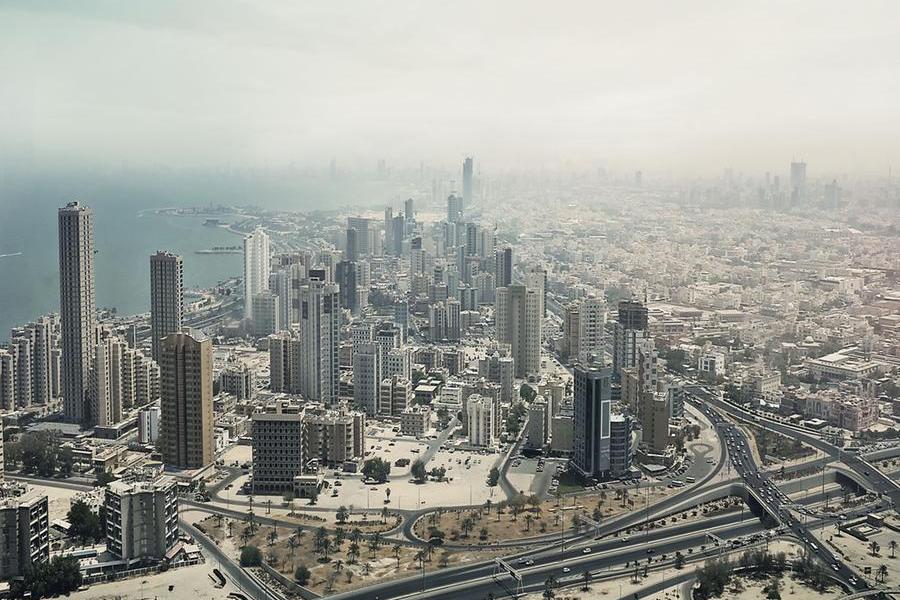
The GCC real estate market is poised to maintain its upward trajectory into the first half of 2026, building on the strong momentum recorded in the second half of 2025, according to the latest report from the Kuwait Financial Center (Markaz).
Markaz’s latest ‘Real Estate Outlook: H1 2026’ report provides a comprehensive analysis of real estate market performance across key real estate sectors in Kuwait, Saudi Arabia and the United Arab Emirates (UAE).
The report said liquidity and credit growth are expected to improve due to increased oil production, growth in the non-oil economy, continued government spending on infrastructure and development projects, and lower policy interest rates. These factors support borrowing and investment activities across residential, commercial and industrial real estate segments.
Kuwait: Stable with selective upside
Kuwait’s real estate sector maintained a stable growth trajectory throughout the first nine months of 2025, supported by rising land prices and rental rates across the Istismari (investment) and commercial sectors. Land prices increased year on year across the state, and rents in the investment sector recorded steady increases.
Real estate transaction activity strengthened in the third quarter of 2025, with total real estate sales increasing 26.9% year-on-year to KD 3,043 million ($936.66 million), driven by growth across all segments. Sales in the investment division increased by 60.0% year-on-year, and sales in the residential and commercial divisions increased by 8.0% and 17.4%, respectively. Transaction volume increased 27.8% year-on-year to 4,247 transactions, supported by an increase in residential, investment, and commercial real estate transactions.
Looking ahead, Kuwait’s real GDP is projected to grow by 3.9% year-on-year in 2026 due to increased oil production, improved non-oil activities, stronger project acquisitions, and expected interest rate cuts. These factors are expected to support demand for commercial and industrial real estate.
Markaz expects Kuwait’s real estate market to remain stable in the first half of 2026, with land prices and rental rates expected to increase, based on macroeconomic indicators and the Markaz Real Estate Macro Index score of 3.45 out of 5.0.
Saudi Arabia: Acceleration continues
Saudi Arabia’s real estate sector remained in an acceleration phase in the second half of 2025 due to strong housing activity and tight office market conditions. Housing transactions in the third quarter of 2025 rose 17.9% quarter-on-quarter, with Riyadh and Jeddah leading the way in price growth, while developers continued to accelerate supply through megaprojects and luxury residential developments.
The office sector remains highly subdued, with Riyadh’s vacancy rate at near-zero levels (0.5%), which supported prime rent growth of 7.3% year-on-year. Demand was supported by regional headquarters programs and increased activity in the healthcare and technology sectors.
The fiscal deficit is expected to widen to 3.7% of GDP in 2025 and remain at a similar level in 2026, although increased capital expenditure under Vision 2030 is expected to support construction activity and sustain demand across the commercial and residential sectors. Population growth continues to support housing demand, with Saudi Arabia’s population reaching 35.3 million by mid-2024, an increase of 4.7% year-on-year, with non-Saudi Arabians accounting for 44.4% of the total.
Based on these trends, Markaz believes that the Saudi real estate market is still in an acceleration phase and is expected to maintain its momentum in the first half of 2026, indicating stable market conditions with room for further gains for investors.
UAE: Strong performance shows signs of peaking
The UAE real estate market recorded strong performance in the first three quarters of 2025. In Dubai, real estate transaction value increased by 28.3% year-on-year to AED 554.1 billion ($150.88 billion), while in Abu Dhabi, total real estate sales amounted to AED 58 billion, reflecting an increase of 75.8% year-on-year. The number of transactions in Abu Dhabi also increased by 42.3% from the previous year to 15,800.
The UAE continues to offer attractive rental yields compared to its global peers. As of June 2025, rental yields in Dubai are 7.47%, slightly lower than the previous month, but well above yields in major global markets such as Singapore (3%), New York (5.8%) and London (3.3%).
Dubai’s annual sales have been consistently higher than the previous year for the past three years, but concerns about sustainability have emerged. Markaz points out that the current growth cycle is supported by strong fundamentals and that a sharp correction is unlikely. However, a period of relaxation or cooling is expected in the medium term. Nevertheless, Markaz predicts that the UAE’s real estate market could peak in the first half of 2026, featuring steadily rising prices and rental rates in both Dubai and Abu Dhabi.
Despite evolving macroeconomic dynamics, the GCC real estate market is expected to maintain momentum in the first half of 2026. Markaz believes that real estate will continue to make a significant contribution to the region’s economic development and offer attractive opportunities for investors across the residential, commercial and industrial sectors.
Copyright 2026 Al Hilal Publishing and Marketing Group Provided by SyndiGate Media Inc. (Syndigate.info).
