


RIYADH — The GCC Council of Ministers on Sunday confirmed that member states will take all necessary measures to protect their security and stability, including options to respond to Iran’s unwarranted aggression in the Gulf.
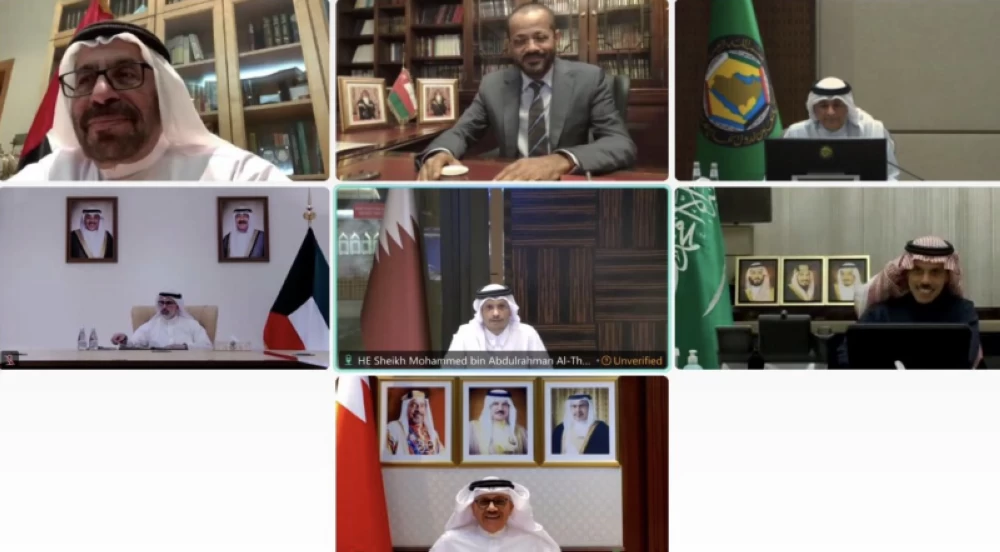
The Council held its 50th extraordinary meeting on Sunday via video conference, chaired by Dr. Abdullatif Al Zayani, Minister of Foreign Affairs of Bahrain and current Chairman of the Council of Ministers.
The meeting was attended by UAE Minister of State Khalifa Shaheen Al Marar. Saudi Foreign Minister Prince Faisal bin Farhan. Badr Al Busaidi, Minister of Foreign Affairs of Oman; Sheikh Mohammed Al Thani, Prime Minister and Minister of Foreign Affairs of Qatar; Sheikh Jarrah Al Jaber Al Sabah, Minister of Foreign Affairs of Kuwait; Jassem Mohamed Al-Budawi, GCC Secretary-General;
The council convened to discuss Iranian missile and drone attacks targeting the UAE, Bahrain, Saudi Arabia, Oman, Qatar and Kuwait that began on February 28.
Ministers considered the serious damage caused by treacherous attacks on civilian facilities, service locations and residential areas, resulting in material losses and threatening the security of citizens and residents.
The two leaders also discussed measures to coordinate efforts aimed at restoring security, stability and peace in the region.
The Council strongly condemned the attacks on the GCC countries and the Hashemite Kingdom of Jordan, calling them grave violations of sovereignty, the principle of good neighborliness, international law and the United Nations Charter. He stressed that targeting civilians and civilian infrastructure is a serious violation of international humanitarian law.
The Council affirmed full solidarity among Member States and stressed that, in accordance with the GCC Charter and the Joint Defense Agreement, the security of GCC States is indivisible and an attack on one Member State shall be considered a direct attack on all Member States.
Related articles
Riyadh ruler and deputy ruler oversee reception of stranded Gulf nationals
Member States reiterated that they reserve the legal right to take all necessary measures to protect their sovereignty, security and stability, in line with Article 51 of the United Nations Charter, which guarantees the right to individual and collective self-defense.
Ministers praised the efficiency and readiness of Member States’ armed forces and air defense systems, noting their role in deterring missile and drone attacks, neutralizing threats, and protecting human life and critical infrastructure.
The Security Council said that despite diplomatic efforts by GCC countries to avoid escalation and assurances that their territory would not be used to launch attacks against Iran, Tehran continued its military operations targeting Gulf states.
He called for an immediate cessation of attacks to restore security and stability, and stressed the importance of protecting regional airspace, maritime routes and global supply chains, as well as ensuring stability in global energy markets.
The Council called on the international community to condemn the attack and urged the United Nations Security Council to take a firm and immediate stance to fulfill its responsibility to prevent further violations that threaten regional and international peace.
He expressed gratitude to the countries that condemned the Iranian attack and expressed solidarity with the GCC countries.
The Council reaffirmed that GCC countries have consistently supported dialogue and negotiations with Iran, commended Oman’s role in mediation efforts, and stressed that diplomacy remains the only path to resolving the crisis and maintaining regional and international stability.
