


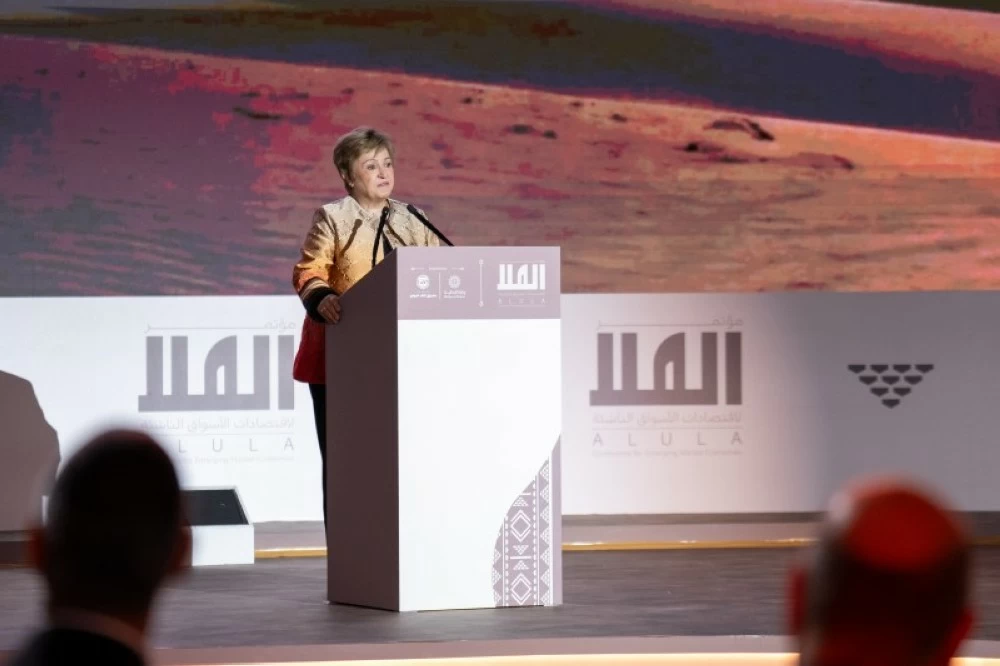
International Monetary Fund Director Kristalina Georgieva acknowledged that the second AlUla Conference on Emerging Markets in 2026 confirmed the vital role that emerging economies play in the global economy.
He expressed his admiration for the economic, tax and financial reforms being undertaken in emerging markets, stressing that good policies lead to success.
He explained that research shows that emerging market economies adopt monetary policies that emphasize medium-term frameworks, have a clear vision on inflation targets, are less dependent on stock and currency market fluctuations, and enjoy a high degree of central bank independence.
He added that emerging market countries now account for more than half of the global economy, reaching about 56%, and that this has been achieved through joint cooperation.
It warned that post-pandemic growth remains below required levels, a growing concern, especially given the potential exposure to further economic shocks.
He explained that spending pressures and high debt levels in many countries pose clear challenges, noting that there are two fundamental priorities for the next phase of economic policy. First, in addition to empowering young people and developing new skills for the businesses of tomorrow, he expressed the hope that young people will become entrepreneurs and not rely solely on governments to provide employment opportunities, unlocking the potential of the private sector, deepening the role of emerging markets, and strengthening institutional frameworks.
Kristalina Georgieva, Managing Director of the International Monetary Fund, confirmed that the second Al-Ula Emerging Markets Conference in 2026 will emphasize the important role that emerging economies play in the global economy.
He expressed his admiration for the economic, tax and financial reforms being undertaken in emerging markets and asserted that good policies are successful.
He explained that research shows that emerging market countries are less dependent on stock and currency market fluctuations, adopt fiscal policies focused on medium-term frameworks, and enjoy greater central bank independence with a clear vision on inflation targets.
He added that the share of emerging market countries in the global economy now stands at about 56%, more than half of the global total, and is on a trajectory achieved through joint cooperation.
He warned that post-pandemic growth remains below desirable levels, a growing cause for concern, especially given the possibility of facing further economic shocks.
He said spending pressures and rising debt levels present clear challenges in many countries, and noted that there are two main priorities for the next phase of economic policy. The first is to unlock the potential of the private sector, deepen the role of emerging markets and strengthen institutional frameworks, as well as empower young people and develop new skills for the jobs of tomorrow, expressing the hope that young people will become entrepreneurs and not rely solely on governments to provide employment opportunities.
