

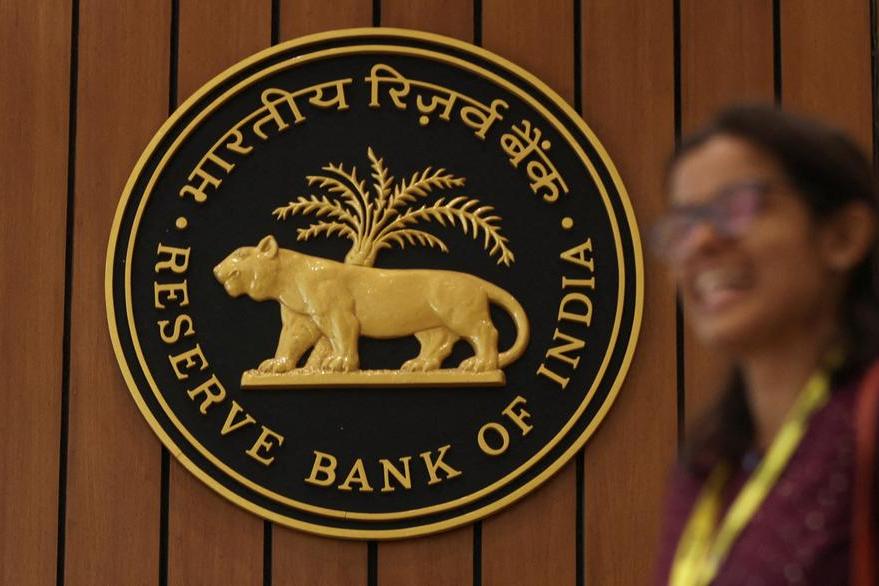
MUMBAI: The Reserve Bank of India (RBI) on Friday kept its key repo rate unchanged as expected on the back of strong economic growth and reduced tariff pressure following the trade deal with the US.
The landmark agreement between Washington and New Delhi announced earlier this week includes lowering U.S. tariffs on Indian imports from nearly 50% to 18%, easing a key pressure point for India’s economy and markets.
The RBI’s six-member Monetary Policy Committee unanimously voted to keep the repo rate at 5.25%, in line with the consensus view in a Reuters poll.
The monetary policy stance remained “neutral,” indicating that interest rates will remain at low levels for some time to come.
Reserve Bank of India Governor Sanjay Malhotra said in a policy statement that despite increased external headwinds, the successful completion of the trade deal with the US bodes well for the economy. He added that inflation remains positive.
Malhotra said the interest rate committee will now take decisions based on the growth and inflation outlook.
The central bank has now cut rates by a total of 125 basis points since February 2025, the most aggressive easing since 2019. At its last meeting in December, it cut interest rates by 25 basis points.
India remains one of the world’s fastest growing major economies, supported by strong domestic demand, public infrastructure spending and a relatively resilient services sector.
Economic growth is expected to be 7.4% this fiscal year, and government economic advisors predict next year’s growth rate will be between 6.8% and 7.2%.
Trade tensions with the United States have been a drag on the world’s fifth-largest economy, with the United States agreeing to lower tariffs on Indian imports in exchange for India to stop buying Russian oil and lower trade barriers.
India’s inflation rate is low, with average inflation expected to be close to 2% this fiscal year, below the central bank’s target of 4%. The retail inflation rate in December was 1.33%, the highest level in three months.
India’s benchmark 10-year bond yield rose by 5 basis points to 6.70% as the Reserve Bank of India made no policy announcements. The rupee remained high at 90.26 rupees against the dollar. Indian stock indexes each fell 0.5%.
Strong growth and stable inflation
The central bank did not provide full-year GDP forecasts for the next fiscal year, as a new data series with changes to the base year and commodity basket will be released soon.
However, the central bank forecasts growth of 6.9% in the April-June period of 2026, followed by 7% in the next three months.
Government economic advisers predict next year’s growth rate will be in the range of 6.8-7.2%.
Recent trade deals, such as the trade deal with the EU and the impending trade deal with the US, will support exports and growth, Malhotra said.
The central bank’s inflation forecast for this fiscal year has been slightly raised to 2.1% from 2%.
Inflation rates in the first and second quarters of next year are expected to be 4% and 4.2%, respectively. Full-year guidance will be released in April, Malhotra said.
India is scheduled to release a new retail inflation data series from February, which will have a low weight on groceries and will use 2023-2024 as the base year.
(Reporting by Jaspreet Kalra and Abhinaya V in Mumbai; Additional reporting by Dharamraj Dutia in Mumbai; Writing by Ira Dugal; Editing by Jacqueline Wong and Mrigank Dhaniwala)
