


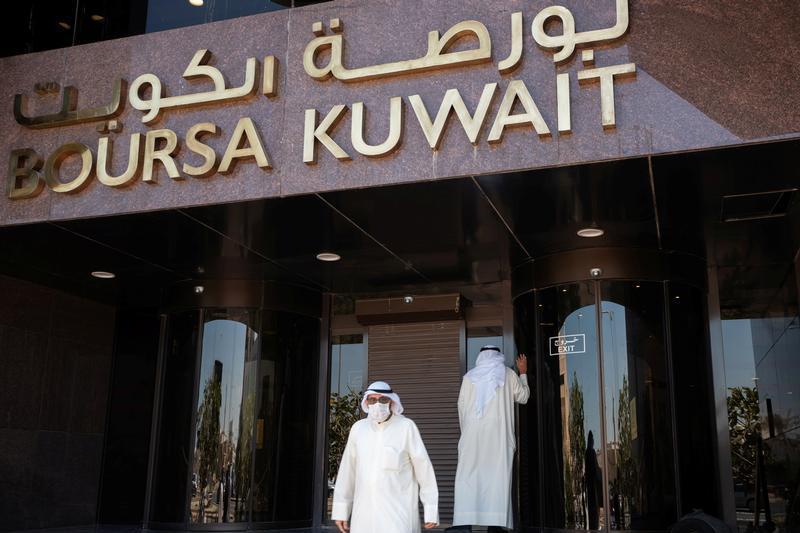
Most Gulf stocks fell on Sunday and Bursa Kuwait suspended trading after a U.S. and Israeli attack on Iran triggered retaliatory attacks on U.S. targets in neighboring cities in the Gulf state, raising concerns that it would prolong instability in the region.
Witnesses reported explosions over the Dubai area and Doha for a second day on Sunday, as Iran’s retaliation for the US and Israeli attack that killed Iranian leader Ayatollah Ali Khamenei forced the closure of major regional airports, including Dubai, in one of the biggest disruptions for the global aviation industry in years.
Trading in Middle East markets is an early indicator of how investors will measure the impact on assets ranging from oil to safe-haven currencies and gold. Barclays analysts on Saturday raised their forecast for Brent crude oil prices to about $100 per barrel from their previous forecast of $80.
In an unusual move, Bursa Kuwait suspended trade until further notice, citing the “exceptional circumstances” facing the country.
In Saudi Arabia, the region’s largest stock market, the benchmark index pared its losses to close 2.2% lower, compared with a 4.6% drop in early trading.
Declining stocks included Al Rajhi Bank’s 3% and low-cost airline Flynas’ 6.9%, marking the largest intraday decline since its IPO in June last year.
Elsewhere, Jabal Omar Development, which operates Jabal Omar, a hotel and real estate complex within walking distance of the Grand Mosque in Mecca, Islam’s holiest city, fell 2.6%.
Saudi shipping company Bahri fell 4.2%. But oil giant Saudi Aramco rose 3.4%, its biggest intraday gain in more than four months amid expectations for higher oil prices.
Saudi Arabia announced on Saturday that Iran had attacked Riyadh and the country’s eastern region.
“The GCC market is likely to remain under pressure as investors price in the potential for higher and longer geopolitical risk premiums following the recent escalation in regional conditions,” said Tahir Abbas, head of research at Ubar Capital in Oman.
“While higher oil prices provide a short-term financial cushion for local governments, a more significant concern is the risk that shipping routes, particularly through the Strait of Hormuz, will be affected, which will have far-reaching implications for energy flows and trade.”
XTBMENA Senior Market Analyst Hani Abuagra said Gulf stock markets face correction risks and increased volatility as geopolitical tensions drive a risk-off mood and weigh on prices and expectations.
Investors will be tracking developments in the region, but any further escalation or damage to the real economy could deepen the decline, he said.
The Muscat stock index narrowed its decline to 1.4% after falling more than 3% in a broad decline. Bahrain’s stock index fell 1% and Qatar’s stock exchange was closed for the holiday.
Outside the Gulf, Egypt’s blue-chip index fell 5.5% in early trade before settling 2.5% lower. Abuagra said disruption to shipping traffic through the Strait of Hormuz also remained a major risk, weighing on sentiment and disrupting normal operations in various sectors.
Saudi Arabia down 2.2% to 10,479 Egypt down 2.5% to 47,984 Bahrain down 1% to 2,040 Oman down 1.4% to 7,289 (Reporting by Ateeq Shariff in Bengaluru; Editing by Christopher Cushing and Ros Russell)
