


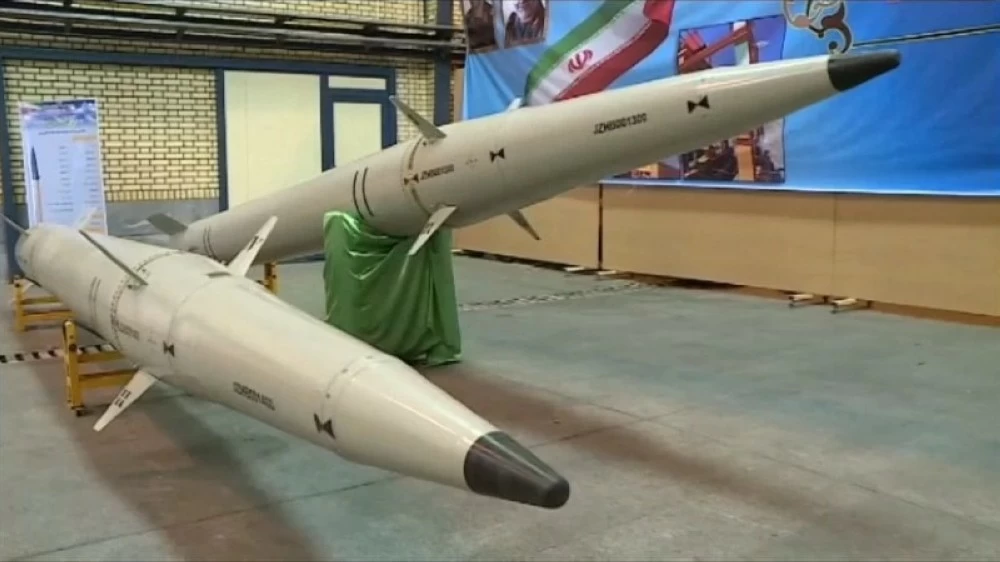
Iran reiterated that the “ballistic missile” issue is not a subject for discussion in negotiations with the United States.
Iran’s Defense Council Secretary Ali Shamkhani today (Saturday) stressed that the missile system is within the red line and non-negotiable, Fars Agency reported. He stressed that his country would respond strongly, firmly and proportionately to any adventure targeting its country. Shamkhani believed that Israel could not take any action without direct US support.
Iran has announced multiple times that its negotiations with the United States are limited to the nuclear file, and has emphasized that it cannot negotiate on ballistic missiles and their defense capabilities because they are sovereignty issues.
The US administration has repeatedly hinted at the need to discuss the issue of Iranian ballistic missiles and Iran’s support for Iranian proxies in the region.
Israel called for the potential agreement between Tehran and Washington to be expanded to include nuclear weapons (missiles and armed groups), given that any agreement outside of these issues would be useless.
However, after speaking with Israeli Prime Minister Benjamin Netanyahu a few days ago, US President Donald Trump confirmed that he was now fully committed to nuclear negotiations, but threatened to open up military options if the negotiations did not lead to a result, saying: “If there is no deal, very bad things will happen.”
Iranian Foreign Minister Abbas Arakchi is scheduled to travel to Geneva next Tuesday for new talks with a US delegation led by Special Envoy Steve Witkoff and Special Envoy Jared Kushner.
Iran reaffirmed that the “ballistic missile” issue is not up for discussion during negotiations with the United States.
According to Fars news agency, Ali Shamkhani, secretary of Iran’s Supreme Council for National Security, today (Saturday) stressed that the missile system is within the red line and is non-negotiable. He confirmed that he would respond with strength, resoluteness and proportionality to any adventure targeting his country. Shamkhani believed that Israel could not take any action without direct US support.
Iran has repeatedly stated that negotiations with the US are limited to the nuclear file, and has stressed that ballistic missiles and their defense capabilities cannot be negotiated because they are a matter of sovereignty.
The US administration has repeatedly hinted at the need to discuss Iran’s ballistic missile issue and support for Iranian proxies in the region.
Israel, on the other hand, is calling for a potential agreement between Tehran and Washington to be expanded, along with nuclear issues (missiles and armed groups), given that any agreement outside of these issues would be ineffective.
However, after speaking with Israeli Prime Minister Benjamin Netanyahu a few days ago, US President Donald Trump confirmed that he was currently working on nuclear negotiations, but threatened to take military action if the negotiations yielded no results, saying: “If there is no deal, very bad things will happen.”
Iranian Foreign Minister Abbas Araghchi is scheduled to travel to Geneva next Tuesday for new talks with a US delegation led by Special Envoy Steve Mnuchin and Special Envoy Jared Kushner.
