

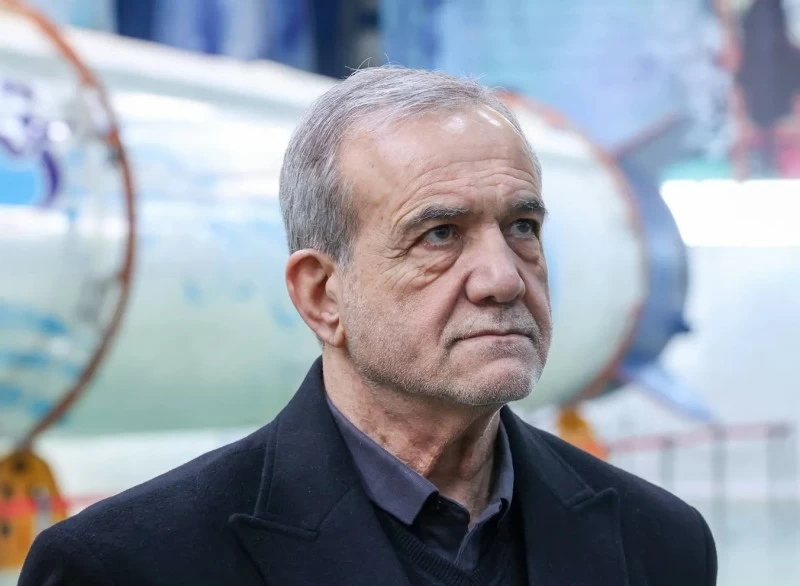
Iranian President Masoud Pezeshkian announced today (Saturday) that his country will not bow to pressure from world powers in light of nuclear negotiations with the United States.
“The world powers are lining up to force us to bow down, but despite all the troubles they are bringing us, we will not bow down,” Pezeshkian said in a speech broadcast on Iranian state television. “Despite all the difficulties and problems, we will not give in to any adversity, we will endure hardships, and the final victory will be ours.”
The development of a major U.S. military reinforcement in the Middle East has cast a shadow over indicators of nuclear negotiations between the United States and Tehran, even as Iran announced its intention to submit a draft of a new deal to the administration of U.S. President Donald Trump within days.
Officials believed the possibility of a conflict had increased even though the United States had given Iran no more than 15 days to reach an agreement on its nuclear program.
The US government is stepping up its military deployment to the Middle East, making it the largest deployment of US forces since the 2003 invasion of Iraq.
U.S. and Iranian officials, as well as diplomats from the Middle East and Europe, expressed concern about the possibility of war and emphasized that Iran and the United States are moving rapidly toward military conflict.
As hopes for a diplomatic solution to reach a new deal on Iran’s nuclear program fade, officials have stressed that conflict is now more likely than a settlement to be reached.
Iranian President Masoud Pezeshkian announced today (Saturday) that his country will not bow to pressure from world powers amid nuclear negotiations with the United States.
“World powers are colluding to force us to bow down, but despite all the troubles they have brought us, we will not bow down,” Pezeshkian said in a speech broadcast by Iranian state television. “Despite all the difficulties and problems, we will not give in to any test, we will stand firm against adversity, and the final victory will be ours.”
The development of a major American military buildup in the Middle East has cast a shadow over indicators of nuclear negotiations between the United States and Tehran, even as Iran announced its intention to submit a draft of a new deal to President Donald Trump’s administration within days.
Officials deemed a conflict more likely, even though the United States gave Iran a 15-day deadline to reach an agreement on its nuclear program.
The US government is increasing its military presence in the Middle East, marking the largest deployment of US troops since the 2003 invasion of Iraq.
U.S. and Iranian officials, as well as diplomats from the Middle East and Europe, have expressed concern about the possibility of war and confirmed that Iran and the United States are moving rapidly toward military conflict.
As hopes for a diplomatic solution leading to a new deal over Iran’s nuclear program fade, officials have confirmed that conflict is now more likely than a resolution.
