


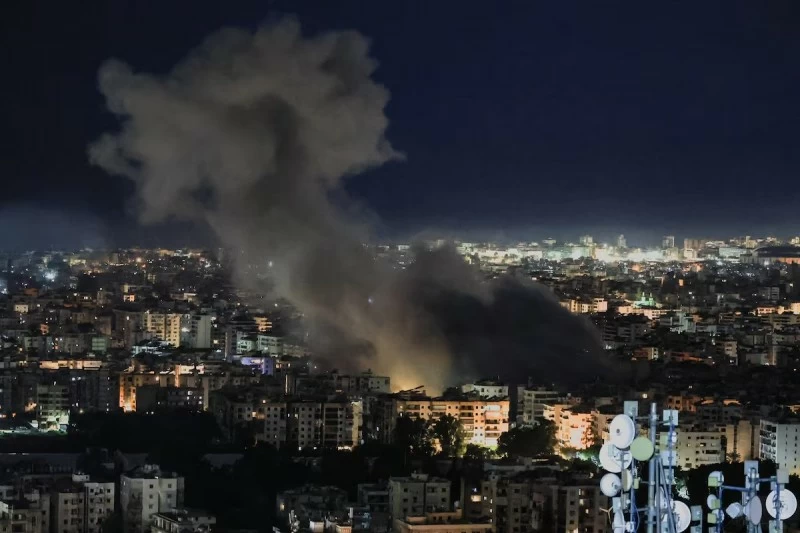
The war between Iran, on the one hand, and the United States and Israel, on the other, enters its seventh day, and the pace of military and political escalation in the region is accelerating, amid exchanges of airstrikes and an expansion of the conflict to include several countries in the Middle East and beyond.
US President Donald Trump said the US wants to play a role in determining Iran’s future leadership after Iranian Supreme Leader Ayatollah Khamenei was killed in a US-Israeli airstrike over the weekend.
President Trump rejects Khamenei’s son
In a statement to Reuters, President Trump suggested that Mojtaba Khamenei, the son of late Supreme Leader Ali Khamenei and considered one of the frontrunners to succeed him, was an “unlikely” or “unacceptable” choice amid the escalating war between the United States, Israel and Iran, which has been going on for days, and stressed that Washington wants to participate in deciding who will lead Iran in the future.
“We want to participate in the process of choosing someone who will lead Iran into the future, someone who will be great for the people and the country,” Trump said, adding that he did not intend to repeat the same process every five years, expressing his desire for “great” leadership for Iran.
encourage the Kurds to launch an attack
President Trump also encouraged Iranian Kurdish forces to launch an attack, saying, “I think it’s great that they want this, and I completely agree with him.” While he did not say whether the United States would provide air cover for the Kurdish operation, the Trump administration acknowledged the existence of contacts with Iranian Kurdish groups since the joint U.S.-Israeli offensive began.
Mutual bombing and war escalation
On the ground, Israel announced new attacks inside Iran, including areas east of the capital Tehran. Iranian media reported that explosions were heard in several parts of the capital, and state television said an airstrike killed 17 people on a guesthouse on a road northwest of Tehran.
The ongoing war has killed more than 1,230 people in Iran so far, including 175 girls and staff at an elementary school in the country’s southern Minab region on the first day of the outbreak, according to the Iranian Red Crescent Society.
Warnings and attacks in some countries
Israeli attacks continue in areas east and north of Tehran, including attacks on oil refineries in Bahrain and drone attacks on Kurdish rebel camps in Iraqi Kurdistan and oil fields operated by US companies, along with Iranian attacks on Israel, the UAE, Qatar and Bahrain, warning residents to evacuate and explosions heard in the capital.
Azerbaijan entered crisis line after accusing Iran of launching a drone into its territory and announcing a 12-hour closure of its southern airspace, which Tehran denies.
Human losses and widespread evacuations
In Lebanon, the health ministry announced the killing of 77 people and thousands of residents fled the southern suburbs following an Israeli warning to evacuate some areas.
the battle isn’t over
Meanwhile, Israeli Prime Minister Benjamin Netanyahu said that although Israel had achieved great results in its military operations inside Iran, “many tasks remain before us.”
Sources revealed that Israel is preparing to move into the second phase of its military operation targeting Iran’s underground missile caches. Tel Aviv also confirmed that it has so far destroyed about 60% of Iran’s ballistic missile launchers.
Iran threat and escalation
Meanwhile, Iran’s Revolutionary Guards said it had targeted a U.S. oil tanker in the northern Gulf after the ship caught fire. The Iranian government also vowed to respond to the sinking of an Iranian warship off the coast of Sri Lanka by a US submarine, killing 80 crew members.
Iranian Foreign Minister Abbas Araqchi threatened that the US would “strongly regret” the precedent of sinking a ship in international waters without warning, and Qaymars Heydari, a senior commander in the Revolutionary Guards, said: “We are determined to fight the US wherever he is.”
global economic turmoil
On the economic front, the effects of the war began to become apparent after military operations disrupted approximately one-fifth of the world’s oil and liquefied natural gas supplies, along with disruptions to air traffic and international supply chains.
The war between Iran on the one hand and the United States and Israel on the other is entering its seventh day, and the pace of military and political escalation in the region is accelerating amid mutual airstrikes and an expansion of the scope of the conflict to include countries in the Middle East and beyond.
US President Donald Trump said the US wants to play a role in determining Iran’s future leadership after Iran’s Supreme Leader Ayatollah Khamenei was killed in a US-Israeli airstrike earlier this week.
President Trump rejects Khamenei’s son
In a statement to Reuters, President Trump confirmed that the United States wants to participate in deciding who will lead Iran in the future, saying Mojtaba Khamenei, the son of late Supreme Leader Ali Khamenei, who is considered one of the leading candidates to succeed him as the ongoing war between the United States, Israel and Iran escalates, is an “unlikely” or “unacceptable” choice.
“We want to be involved in the process of choosing someone who will lead Iran into the future, someone who will be great for the people and the country,” Trump said, adding that he did not intend to repeat the same process every five years, expressing his desire for “great” leadership for Iran.
Encourages Kurds to launch attack
Trump also did not say whether the United States would provide air cover for the Kurdish operation, saying, “I think it’s great that they want to do that, and I’m totally on board with them,” and encouraged Iranian Kurdish forces to launch an attack, while the Trump administration confirmed the existence of communications with Iranian Kurdish groups since the beginning of the joint U.S.-Israeli offensive.
Mutual bombardment and escalation of war
On the ground, Israel announced new airstrikes into Iran, including areas east of the capital Tehran, with Iranian media reporting explosions could be heard in several parts of the capital, while state television reported that 17 people were killed in an airstrike targeting a guesthouse on a road northwest of Tehran.
The ongoing war has so far killed more than 1,230 people in Iran, including 175 students and teachers at an elementary school in Minab district in the country’s south on the first day of the outbreak, according to the Iranian Red Crescent Society.
Warnings and attacks in some countries
Israeli attacks on areas in eastern and northern Tehran continued, warning residents to evacuate and explosions heard in the capital. This coincides with Iranian attacks on Israel, the UAE, Qatar, and Bahrain, including damage to an oil refinery in Bahrain and drone attacks on Kurdish rebel camps and oil fields operated by American companies in Iraqi Kurdistan.
Azerbaijan also joined the fray after accusing Iran of launching drones into its territory and announcing a 12-hour closure of its southern airspace, a charge Tehran denies.
Increased human losses and evacuations
In Lebanon, the health ministry announced 77 deaths and thousands of residents were evacuated from the southern suburbs following an evacuation order for certain areas in Israel.
the battle isn’t over
Meanwhile, Israeli Prime Minister Benjamin Netanyahu said that Israel had made significant achievements in military operations inside Iran, but said: “We still have many challenges ahead of us.”
Sources revealed that Israel is preparing to move into the second phase of a military operation targeting Iranian underground missile shelters, with Tel Aviv confirming that it has so far destroyed about 60% of Iran’s ballistic missile launch pads.
Iran threat and escalation
In contrast, Iran’s Revolutionary Guards said it had targeted a U.S. oil tanker in the northern Gulf, causing it to catch fire, and Tehran said it would respond to the sinking of an Iranian warship by a U.S. submarine off the coast of Sri Lanka, killing 80 crew members.
Iranian Foreign Minister Abbas Araghchi threatened that the United States would “deeply regret” the precedent of sinking a ship in international waters without warning, and Keymars Heydari, a senior commander in the Revolutionary Guards, said: “We have decided to fight wherever the United States is.”
global economic turmoil
On the economic front, the effects of the war are becoming clear, with military operations disrupting air traffic and international supply chains, as well as disrupting approximately one-fifth of the world’s oil and liquefied natural gas supplies.
