

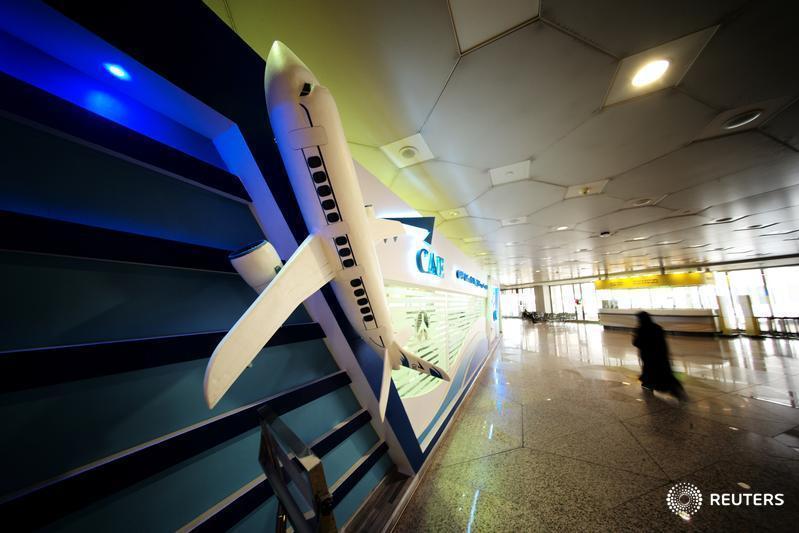
Dammam’s King Fahd International Airport, recognized by the Guinness Book of World Records as the world’s largest airport by area, has installed a state-of-the-art navigation system, becoming Saudi Arabia’s first Category III instrument landing system upgrade.
The system allows aircraft to automatically land in low visibility and foggy conditions, improving flight continuity, operational efficiency and safety reliability, writes Faustine Ngila of Impact Newswire.
The project is supported by a $426.5 million investment package that includes 77 infrastructure projects. The upgrade is being driven by a surge in demand, with the airport recording a 35% increase in passenger numbers by the end of 2024 compared to 2022, and the strategic master plan aims to double its annual passenger capacity to more than 19.3 million by 2030 compared to 2022.
Eastern Province Governor Prince Saud bin Naif bin Abdulaziz on Monday inaugurated both the general aviation terminal and the ILS upgrade, highlighting the airport’s extensive modernization efforts.
Spread over 23,000 square meters, the terminal is designed to streamline operations, facilitate faster passenger processing and improve the overall travel experience. The facility includes 12,415 square meters of aircraft parking that can accommodate up to four aircraft simultaneously and 6,665 square meters of parking with support services to ensure smooth traffic flow and international standard services.
The project also upgraded the western runway to 4,000 meters and added an additional 4,000 meters of taxiway, all equipped with more than 3,200 advanced lighting units integrated into an integrated system. These enhancements are aimed at increasing passenger capacity and accommodating a wider range of aircraft types, in line with the goals of Saudi Arabia’s National Transport and Logistics Strategy.
Abdulaziz bin Abdullah Al Duaireij, President of the General Directorate of Civil Aviation, said the aviation plan reflects the goals of Vision 2030, which is to establish the Kingdom as a global logistics platform connecting three continents, an international destination for tourism and business, and the Middle East’s leading aviation hub.
“This embodies the ambitious goals of Vision 2030,” said Al Duailei. The authority is also working to develop and attract investment in the general aviation sector by strengthening the regulatory framework, bringing in world-class companies such as Universal Aviation to operate terminals at Jeddah’s King Fahd International Airport and King Abdulaziz International Airport.
Mohammed bin Ali Al Hasani, CEO of Dammam Airport, described the new terminal and ILS upgrade as a “huge leap forward for Saudi airports.” He noted that the success of the project depended on close collaboration between GACA, Saudi Airports Holding Company, Dammam Airport, National Meteorological Center and Saudi Air Navigation Services Company to ensure operational readiness, safety and efficiency.
Dammam Airport manages three airports in the Eastern Province, including King Fahd International Airport, Al Ahsa International Airport, and Qaisma Airport in Hafar Al Batin.
Gregory Evans, Chairman of the Board of Universal Weather and Aviation, said the General Aviation Terminal will provide Saudi Arabia with its first dedicated civil aviation hangar and provide secure, temperature-controlled aircraft storage.
Evans noted the speed of implementation in Dammam, adding that additional hangars are also planned in Jeddah and Riyadh. “We’re actually working on three projects at the same time. Riyadh and Jeddah are underway. The first one is Dammam because the people at DACO work very quickly. I wouldn’t say I chose Dammam. Dammam chose us.”
All these upgrades are reflected in Saudi Arabia’s National Aviation Strategy. For KFIA in particular, future expansion is projected to increase aircraft movement capacity to 77 aircraft per hour and annual passenger throughput to 32 million. Air cargo handling is targeted to increase to 600,000 tonnes per year, a tenfold increase and positioning the airport as a major logistics hub for the region. In 2023 alone, KFIA recorded a 16.2% annual increase in passenger numbers, underscoring the urgency and scale of these investments.
The renovation of King Fahd International Airport marks a broader push to modernize Saudi Arabia’s aviation infrastructure, positioning the kingdom to accommodate growing passenger numbers, expand civil aviation services, and strengthen its role as a regional hub for international travel and logistics.
Copyright 2026 Al Hilal Publishing and Marketing Group Provided by SyndiGate Media Inc. (Syndigate.info).
