


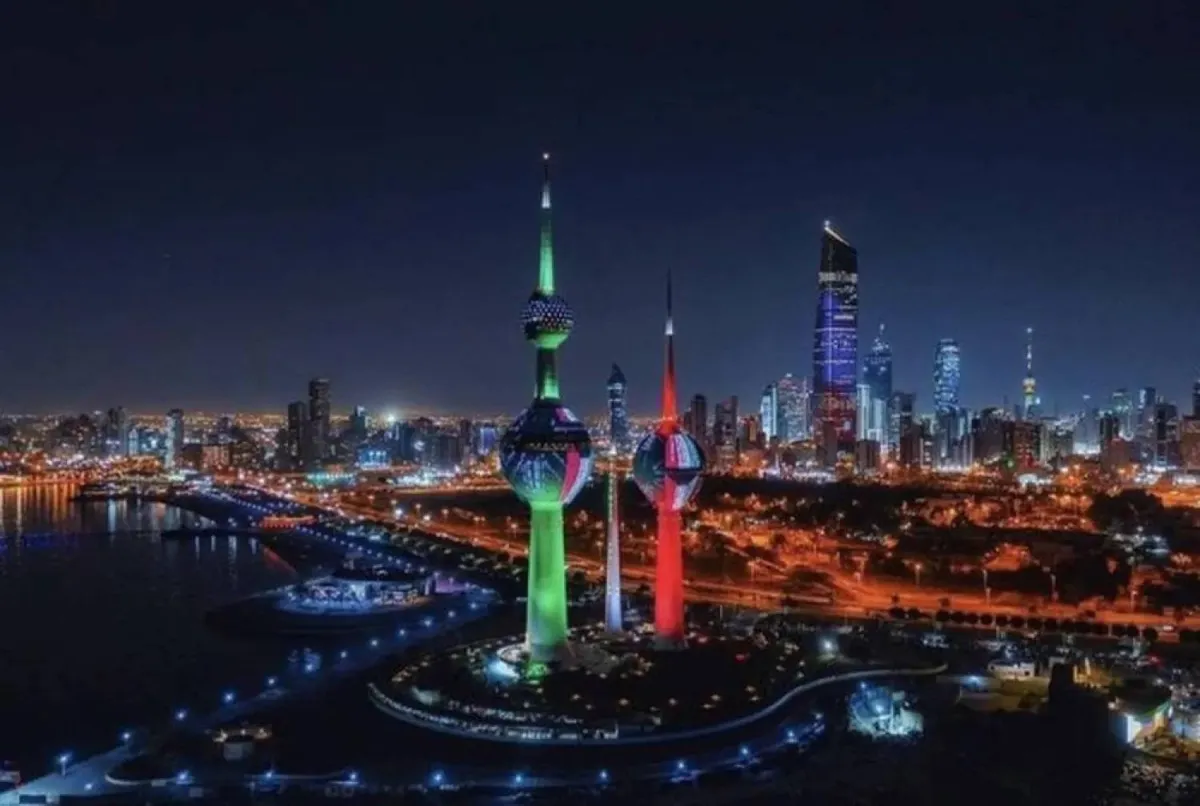
Kuwait on Wednesday celebrated its 65th anniversary of independence (National Day) and the 35th anniversary of Liberation Day, which marks the country’s liberation from the invasion of Iraq on August 2, 1990. Liberation was achieved on February 26, 1991.
Kuwait gained independence from Britain on June 19, 1961. On that day, the late Sheikh Abdullah Al-Salem Al-Sabah, the 11th Ruler of Kuwait, signed the Instrument of Independence on behalf of his government with the British High Commissioner to the Arabian Gulf, Sir George Middleton. The move would nullify an 1899 agreement signed by Kuwait’s seventh ruler, Sheikh Mubarak al-Sabah, with Britain to protect the country from external threats.
On May 18, 1964, in honor of his pivotal role in securing Kuwait’s independence, it was decided to merge Independence Day on June 19 with February 25, the anniversary of the inauguration of President Sheikh Abdullah Al-Salem Al-Sabah. Since then, Kuwait has celebrated its National Day on February 25 every year.
strong economic performance
This year’s 65th National Day comes as Kuwait records impressive economic development. A report published by the Statistics Center of the Gulf Arab States Cooperation Council, entitled “The Kuwaiti State: Deep Foundations and Steps for the Future,” highlights unprecedented fiscal and investment surpluses.
Kuwait has achieved record fiscal and investment surpluses, supported by the strength of its sovereign wealth fund, which has more than $1 trillion in assets, according to the report. Furthermore, the banking sector has assets of over 100 billion Kuwaiti dinars (approximately $326 billion), reflecting the resilience of the financial system and the continued confidence of international institutions in the national economy.
The Kuwait Stock Exchange recorded a profit of over 9.6 billion Kuwaiti dinars (approximately $32 billion), underscoring the attractiveness of the investment environment and the growing confidence of investors within and outside the region.
Kuwait ranks 19th in the world on the National Brand Value Index, with the national brand accounting for approximately 9% of GDP, one of the highest ratios in the world.
The country is also among the world’s top 10 in the 2025 Global Innovation Index (GII), supported by advances in digital infrastructure, 5G technology, mobile internet speeds, government digitization and digital workforce efficiency.
Kuwait’s sovereign credit rating remains in the high rating category with a stable outlook, further strengthening its global economic position.
Saudi-Kuwait relations
For more than 130 years, Saudi-Kuwaiti relations are firmly rooted in a common history and a close relationship built on common interests and long-standing positions.
Kuwait was the first country Saudi Arabia’s Crown Prince Mohammed bin Salman visited after becoming crown prince. He visited in May 2018 and again on September 30, 2018.
Similarly, Saudi Arabia was the first foreign destination for Emir Mishal al-Ahmad al-Jaber al-Sabah, who assumed power as emir of Kuwait. On January 30, 2024, he made his first official overseas visit to Saudi Arabia since ascending the throne.
Joint efforts between Saudi Arabia and Kuwait continue to strengthen cooperation in line with the two countries’ strategic visions, Saudi Vision 2030 and Kuwait Vision 2035, which aim to expand cooperation across economic, security, cultural, sports and social sectors.
Among the key milestones was the signing in December 2019 of a supplementary agreement to the agreement governing the Divided Neutral Zone and adjacent offshore waters between the two countries, paving the way for both countries to resume oil production.
