


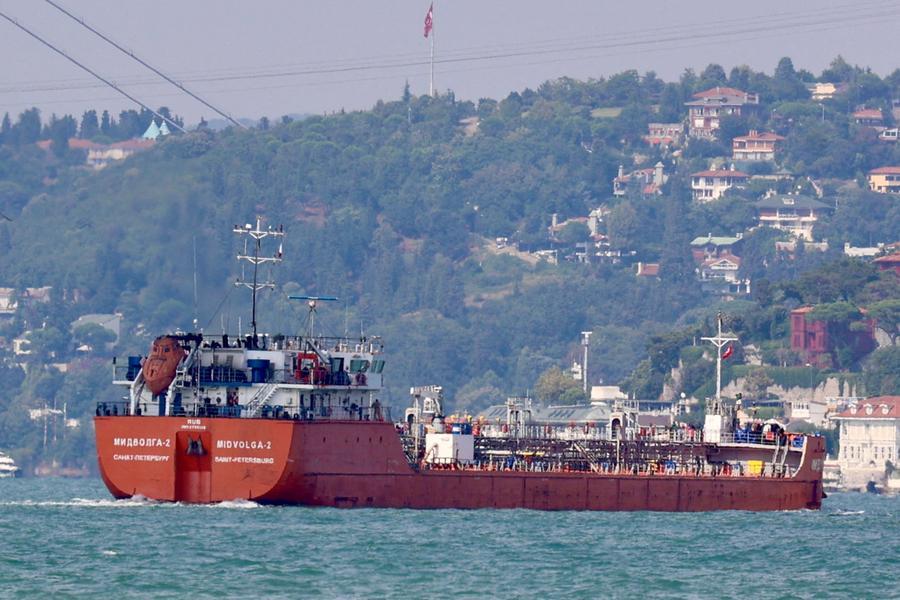
Marine insurance companies are cutting off war risk coverage for vessels and oil shipping rates are expected to rise further after the escalating Iranian conflict has damaged at least three tankers, killed one sailor and stranded 150 ships in the Strait of Hormuz.
Iran has responded to the U.S. and Israeli attacks that began on Saturday with retaliatory strikes, and risks to commercial shipping have sharply increased in the past 24 hours.
At least 150 vessels, including oil tankers and liquefied natural gas tankers, were anchored in the Strait of Hormuz and surrounding waters, shipping data showed on Sunday.
Typically, ships carrying oil from Saudi Arabia, the United Arab Emirates, Iraq, Iran and Kuwait, representing about a fifth of global demand, sail through the strait along with tankers carrying diesel, jet fuel, gasoline and other products.
The disruption caused global oil prices to rise 9% on Monday.
Insurance company cancels war risks coverage
Companies including Gard, Skuld, NorthStandard, London P&I Club and American Club announced that the cancellations will take effect from March 5, according to notices dated March 1 on their websites.
According to the notification, risks of war coverage is excluded in Iranian waters, the Gulf and adjacent waters.
Skuld added in the notice that it is working on a buyback option to restore cover.
Japan’s MS&AD Insurance Group told Reuters it had stopped writing a series of insurance policies covering war risks in waters around Iran, Israel and neighboring countries.
Oil transportation costs will rise further
Meanwhile, the cost of shipping crude oil from the Middle East to Asia, already at a six-year high, is expected to rise further as the escalating conflict with Iran deters shipowners from sending vessels to the region, market participants and analysts said on Monday.
Spot freight rates from the Middle East to Asia, commonly known as TD3C, are expected to rise further, shipbrokers said. The benchmark has nearly tripled since the beginning of 2026.
Brokers early Monday set spot rates for hiring ultra-large crude carriers on Asia’s key Middle East-to-China route about 4% higher than on Friday, equivalent to nearly W225 by global industry standards, or at least $12 million.
exponential rise
Emril Jamil, senior analyst at LSEG, said: “TD3C rates were rising exponentially before the attack and will continue to rise as countries scramble to meet their energy needs.”
Although there is still much uncertainty about what final rates will be on Monday, all Middle East loading routes are expected to remain strong, the shipbroker said. They declined to give their names because they were not authorized to speak to the media.
Meanwhile, the market will need more vessels capable of loading crude oil from the United States and West Africa on long voyages and supporting cargo on those routes, shipping company officials said.
(Reporting by Emily Chow and Jeslyn Lerh; Additional reporting by Trixie Yap and Ruth Chai in Singapore; Reporting by Nidhi Verma in New Delhi; Editing by Florence Tan, Sonali Paul and Jamie Freed)
