


In an unprecedented move to extend the life of a space mission spanning more than 20 years, NASA announced it would suspend most scientific operations at the Swift Observatory, a space telescope specialized in monitoring gamma-ray bursts, to slow orbital decay and prevent rapid fall into Earth’s atmosphere.
In an official statement, NASA said the 21-year-old observatory was rapidly losing orbital altitude due to increased solar activity during the 25th solar cycle, leading to an “expansion” of the upper atmosphere and increased atmospheric drag.
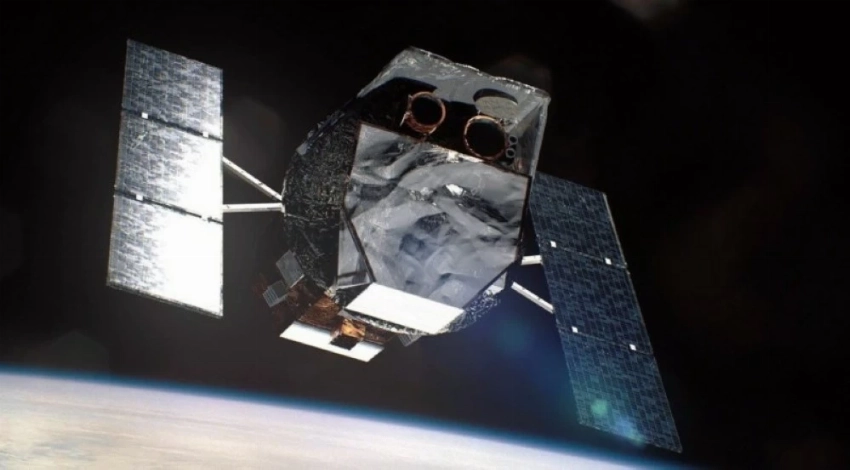
The observatory’s average altitude dropped to less than 400 kilometers in early February 2026. This means that without intervention, there was a 90% chance that it would have entered the atmosphere uncontrolled by the end of the year and burned up completely during the fall.
Preserve rather than abandon observatories
The observatory’s mass is only about 1.4 tons, so a complete burn would pose little danger to Earth, but NASA took a more ambitious path and saved the observatory rather than abandon it.
The agency has signed a $30 million contract with an American company in Arizona to carry out orbit-raising missions using a robotic vehicle called Link. This pioneering mission is scheduled to launch in the summer of 2026, lifting Swift into a higher, more stable orbit of around 600 km, which could allow him to undertake several more years of scientific research.
During the current outage, the gamma-ray burst detector will continue to operate to warn of space explosions, but the other two X-ray telescopes and the ultraviolet-visible telescope will not move quickly to the target in order to maintain a constant orientation that reduces atmospheric drag as much as possible and buy time until the rescue mission arrives.
historic mission
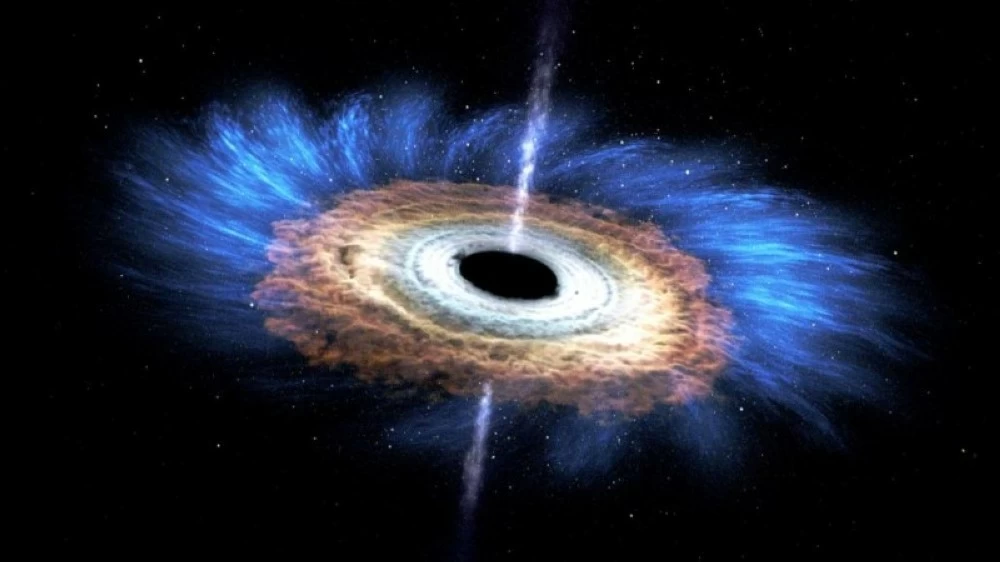
Swift Observatory was launched on a Delta rocket on November 20, 2004, and is specifically designed to rapidly respond to gamma-ray bursts, the most powerful explosions known in the universe since the Big Bang.
Thanks to his ability to quickly direct within seconds, Swift helped discover hundreds of explosions, connected them with phenomena such as the collapse of giant stars and neutron star mergers, and helped understand the origin of heavy elements in the universe, such as gold and platinum.
The observatory also observed many exploding stars (supernovae) and other high-energy objects, achieving results that far exceeded scientists’ expectations.
