

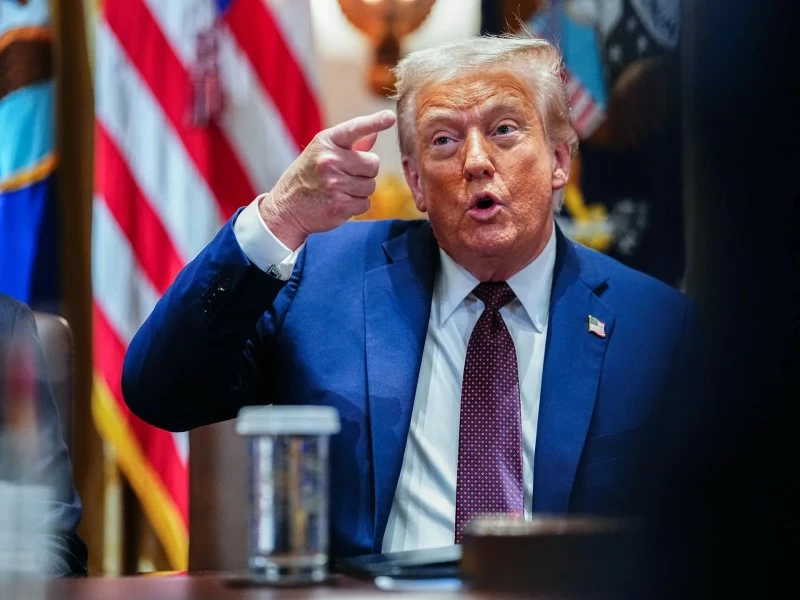
Today (Saturday), US President Donald Trump announced an immediate increase in global tariffs from 10% to 15% in response to the US Supreme Court’s decision invalidating previous tariffs imposed under the Emergency Economic Act.
“As President of the United States, I will immediately increase the 10% worldwide tariffs announced yesterday to the legally permissible level of 15%,” Trump said in a post on the Truth Social platform, adding that many countries “stole” America by not responding for decades until President Trump came along.
The announcement came a day after President Trump imposed 10% tariffs worldwide under Section 122 of the Trade Act of 1974. The article allows for temporary tariffs of up to 15% for 150 days to be imposed to address “large and serious payment shortfalls” and prevent the dollar from depreciating in international markets.
President Trump described the Supreme Court’s decision as “un-American” and stressed that the new tariffs would be imposed on top of existing trade tariffs.
The announcement raised concerns about the global economy, as it is expected to lead to higher prices for U.S. imports and trade reactions from countries such as China and the European Union, which could hamper global economic growth given continued geopolitical tensions.
In his second term, which began in January 2025, President Trump sought to restore the protectionist trade policies he implemented from 2017 to 2021, with a focus on imposing “reciprocal” tariffs to counter what he called “exploitation of America by other countries,” promote domestic manufacturing, and reduce the trade deficit.
In April 2025, President Trump issued an executive order imposing sweeping tariffs on all imports, starting at 10% and rising to 50% in some countries such as China, and up to 25% in Canada and Mexico due to the drug crisis, based on the International Economic Emergencies Act of 1977, which gives the president broad powers in the event of a “national emergency.” The law gives the president broad powers in the event of a “national emergency,” but does not explicitly mention “tariffs.”
These tariffs led to lawsuits from importers and companies, which ended with a February 20 Supreme Court ruling. The law does not give the president the power to impose tariffs because taxing imported goods is the exclusive jurisdiction of Congress under the Constitution.
The judicial decision invalidated the fees, potentially leading to billions of dollars in restitution claims, with some media estimates suggesting the amount could reach $130 billion.
