


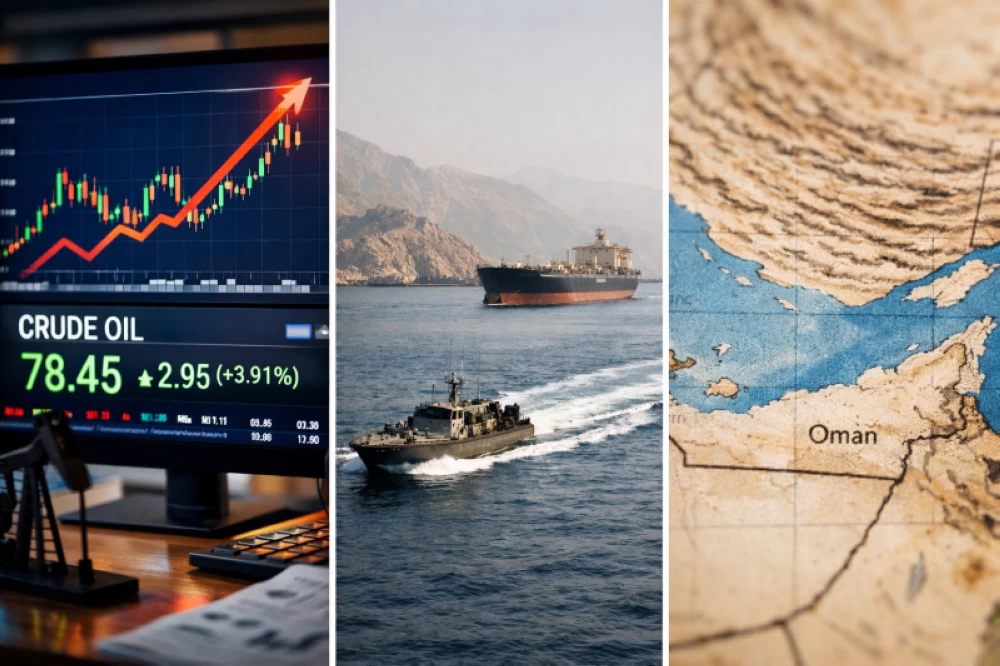
Following the Iranian attacks that affected the Gulf region, the global oil market has entered a new phase of pricing. The world’s energy trajectory has shifted from supply and demand calculations to geopolitical security equations and stability of supply.
Military tensions have returned oil to its traditional position as a key indicator of risk levels in the Middle East region, which represents the center of gravity for global energy exports.
Before the oil price spike, Brent crude was relatively stable, hovering around the $72 per barrel level, but military developments have caused investors to reassess risk and add what is known as a war premium. War premiums are price increases associated with possible production disruptions or threats to maritime shipping routes. Energy market analysts believe that the market has entered a sensitive stage controlled by security factors in the Gulf and important sea lanes.
Energy experts estimate that under a base-case scenario, oil prices will reach $80 a barrel in the short term, with tensions continuing without actual supply disruptions. A moderate escalation scenario related to expanded military operations and increased insurance risk for oil tankers could push prices into the $85 to $90 per barrel range.
If Strait of Hormuz navigation is exposed to any direct disruption, the market could witness a sharp rise above the $100 barrier as a result of the global supply shock.
Saudi economic advisor Eid al-Eid told Okaz that the oil market has indeed entered a “war economy” phase, with political geography being the main driver of prices, predicting that oil prices will soon rise to the $80 level and that risk premiums will remain high. He added that if threats to the energy corridor continue, the upward trend will strengthen and give further momentum to prices beyond previous expectations.
He added: “Energy markets confirm that oil has returned as a direct mirror of the regional military balance.” While any escalation in any sector immediately raises prices, and any subsidence returns markets to temporary stability, developments in the Gulf region remain a decisive factor in shaping the direction of energy and the global economy in the next phase.
As the world’s energy trajectory shifts from demand and supply calculations to geopolitical security and stability of supply equations, global oil markets have entered a new phase of pricing following Iranian attacks targeting the Gulf region.
Military tensions have returned oil to its traditional position as a key indicator of risk levels in the Middle East region, the center of gravity for global energy exports.
Before the oil price spike, Brent crude had been in a relatively stable range, hovering around $72 a barrel, but military developments have caused investors to reassess risk and add so-called war premiums (increased prices associated with potential production disruptions or threats to shipping routes). Energy market analysts believe that the market has entered a sensitive phase controlled by the security of the Gulf and important maritime corridors.
Energy experts estimate that in a base case scenario, oil prices would be at $80 a barrel in the short term, with tensions continuing with no actual supply disruptions. A moderate escalation scenario related to expanded military operations or increased insurance risk for oil tankers could push prices into the $85 to $90 per barrel range.
If there is a direct disruption to navigation in the Strait of Hormuz, the market could witness a sharp upward wave above the $100 barrier due to a global supply shock.
Eid al-Eid, a Saudi economic advisor, told Okaz that the oil market has effectively entered a “war economy” stage, with geopolitical factors becoming the main driver of prices, and he expects oil prices to reach the $80 level soon, although risk premiums will remain high next quarter. He added that continued threats to the energy corridor will strengthen the upward trend and give further momentum to prices beyond previous expectations.
He added: “Energy markets confirm that oil has returned to being a mirror that directly reflects the regional military balance.” While any escalation in any sector will immediately drive prices higher, and any de-escalation will return markets to temporary stability, developments in the Gulf region will remain a decisive factor in shaping the direction of energy and the next phase of the global economy.
