


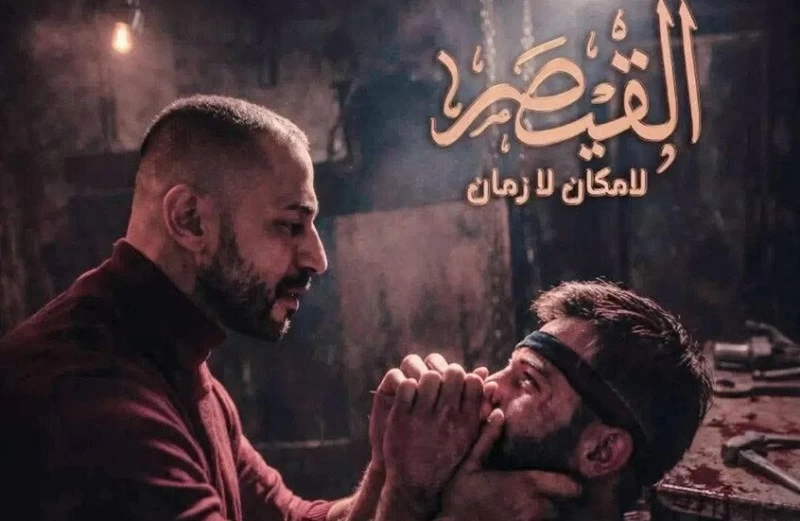
The series “The Caesar: No Place, No Time” has once again made public one of the most secret files in Syria’s memory, sparking controversy between those who see it as a record of the bloody phase and those who consider it an exhumation of wounds that have not yet healed.
Between these two positions, the name “Caesar” resurfaced. Not only as a dramatic character, but also as a real witness, Okazu previously independently revealed his identity and gave his first media interviews as a step to document for public opinion detailed chapters of the story before it becomes a work of art that provokes questions and dissent.
The director answers: What is shown is not more than 1% of the truth.
Syrian director Safwan Namo responded to widespread criticism of the film, stressing that what was shown on screen was “only 1% of the true story.” He explained that the series team met with families of numerous former detainees and witnesses, and that while the stories they heard were “unbearably cruel,” they received dramatic treatment that balanced the requirements of truth and artistic construction.
He noted that he had received repeated threats via phone calls, letters, and communications with outside parties, and noted the degree of sensibility his work evoked, describing them as “criminal messages” that exceeded the limits of art criticism.
Between marketing accusations and crime scene photography
Among the most prominent criticisms leveled at the series are accusations that it exploits tragedy to attract viewers and reopens wounds for the families of the victims. However, Namo stressed that the filming did not take place in real locations, prisons or security departments, but took place entirely in studios and decorations specifically designed to imitate the atmosphere, stressing that these real locations are “crime scenes” that cannot be filmed now or in the future.
Controversy over name and actor choice
The controversy extended to the list of participating actors, as some observers believed that many of them were known for their loyalties to the previous government. Nemo explained that from the beginning, he had been trying to connect with prominent Syrian artists known for their opposition, including Fares al-Helou, Samer al-Masri, Maxim Khalil and Mazen al-Natur, but their artistic ties prevented their participation.
Meanwhile, many artists participated in this work, including the names of Abdul Hakim Khatifan, Nawal Bulbul, Maher Mozouq, Sameer Qarawi and others.
“Okazu” and “Caesar” were previously published
During this discussion, the name “Caesar” returns to the forefront, as he is the most prominent witness to what happened inside the detention center. Okaz was the first media outlet to interview him and his partner Sami, which revealed details of what was then described as a file of torture and murder in the Syrian regime’s prisons.
Okaz is also the only person to reveal the true identity of “Caesar”. First aide Farid Nada al-Madhan has kept his real name secret for four years at his request, but his real name, which is from the city of Sheikh Miskin in rural Daraa, will only be revealed after the fall of Assad’s regime.
The title “Caesar” also has a political dimension, relating to the Caesar Act, which was approved by the US Congress and took effect on June 17, 2020, imposing sanctions on the Syrian regime.
Between drama and memory
Today, while debates over works of art are reignited, deeper questions remain: Can theater convey what written materials cannot? Or is painful memory still greater than any artistic treatment?
The series “Al-Qaisar…No Place, No Time” has once again made public one of the most secret files in Syrian memory, sparking a debate between those who see it as a record of the bloody phase and those who consider it an exhumation of wounds that have not yet healed.
Between these two positions, the name ‘Kaisar’ resurfaced. Not just a dramatic character, but a witness to the truth, its true identity was exclusively revealed by Okazu, who gave the first media interview, documenting a pivotal chapter in the story before it turned into a work of art that provoked questions and dissent.
The director replies: What is shown is only 1% of the truth.
Syrian director Safwan Naimo responded to widespread criticism of the film, asserting that what appears on screen “represents only 1% of the true story.” He explained that the series team met with numerous former detainees and witnesses’ families, and that the stories they heard were “harsh beyond imagination,” but that they received dramatic treatment that balanced truth with the requirements of artistic construction.
He said he had received repeated threats via phone calls and external messages, describing them as “criminal messages” that went beyond the boundaries of artistic criticism and said they were indicative of the level of sensitivity the work provoked.
Between accusations of exploitation and crime scene descriptions
Among the most prominent criticisms leveled at the series were accusations that it exploited tragedy to attract viewers and reopened wounds for the victims’ families. However, Naimo stressed that the filming did not take place in real locations, prisons or security departments, but took place entirely in studios and sets specifically designed to simulate the atmosphere, and claimed that these real locations are “crime scenes” where filming is not possible now or in the future.
Name controversy…and actor choice
Discussion extended to the list of participants, as some observers thought some of them were known for their pro-regime positions. Naimo initially contacted prominent Syrian artists known for their opposing views, including Fares Helou, Sameer Ismail, Maxim Khalil and Mazen Nuttor, but revealed that their artistic endeavors prevented their participation.
In contrast, several artists participated in this work, including names such as Abdulhakim Katifan, Nawal Bulbul, Maher Mazouk, and Sameer Qarawi.
Previous revelations of “Okazu” and “Kaiser”
Amid this debate, the name “Kaiser” comes back to the forefront as the most prominent witness to what happened inside the detention center. Okaz was the first media outlet to interview him and his partner Sami, revealing details of what was then a record of torture and killings inside the Syrian regime’s prisons.
Furthermore, “Okazu” exclusively revealed the true identity of “Kaisar.” The man was Lieutenant Farid Nida al-Madan from the town of Sheikh Maskin in rural Daraa, and at his request he had kept his real name secret for four years, but it was planned to be revealed after the fall of the Assad regime.
The title “Caesar” also has a political dimension, as it relates to the Caesar Act, which was approved by the U.S. Congress and went into effect on June 17, 2020, imposing sanctions on the Syrian regime.
Between drama and memory
Today, as the debate over this work of art reignites, a deeper question remains: Can the drama say what the text fails to say? Or will painful memories remain greater than any artistic treatment?
