


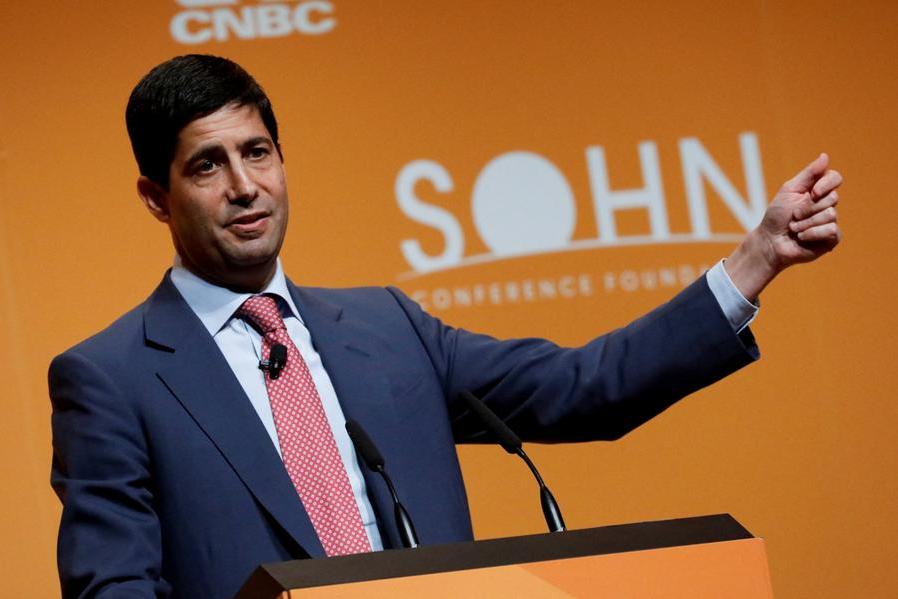
President Donald Trump on Friday selected former Federal Reserve President Kevin Warsh to head the U.S. central bank when Chairman Jerome Powell’s term ends in May. This gives the frequent Fed critic a chance to implement his idea of a “regime change” in monetary policy at a time when the White House is pushing for greater control over interest rate settings.
“I’ve known Kevin for a long time, and I have no doubt that he will go down as one of the great Fed chairs, perhaps one of the best Fed chairs. Above all, he is ‘core casting and never disappoints,'” President Trump said in announcing his latest move to slam the Fed, which he has persistently criticized for not responding to demands for deep cuts in borrowing costs.
After President Trump announced Warsh’s nomination, global stocks rose slightly, while the dollar rose and gold prices fell. The market recognizes Mr. Warsh as a proponent of low interest rates, but will stop well short of the more aggressive monetary easing associated with some of the other potential candidates.
President Trump announced the nomination, which must be confirmed by the U.S. Senate, in a social media post. The president’s schedule for Friday does not list any public events involving the Fed.
The Federal Reserve has long been seen as a stabilizing force in global financial markets because of its perceived independence from politics.
Escalating efforts to test President Trump’s independence, including the Justice Department’s decision to open a criminal investigation into Powell earlier this month, are setting the stage for a difficult Senate confirmation process for his successor.
Republican Sen. Thom Tillis has said he will not support President Trump’s Fed nominee amid the ongoing investigation, while fellow Republican Sen. Lisa Murkowski has called for an investigation into the Fed’s actions.
It also opens the door to the possibility that Mr. Powell, who has argued that the criminal investigation was an excuse to pressure the Fed to make monetary policy decisions in line with the president’s wishes, may choose to remain at the Fed after his term as central bank chief ends to protect it from political capture.
The nomination capped a months-long process that resembled a public audition in which Warsh, White House economic adviser Kevin Hassett and other potential candidates, including current Fed chief Christopher Waller and Wall Street insider Rick Rieder, appeared regularly on television to tout their qualifications and offer their thoughts on the economy and Fed policy.
In August, President Trump nominated economic advisor Stephen Milan to fill the vacant Fed board position, and he has become a leading supporter of the aggressive interest rate cuts that Trump has long called for.
President Trump is also trying to oust Federal Reserve Governor Lisa Cook in a Supreme Court battle that, if successful, would mark the first time a president has fired a policy official at a U.S. central bank.
“This nomination is the latest step in President Trump’s attempt to seize control of the Federal Reserve,” Sen. Elizabeth Warren, the top Democrat on the U.S. Senate Banking Committee, said in a statement, citing the Powell and Cook investigations.
“Republicans who claim to care about the Fed’s independence should not agree to move forward with this nomination until President Trump ends his witch hunt.”
But other Republican senators on the committee said Mr. Warsh was good for the Fed’s independence.
“There is no one better suited to lead the Fed and refocus the central bank on its core statutory mission,” Sen. Bill Hagerty said in a social media post.
Warsh backs broad review of central banks
Although Warsh is not a White House insider, he is a close confidant of the president and a guest at the Florida residence, and appears poised to advance many of Trump’s priorities as the “shadow” Fed chief until Powell’s term as top official ends in mid-May.
Warsh, a lawyer and distinguished visiting fellow in economics at Stanford University’s Hoover Institution, said he believed the president was right to press the central bank to cut interest rates sharply and criticized the Fed for underestimating the potential for productivity growth fueled by artificial intelligence to beat inflation.
He also calls for a major overhaul of the central bank that would slim down its balance sheet and ease banking regulations.
Mr. Warsh, 55, was nearly nominated for the job during President Trump’s first term before being succeeded by Mr. Powell, but since then he has maintained a steady presence in the public eye through speeches and essays that put Mr. Powell and his colleagues in charge of the Fed’s balance sheet, interest rates and other measures.
He will now head a financial institution that he said needs to reduce its impact on the economy and change the way it manages monetary policy. It is not clear how this choice will affect the trajectory of interest rates in the short term.
The Fed will cut interest rates three times in 2025, bringing the base rate to a range of 3.50% to 3.75%. Earlier this week, the central bank left interest rates unchanged, citing strong growth and a stabilizing labor market, hinting at a future pause. Markets are currently not expecting another rate cut until the June 16-17 meeting, when Mr. Powell’s successor is expected to be sworn in.
Mr. Warsh will be in the spotlight as he seeks to prove his independence from the president, given his background on Wall Street as a partner in the firm that managed the wealth of major investor Stanley Druckenmiller and his family ties to Ron Roeder, a major supporter of Mr. Trump.
Mr. Warsh, who served on the Fed’s board from 2006 to 2011, was familiar with Wall Street executives and investors and became then-Fed Chairman Ben Bernanke’s primary point of contact to the financial world during the 2007-2009 financial crisis.
Although he did not oppose Bernanke’s massive bond purchases to rescue the economy from a prolonged recession, he eventually resigned because he feared they would fuel inflation.
Although Mr. Warsh’s inflation concerns turned out to be misplaced, the size of the Fed’s balance sheet and its role in managing interest rates remain a concern.
He now argues that shrinking the Fed’s large balance sheet would allow it to “redistribute” excess liquidity in financial markets to the real economy by lowering central bank policy rates.
Trump said in a subsequent post that he did not choose Hassett for the top Fed job because he wanted to keep him in the White House, and that Hassett was doing a “great job.” Others interviewed for the job would have been good choices and would have “a wonderful and endless future with ‘TRUMP.'” We have such great people in our country,” the president added.
(Reporting by Susan Heavey and Ann Saphir; Additional reporting by Bo Erickson and Andrea Shalal; Editing by Dan Burns, Andrea Ricci, Alison Williams, Hugh Lawson and Paul Simao)
