


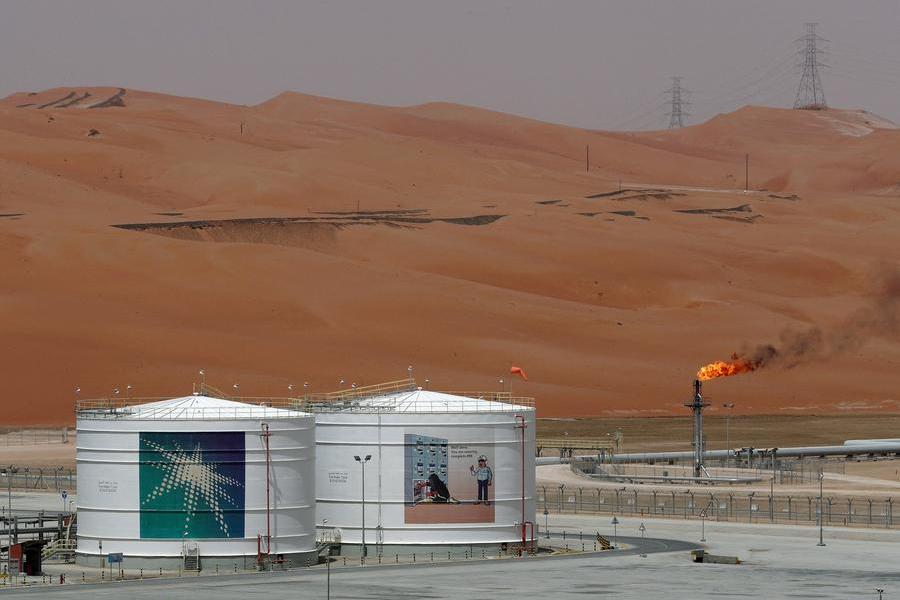
Saudi oil giant Aramco is diverting some of its crude oil exports to the Red Sea to bypass the Strait of Hormuz, where shipping has come to a near standstill due to the risk of attacks, officials said on Tuesday.
The world’s biggest oil companies hope to avoid production cuts by diverting oil to the Red Sea port of Yanbu, but sources, including buyers, traders and analysts, said the East-West pipeline’s production capacity is limited and could make it a target for attack by Iran’s allies.
The pipeline has a capacity of 5 million barrels per day (bpd) and was temporarily able to handle 7 million barrels in 2019 after the natural gas liquids pipeline was converted to transport crude oil.
According to secondary OPEC sources, Saudi Arabia produced just over 10 million barrels of oil per day in January.
Aramco has informed some buyers of Arab Light crude that they will need to load cargo in Yanbu, three sources said, adding that the company would assess demand and crude availability and notify buyers.
“There are logistical trade-offs involved, including reduced NGL offtake capacity and the speed at which the Red Sea’s Yanbu crude oil terminal can sustainably load ships,” said Richard Bronze, co-founder of consulting firm Energy Aspects.
Yanbu’s crude oil loadings peaked at just under 1.5 million barrels per day in April 2020, according to Kpler data.
Aramco declined to comment.
The company shut down the country’s largest refinery in Ras Tanura on Monday following a drone attack, officials said.
Industry sources earlier told Reuters the company was considering all options to bypass the strait, including using a pipeline extending from the Abqaiq field.
Global oil and gas prices soared on Tuesday as the U.S. and Israel’s war against Iran affected energy production and exports from the Middle East, with Iranian attacks on ships and energy facilities, closure of Gulf shipping routes and forced production halts from Qatar to Iraq.
(Reporting by Alex Lawler and Ahmad Ghaddar in London; Reporting by Nidhi Verma in New Delhi; Writing by Yousef Saba; Editing by Louise Heavens and Jason Neely)
