

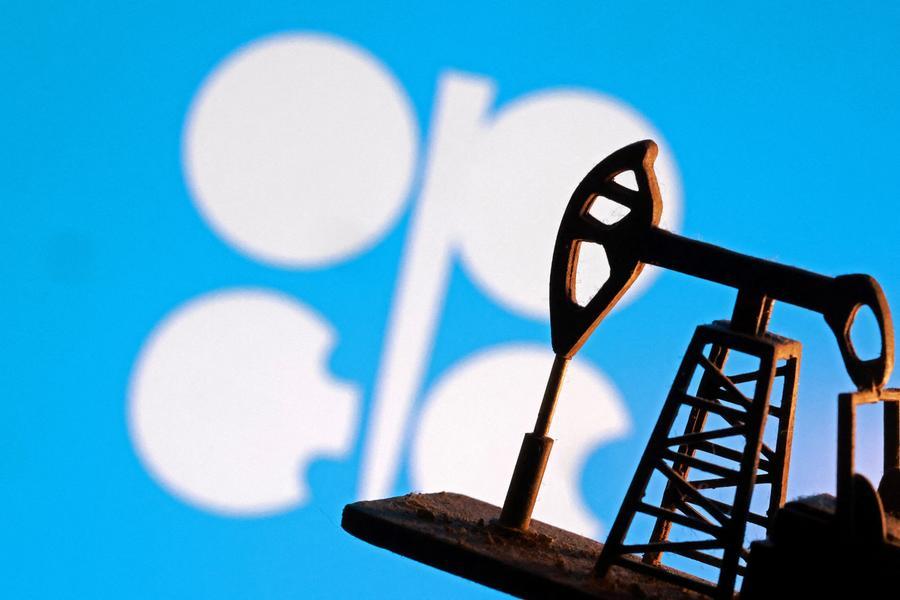
OPEC+ is likely to continue suspending oil production increases in March at its meeting on Sunday, five participants told Reuters at its meeting on Sunday, even as oil prices have soared above $70 a barrel on concerns that the United States could launch a military attack on OPEC member Iran.
The meeting of eight OPEC+ members, which pump about half of the world’s oil, took place as Brent crude rose to nearly $72 a barrel, its highest since August, despite speculation that a glut would push prices down.
Eight countries – Saudi Arabia, Russia, the United Arab Emirates, Kazakhstan, Kuwait, Iraq, Algeria and Oman – will raise their production quotas by about 2.9 million barrels per day from April to December 2025, equivalent to about 3% of global demand. Subsequently, plans for further increases from January to March 2026 were frozen, citing the seasonal slump in consumption.
Three of the five OPEC+ representatives, who requested anonymity because they were not authorized to speak to the media, said Sunday’s meeting was unlikely to result in any decisions being taken beyond March.
OPEC, Saudi Arabia and Russian authorities did not respond to requests for comment.
Also on Sunday, another OPEC+ committee called the Joint Ministerial Monitoring Committee is scheduled to meet, participants said. JMMC does not have decision-making authority regarding production policy.
US President Donald Trump has stepped up pressure to rein in Iran’s nuclear program, threatening military action and sending US naval forces to the region. The US government has imposed wide-ranging sanctions on Tehran to block oil revenues, a key source of state funding.
Reuters reported on Thursday, citing U.S. sources, that President Trump is considering attacks targeting security officials and VIPs, saying they could stoke unrest and weaken the ruling regime.
Oil prices have also been supported by supply losses in Kazakhstan, where the oil sector has been hit by a series of disruptions in recent months. Kazakhstan announced on Wednesday that it would restart its giant Tengiz oil field in stages.
(Reporting by Olesya Astakhova in Moscow, Alex Lawlor and Ahmad Gadar in London; Editing by Simon Webb and Mark Potter)
