

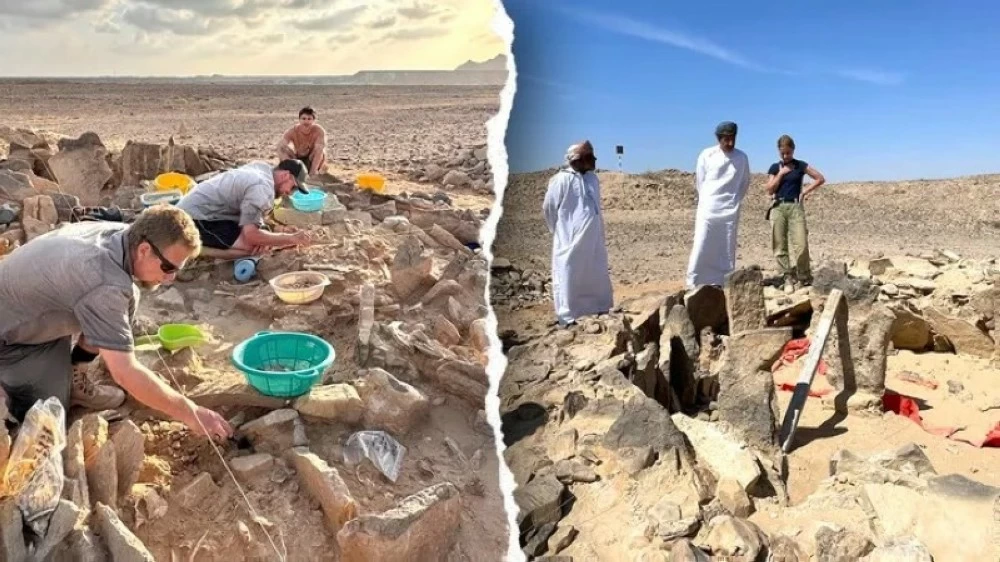
Recent scientific research has revealed that human societies living in the southern Arabian Peninsula in the 5th millennium BC fed on sharks, one of the most prominent marine predators.

The study, recently published in the scientific journal Antiquity, focused on a huge archaeological burial site in the Sultanate of Oman’s Wadi Nahun, dating back some 7,000 years.
According to Fox News, a statement released by the Institute of Archeology of the Czech Academy of Sciences (ARUP) in Prague said the cemetery provides detailed evidence about the diet and migration patterns of Neolithic communities in the area.
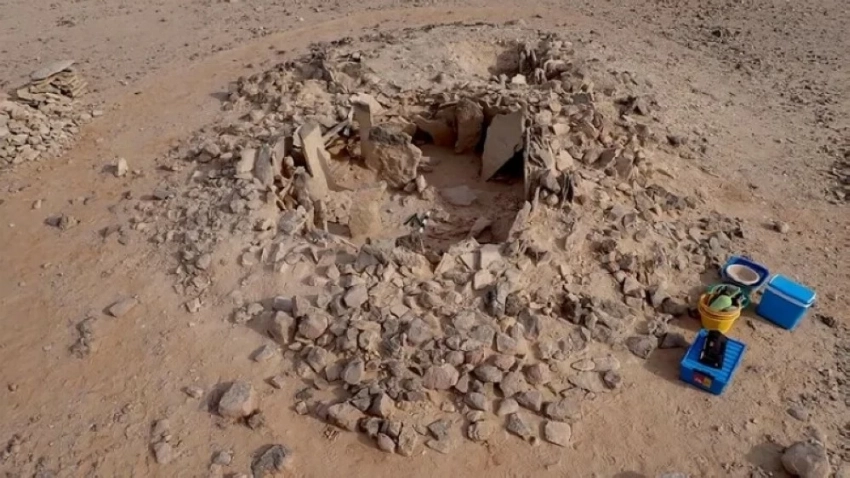
Archaeologists have been working at the site since 2020, as the harsh desert climate makes surviving organic remains rare. To overcome this, researchers collected human tooth samples found at the site and transported them to the Czech Republic for advanced laboratory analysis.
Anthropologist Jiri Schneeberger explained that the research team used stable isotope analysis techniques to reconstruct the diet of ancient people, and preliminary results showed that they may have relied primarily on shark meat as their main food and energy source.
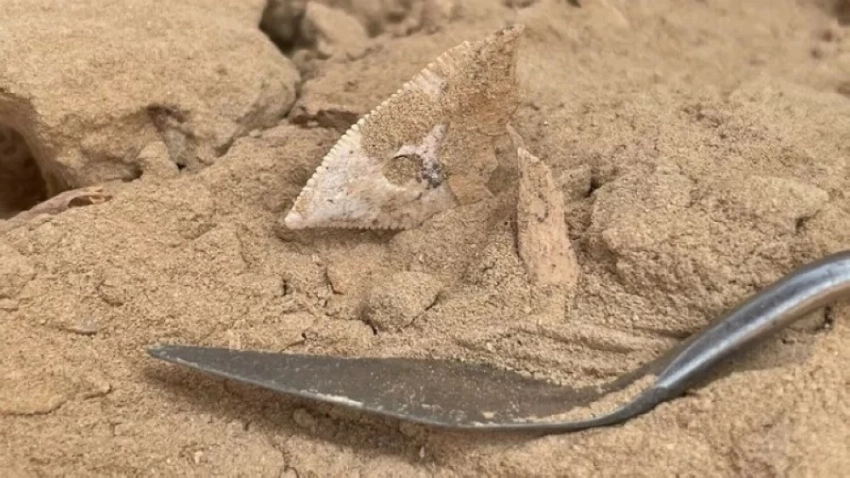
Archaeologist and research mission leader Algbieta Danilsova acknowledged that the study was the first of its kind, as the researchers were able to document for the first time the specialized hunting of a marine predator, based on natural scientific data extracted directly from the analysis of the remains of the assemblage buried at the site.
He added that this close relationship between human populations and sharks is a new discovery not only for prehistory in the Arabian Peninsula, but also for all Neolithic cultures in arid regions. She pointed out that the protein these people are eating is not ordinary, but comes from the top of the marine food chain.
The researchers believe that the results could have important international dimensions, especially in terms of understanding ancient human adaptation strategies to diverse and harsh environments.
The statement emphasized that current results reflect a highly flexible and adaptable livelihood strategy that combines hunting, gathering, pastoralism and systematic use of marine resources.
The researchers also concluded that Wadi Nahun was not just a cemetery, but rather served as a central ceremonial site for more than three centuries, contributing to the unity of the region’s various human groups.
