


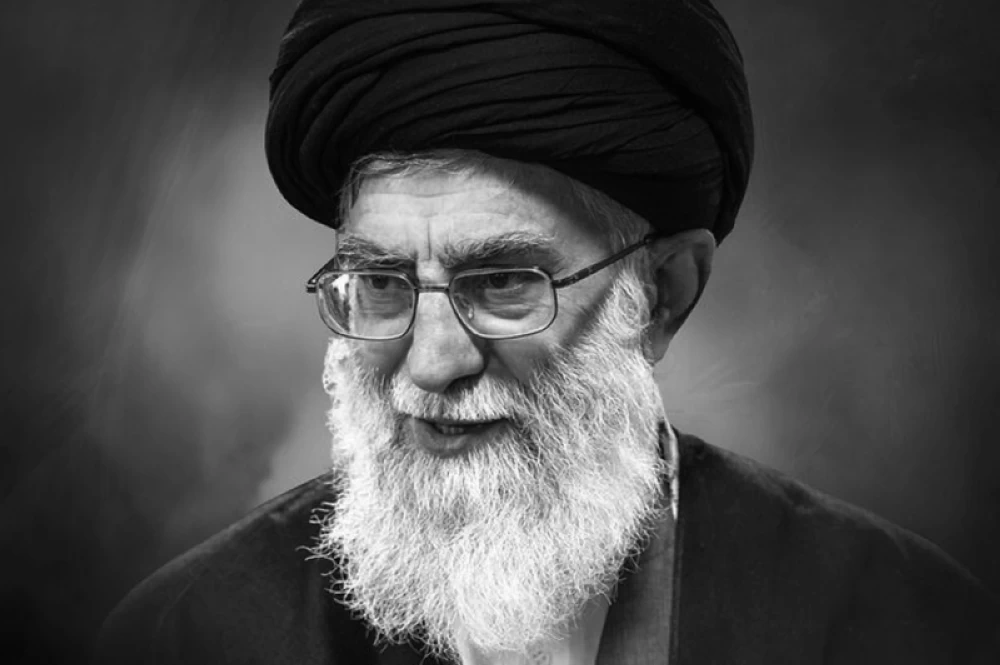
WASHINGTON/TEHRAN — Iranian state media confirmed early Sunday that Iran’s supreme leader Ayatollah Khamenei has died, following a major joint military operation by the United States and Israel targeting military and government facilities in Iran.
Iranian state television and the state-run IRNA news agency reported the 86-year-old leader’s death without detailing the exact cause of death.
Earlier, US President Donald Trump announced that Khamenei was killed in what he described as a coordinated attack between the US and Israel.
The assassination of the second supreme leader of the Islamic Republic and the most powerful man in Iran for more than three decades marks one of the most significant developments in the modern history of the Middle East, throwing the future of the Iranian regime into deep uncertainty.
President Trump declared the killing “the single greatest chance for the Iranian people to take back their homeland” and called Khamenei “one of the most evil figures in history.”
In a statement on social media, he said the Iranian leader “has not been able to evade our intelligence services and highly sophisticated tracking systems and has worked closely with Israel, so there was nothing he or the other leaders killed with him could do.”
The deaths came after airstrikes hit Iran’s military infrastructure and key government facilities. Some of the early strikes reportedly hit areas near the supreme leader’s office in Tehran. Thick smoke was seen billowing in parts of the capital as explosions rocked the city.
The operation marks a dramatic escalation after several days of heightened tensions in the region. Israel had earlier announced a major military operation against Iranian targets, and the U.S. government confirmed that the U.S. military had launched a major combat operation aimed at eliminating what it said was an imminent threat posed by Iran’s missile and nuclear programs.
Hours after the attack, Iran retaliated by firing missiles and drones at Israel and US military bases in the region. Air defense systems were activated in several countries as the conflict expanded beyond Iranian territory.
Related articles
Iranian state TV confirms death of Supreme Leader Ayatollah Khamenei
With Khamenei’s death, Iran faces an unprecedented leadership vacuum. He had ruled since 1989, succeeding Ruhollah Khomeini, and had ultimate authority over Iran’s military, judiciary, and key state institutions. At the time of his death, no named successor had been publicly identified, raising the possibility of a power struggle within the clergy and the Islamic Revolutionary Guard Corps.
The killings raise the risk that the conflict could become longer and more widespread, as Iranian officials had previously warned of harsh retaliation if senior leaders were directly attacked.
President Trump defended the operation, arguing that Iran continues to evolve its nuclear program and missile capabilities capable of reaching the United States. He said the attack was necessary to protect U.S. national security and allies.
This dramatic turn of events comes as diplomatic efforts over Iran’s nuclear program have failed, including recent Oman-mediated negotiations that ended without a breakthrough. Some officials described the talks as a last chance to avoid direct confrontation.
Fears of further escalation prompted governments across the region to quickly increase security measures, close airspace and put militaries on high alert.
For Iranians, Khamenei’s death marks the end of an era that has defined the country’s political and ideological direction for more than three decades. It remains unclear whether it signals the beginning of serious internal change or deeper instability.
The fallout from this extraordinary development is likely to reshape regional alliances, security calculations, and balances of power for years to come, as the Middle East enters a new and unpredictable chapter.
