


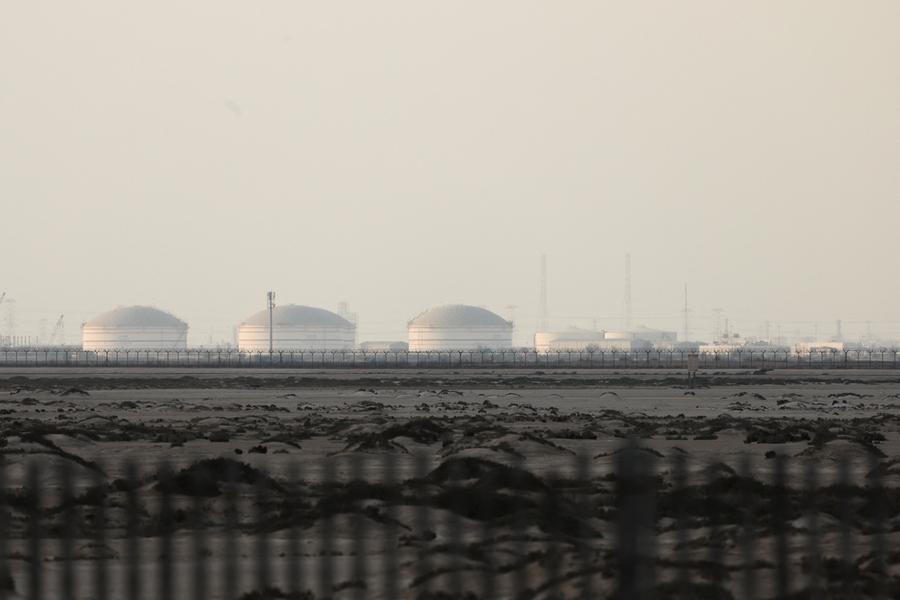
The United States has little capacity to quickly ramp up production of liquefied natural gas to offset supply losses after Qatar halted production amid the Middle East conflict, according to Reuters calculations and industry analysts.
The United States, the world’s largest LNG producer, exports nearly 19 billion cubic feet of natural gas per day that is converted to LNG, according to LSEG data.
A series of attacks forced Qatar on Monday to pull 10 bcfd from the market, nearly twice as much as 10 bcfd, but U.S. export plants are operating at near full capacity and most cargoes are locked into long-term contracts.
“There is no significant production capacity on the sidelines,” said Alex Manton, director of global gas and LNG at research firm Rapidan Energy Group. Cheniere Energy, a major exporter, sold 46 million tons of LNG last year and was pulling more than 7 bcfd of raw gas at two terminals on the Gulf Coast on Tuesday. The company began production last week from Train 5 of its Phase 3 expansion in Corpus Christi, which is a relatively small unit with an annual capacity of 1.5 million tons and is expected to take about a month to reach full production. Most of this is outsourced.
Cheniere told Reuters the company is closely monitoring developments in the Middle East and will deliver on customer commitments. Venture Global, the second-largest U.S. producer, sells as much as 4 bcfd of consignments on the spot market from its Plaquemines plant in Louisiana, making it the most flexible for short-term assistance. This gives the company even more room to reroute shipments, CEO Mike Sabel said on an earnings call Monday. Once fully online, Plaquemine will be able to produce 35 million tonnes per year, he added.
The project was initially approved for 20 million tons per year, which was later increased to 27.2 million tons. The additional expansion is awaiting final approval from the U.S. Department of Energy, and if quickly approved, Venture Global could increase production by up to 800 million cubic feet per day, but that would be just a fraction of the capacity lost in Qatar.
Venture Global declined further comment.
Another new source of supply, the Golden Pass LNG project (a joint venture between Qatar Energy and ExxonMobil), is scheduled to begin initial production this month, with demand for gas converted to LNG expected to reach around 800 million cubic feet per day at the initial 6 million tons per year facility.
Analysts at EBW Analytics Group said: “The war is unlikely to materially increase physical demand for US gas in the short to medium term, as the US is already exporting LNG at de facto maximum capacity.”
The US, Australia and Qatar account for the majority of global LNG production
Energy analysts estimate that global gas consumption is around 400 bcfd. About 55 bcfd of that is traded as LNG, with the United States, Australia and Qatar accounting for about 60% of global production, according to the International Gas Union.
Before halting production, Qatar supplied around 10 bcfd of LNG to buyers in Europe and Asia. Australia ships approximately 11 bcfd. Small-scale producers have limited scope to increase production. Canadian LNG has a production capacity of up to 2 bcfd and is currently operating at about 1.5 bcfd, according to LSEG data.
Trinidad and Tobago’s national gas company is diverting more gas to Atlantic LNG to maximize exports, Chairman Gerald Ramdeen told Reuters on Tuesday.
With one train out of service and another under repair, Atlantic has about 1.2 bcfd of gas available. LSEG says it is already operating at nearly 1 bcfd and has room to add only about 200 million cubic feet in the near term.
Overall, new U.S. production that could come online soon is unlikely to exceed 2 bcfd, according to Reuters calculations, far from the gap left by Qatar. Potential buyers would need to find a transport ship and pay to reroute it to the other side of the world.
Gasoline prices soared on Tuesday, with the Dutch TTF standard hitting a three-year high of nearly $19 per mmBtu, while the Japan-Korea marker rose to an eight-month high of nearly $13.
According to maritime data analysis platform Kpler, there is so far no sign that LNG diversion will occur, although large-scale LNG supply disruptions are likely.
(Reporting by Curtis Williams in Houston and Scott DiSavino in New York; Editing by Nathan Crooks and David Gregorio)
