

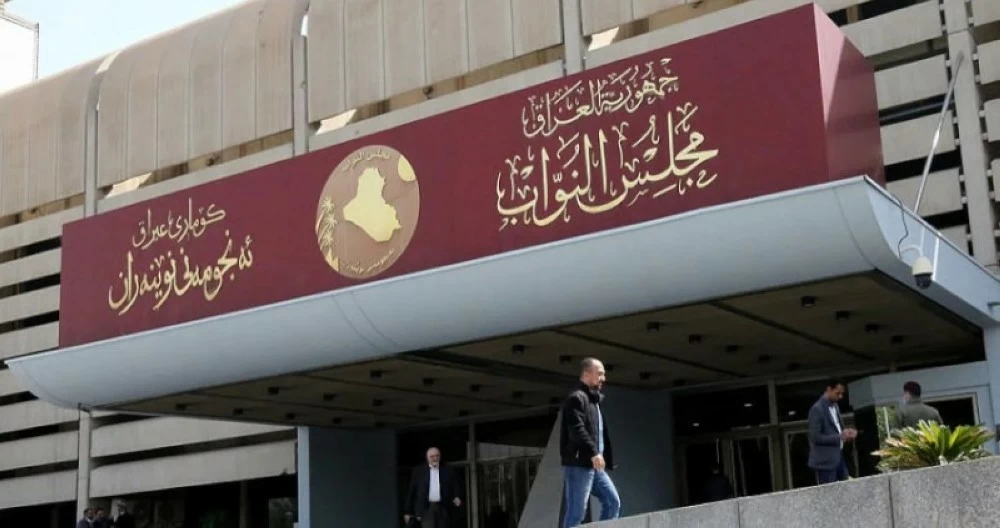
Almost three months after the parliamentary elections, Iraq’s political situation remains at an impasse, with the House of Representatives unable to fulfill its constitutional obligations as the Kurdish conflict has so far prevented the election of the republic’s president and exacerbated the crisis of forming a government.
The crisis in electing the president of the republic is directly reflected in other constitutional rights, as the current political impasse does not allow a prime minister to be appointed without electing a head of state.
Observers warned that continued conflict could leave Iraq in a constitutional vacuum and completely paralyze its political system.
This crisis has arisen in view of the fragility of the political situation and the intensification of regional and international pressures, which are reflected in the ability of political forces to reach internal reconciliation and agreements, especially between the Kurdish Two Democratic Parties of Kurdistan and the Patriotic Union, as well as the coordination framework that brings together the dominant political forces in the country.
On Friday evening, Iraq’s lower house of parliament released the agenda for the session scheduled for tomorrow, Monday, but it does not include any articles related to the election of the president of the republic, indicating that it has not been possible to reach a political consensus on this secret file, further exacerbating the constitutional vacuum.
In this regard, a human rights report considers Iraq to have effectively entered a constitutional vacuum, although, according to the constitution, there are no punitive measures or penalties for exceeding the constitutional period. However, given the obvious political and economic implications, the country is entering a difficult phase.
The report noted that the current government, operating with interim powers, cannot take new decisions, issued government decisions can be revoked, and ministers do not have the right to sign or publish a book containing new decisions.
The report describes the failure of political blocs in the selection of the president of the republic and, ultimately, in the appointment of the prime minister, and says that representative groups must bring forward measures to limit this constitutional vacuum. However, if a foreigner enters the country in order to submit to the head of a political bloc and gain political or economic influence, it will be considered a crime of perjury and may be subject to punishment.
According to the report, it was external interference that made the political world vulnerable, as demonstrated by US President Donald Trump’s tweet, which sent ripples across all political parties, regarding the announcement of his refusal to nominate Nouri al-Maliki, leader of the Rule of Law Union, as prime minister.
The report warned that one possible outcome of the current political divide could be a resurgence of ISIS activity, especially with the transfer of thousands of prisoners from Syria to Iraq.
