


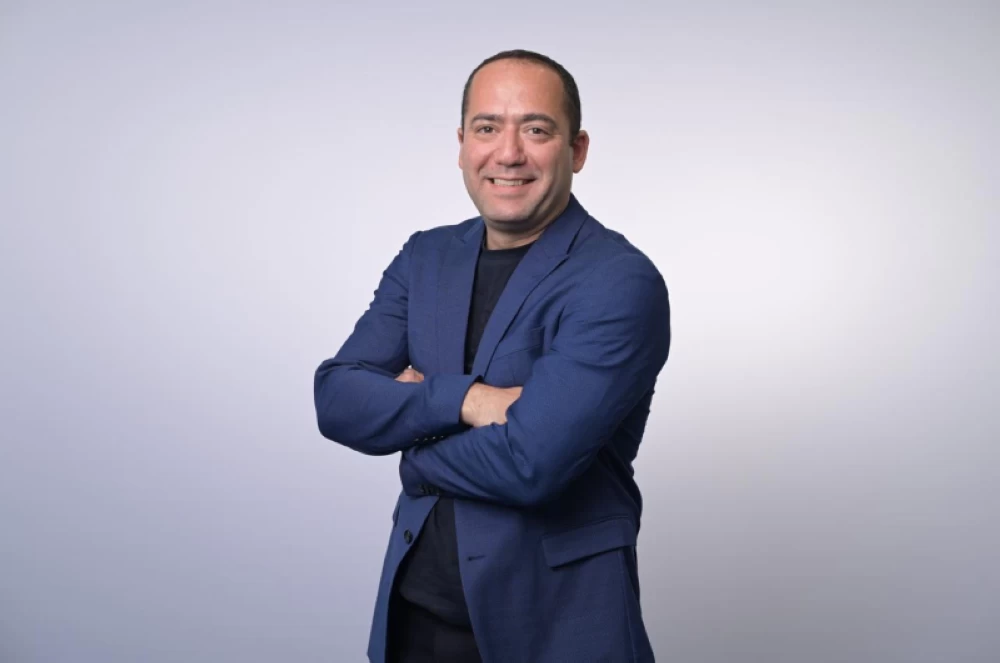
Artificial intelligence is shaping a new reality for Saudi Arabia’s workforce, which, in Fadl Saad’s view, reflects the country’s confident move towards the future of work.
Rather than seeing AI as a technology to be alarmed by, Saad sees AI as a practical tool that is already transforming daily productivity, collaboration, and decision-making across the kingdom.
This transformation comes at a time when the global relationship with work is under strain. According to HP’s 2025 Work Relationship Index (WRI), many workers around the world are experiencing increased pressure, decreased fulfillment, and uncertainty about their professional future. But Saad points out that Saudi Arabia deviates from this global trend.
According to the index, one in three Saudi knowledge workers report having a healthy relationship with their work, which is much higher than the global average of 20%. This is seen as a reflection of the country’s unique momentum, driven by Vision 2030, rapid digitization and a workforce that sees transformation as an opportunity rather than a disruption.
Technology is central to that story. Four out of 10 Saudi workers use artificial intelligence (AI) every day, a much higher percentage than in many other markets. Saudi Arabian employees are embracing innovation for generations. Unlike countries where AI adoption is concentrated among the youngest employees, Saad highlighted that Generation X and baby boomers in Saudi Arabia are also active users, indicating that the country as a whole is ready to incorporate AI into daily work.
One of the most important findings at WRI is the relationship between the use of AI and workplace enrichment. Among Saudis who report healthy work relationships, 34% use AI tools provided by their employer on a daily basis. According to Saad, when people have access to tools that simplify tasks and reduce cognitive load, they have more room to focus on more meaningful and strategic work. This not only increases productivity, but also creates deeper engagement and satisfaction.
Trust in leaders is another characteristic that determines Saudi performance. Saad pointed out that Saudi IT decision makers score 23 points higher than their global peers on work engagement. This difference shows confidence in the direction the company is taking and confidence in the digital strategy being implemented. Such trust is essential during times of transformation and sets Saudi Arabia apart as one of the most digitally optimistic workforces in the world.
Related articles
iCAUR V27 Jeddah Media Test Drive: Conquering urban roads with new energy technology and urban mobility
But it’s also clear that the future of work will not be shaped solely by technology. According to a WRI study, seven out of 10 Saudi workers have experienced major changes at work in the past year, from changing expectations to evolving work models. In moments like these, organizational responsibility increases. The index shows that 85% of the factors that drive fulfillment are within a company’s control, reminding leaders that culture, communication, and access to tools are the foundation of the employee experience.
Generational change is further accelerating this evolution. Saad emphasized that by the end of 2025, Gen Z will make up 28% of the Saudi workforce, higher than the global average. This generation brings new expectations: purpose, flexibility, continuous learning, and the courage to demand them. According to WRI, eight out of 10 Saudi Gen Z employees plan to give up part of their salary for increased autonomy and better technology and training. This shows that employees are ready to define a more human-centered definition of success.
These observations make it clear that this country is not simply adapting to the global future of work, but actively redefining it. As Saudi Arabia continues to transform under Vision 2030, the country’s combination of digital fluency, leadership credibility, and workforce optimism represents a powerful advantage.
As part of this progress, HP remains committed to supporting organizations with secure AI-powered devices, hybrid work solutions, and digital experience platforms. Saad believes that when technology enables people rather than overwhelming them, it becomes a catalyst for growth, collaboration, and fulfillment.
In his words: “Saudi Arabia is not waiting for the future of work, it is shaping it. And what we are seeing through WRI is a workforce that has the confidence and ambition to define what work will look like when innovation and human potential move forward together.”
Fadle Saad, Managing Director, HP MENA Regional Headquarters
