

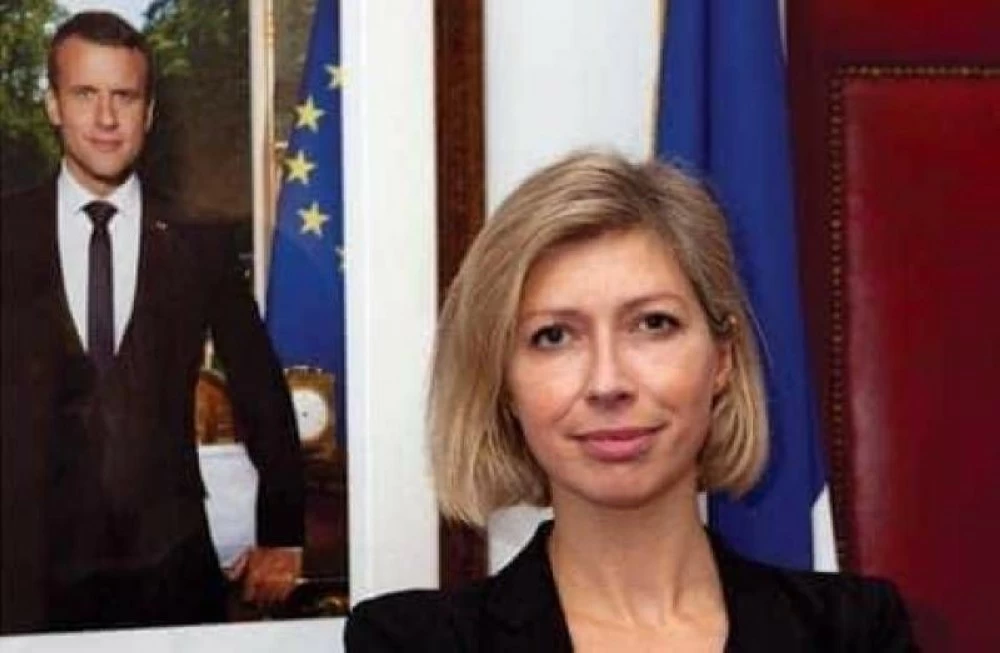
In a historic step after four decades of continuous male leadership since its founding in 1987, the Board of Directors of the Arab World Institute on Tuesday morning, February 17, appointed veteran diplomat Anne-Claire Legondelet as director of the institute, replacing Jack Lang, who had submitted his resignation 10 days earlier. Paris’s cultural institutions are thus at a turning point in their organizational journey.
Diplomatic road from the Elysée to New York
Mr. Le Gondre, 46, has been a member of the diplomatic office at the Elysée Palace since December 2023 and holds the position of advisor to President Emmanuel Macron on North African and Middle East issues. She previously held the position of Spokesperson at the Ministry of Foreign Affairs for more than two years, was also Consul General of France in New York from 2016 to 2020, and briefly managed the French Embassy in Kuwait.
She is from Brittany and mastered Arabic after studying at the National Institute of Oriental Languages and Civilizations (INALCO). She also holds a certificate in contemporary literature from the Paris Institute of Political Science and the Sorbonne University. She gained media experience providing breaking news on French channels.
Attending the Palestine recognition file
Mr. Le Gondre’s name surfaced in the Palestinian state recognition file in Paris after he led extensive contacts with Arab and Western capitals, including London, Ottawa and Canberra, leading to the announcement of the decision on the sidelines of the United Nations General Assembly in September 2025.
cultural agreement and welcome
Sources confirmed to Okaz that Le Gondre’s selection was unanimously approved by a board of directors made up of seven Arab ambassadors and seven members appointed by the French Ministry of Foreign Affairs.
French diplomat Denis Bouchard commented, “I was afraid to choose a politician so far removed from my culture, but I made the right decision to appoint Anne-Claire Legondelet.”
Between the symbolism of historical ruptures and deep diplomatic experience, the institute is entering a new phase, betting on a more accurate understanding of the pulse of the Arab world and its transformation.
In a historic step after four decades of male leadership since its founding in 1987, the Arab World Institute’s Board of Directors on Tuesday morning, February 17, appointed veteran diplomat Anne-Claire Legendre as the institute’s president. She replaces Jack Lang, who resigned 10 days ago. This marks a pivotal moment in the organizational journey of Parisian cultural institutions.
A diplomatic journey from the Elysée to New York
Legendre, 46, has been a member of the Elysée Palace’s diplomatic office since December 2023 and is an advisor to President Emmanuel Macron on North Africa and the Middle East. She previously held the position of spokesperson at the Ministry of Foreign Affairs for more than two years, served as Consul General of France in New York from 2016 to 2020, and briefly managed the French Embassy in Kuwait.
Originally from Brittany, she is fluent in Arabic after studying at the National Institute of Oriental Languages and Civilizations (INALCO) and holds degrees from the Paris Institute of Political Studies and the Sorbonne Institute of Contemporary Literature. She also has media experience and has been in charge of news broadcasts for a French channel.
Involvement in recognition of Palestine
Ms. Legendre’s name appeared in the file on recognizing the Palestinian state in Paris, where she led intensive communications with prominent Arab and Western capitals, including London, Ottawa and Canberra, culminating in the announcement of the decision on the sidelines of the United Nations General Assembly in September 2025.
Consensus and cultural welcome
Sources confirmed to Okaz that Legendre’s selection received unanimous support from the board, which is made up of seven Arab ambassadors and seven members appointed by the French Ministry of Foreign Affairs.
French diplomat Denis Pouchard commented, “I was afraid to choose a politician far from culture, but appointing Anne-Claire Legendre was a wise decision.”
With this symbol of historical rupture and the deep experience of diplomats, the institute enters a new phase, betting on a more accurate understanding of the pulse of the Arab world and its transformation.
