

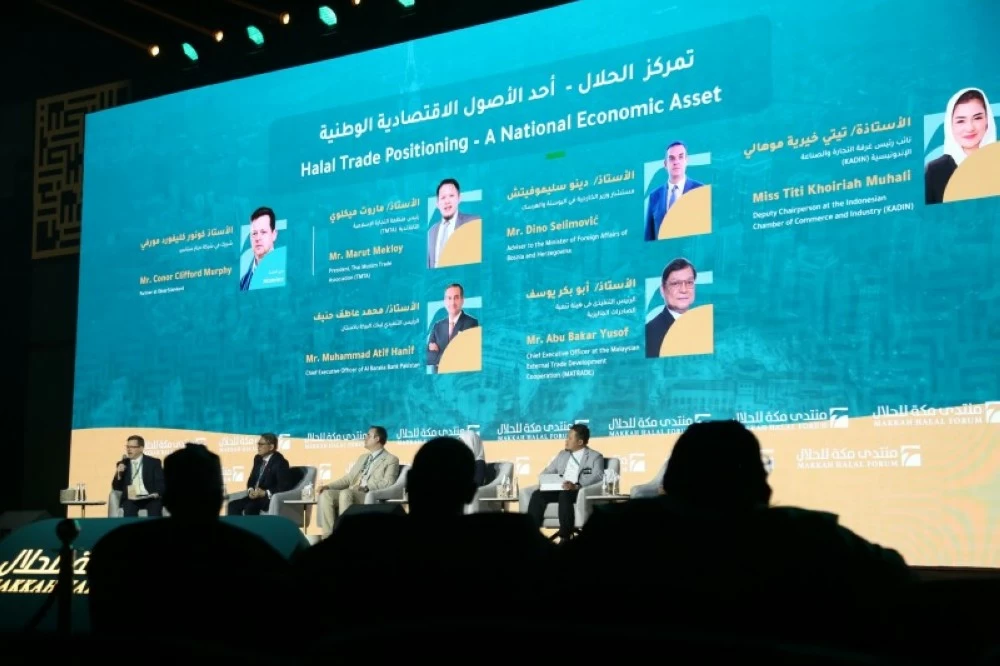
Participants at the Makkah Halal Forum 2026 affirmed that harmonized standards are a strategic pillar for the growth of the global halal sector, given the rapid expansion and diversity of regulatory standards, and emphasized that reducing disparities between countries will increase trust and facilitate trade flows.
Youssef Qarawi, Secretary General of the Islamic Chamber of Commerce, explained that unifying standards should start from within the economic system with the voluntary adoption of regulated business models before legal obligations, stressing that a clear competitive environment increases the level of professionalism and increases market confidence.
Badr Al Abdullatif, Executive Director of the Islamic Forum, a halal certification body, said that an integrated infrastructure for halal quality includes institutions that set specifications, conformity assessment, certification, measurement and calibration, and warned that the diversity of national standards leads to different assessment practices and limits integration.
Meanwhile, Abdulaziz Alsaab, Director of Halal Files at the Gulf Certification Center, pointed out that differences in standards between countries increase production costs and affect the efficiency of supply chains, explaining that Gulf countries rely on Standardization Organization specifications for Arab Gulf Cooperation Council countries and Standardization and Metrology Institute standards for Islamic countries.
Participants emphasized that the ongoing institutional dialogue will contribute to building a common reference framework to support the flow of products, in line with the Saudi Vision 2030 goal of strengthening the competitiveness of the national economy.
Participants at Mecca Forum for Halal 2026 confirmed that harmonized standards are a strategic pillar for the global growth of the halal sector amid rapid expansion and numerous regulatory standards. The two leaders emphasized that reducing disparities between countries increases trust and facilitates trade facilitation.
Youssef Qarawi, Secretary-General of the Islamic Chamber of Commerce, explained that professional unification of standards should come from within the economic system through the voluntary adoption of organized business models, before regulatory obligations, stressing that a clear competitive environment increases the level of professionalism and increases market confidence.
Badr Al-Abdulatif, Secretary-General of the Islamic Forum, a halal certification body, pointed out that an integrated infrastructure for halal quality includes specification-setting bodies, conformity assessment, certification, measurement, and calibration, and warned that the diversity of national standards leads to differences in evaluation practices and limits integration.
Meanwhile, Abdulaziz Alsaab, Director of Halal Files at the Gulf Certification Center, pointed out that differences in standards between countries raise production costs and affect supply chain efficiency, revealing that Gulf countries rely on the specifications of the Gulf Cooperation Council Standards Organization and the standards of the Islamic Organization for Standardization and Metrology.
It was confirmed that the ongoing institutional dialogue is contributing to the participants building a common reference framework that supports the flow of products, in line with the Saudi Vision 2030 goal of strengthening the competitiveness of the national economy.
