


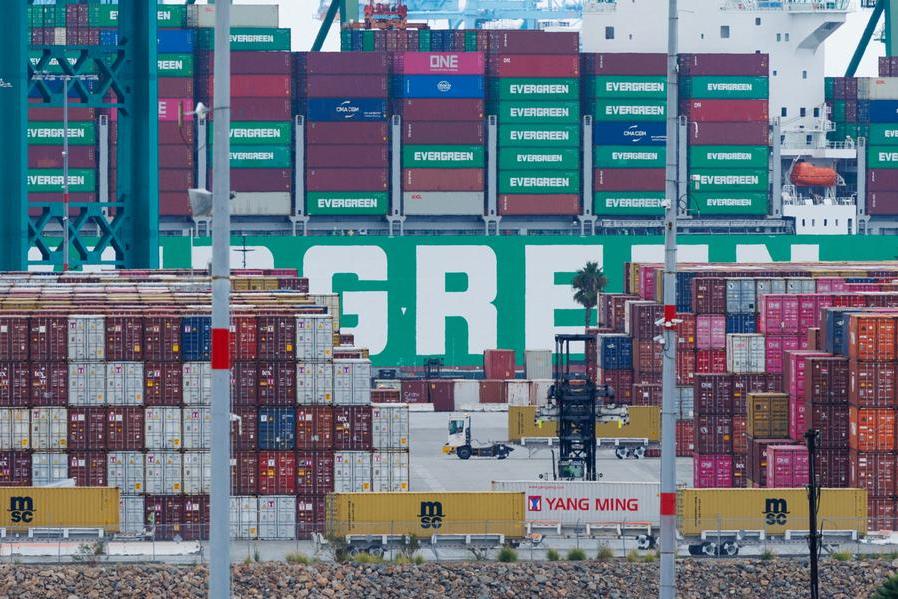
The U.S. trade deficit widened sharply in December on a surge in imports, and goods shortages in 2025 are at a record high despite President Donald Trump’s tariffs on foreign goods.
The Commerce Department’s Bureau of Economic Analysis and the Census Bureau announced Thursday that the trade gap widened by 32.6% to $70.3 billion. A Reuters poll of economists predicted the trade deficit would narrow to $55.5 billion. The trade deficit in 2025 narrowed by 0.2% to $901.5 billion. The goods trade gap widened by 2.1% to a record $1.24 trillion.
Last year, President Trump imposed intensive tariffs on trading partners aimed at, among other things, addressing trade imbalances and protecting U.S. industry. However, punitive tariffs did not result in a manufacturing renaissance, with factory employment dropping by 83,000 from January 2025 to January 2026.
The report was delayed because of last year’s government shutdown. Imports in December increased by 3.6% to $357.6 billion. Merchandise imports rose 3.8% to $280.2 billion, driven primarily by a $7 billion increase in industrial supplies and materials such as non-monetary gold, copper and crude oil.
Capital goods imports increased by $5.6 billion, driven by computer accessories and communications equipment. This increase is likely related to the construction of data centers that support artificial intelligence.
However, imports of consumer goods decreased due to the impact of pharmaceuticals. There have been major fluctuations in pharmaceutical imports.
Merchandise imports increased by 4.3% to $3.44 trillion in 2025.
Exports in December decreased by 1.7% to $287.3 billion. Exports of goods fell 2.9% to $180.8 billion, weighed down by an $8.7 billion decline in industrial supplies and materials, mainly non-monetary gold. Exports of other goods also declined.
However, thanks to semiconductors, exports of capital goods increased. Exports of consumer goods, including pharmaceuticals, increased. Merchandise exports increased by 5.7% to $2.2 trillion in 2025.
The trade deficit in goods expanded by 18.8% to $99.3 billion. Services imports increased by $2 billion to $77.4 billion in December due to increases in transportation and travel services. Exports of services increased by $500 million to $106.5 billion.
The larger-than-expected trade deficit could cause economists to lower their expectations for fourth-quarter gross domestic product (GDP) growth. BEA is scheduled to release its delayed fourth-quarter GDP forecast on Friday. The economy likely grew at an annual rate of 3.0% last quarter, after expanding at a 4.4% pace in the July-September period, according to a Reuters poll of economists.
(Reporting by Lucia Mutikani; Editing by Paul Simao)
