


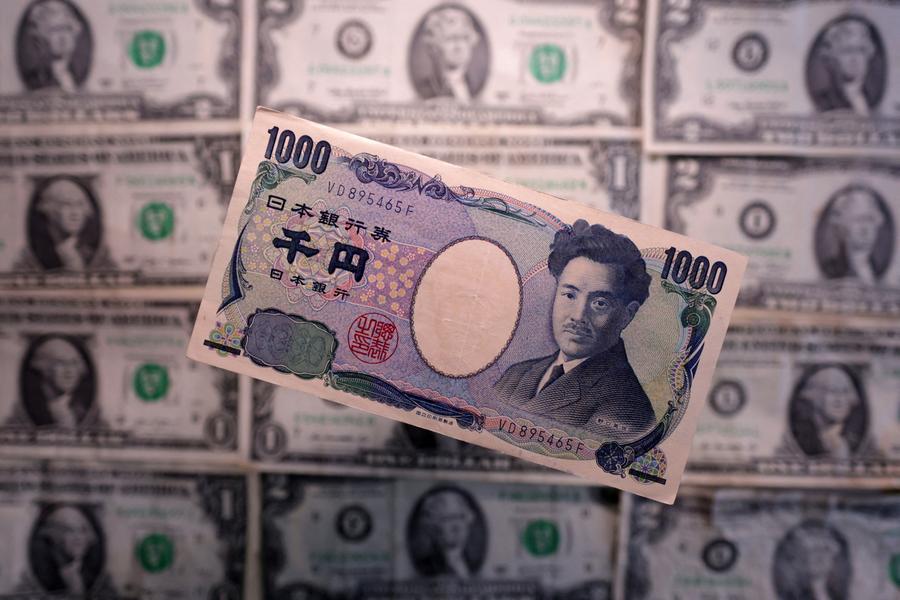
SINGAPORE: A rebound in the yen, a runaway Australian dollar and a steady rise in the yuan put pressure on the greenback on Thursday, tipping it toward a weekly decline as investors’ attention shifted to the next round of US labor and inflation data.
Last night’s better-than-expected US jobs report gave the dollar a brief boost. But traders are taking recent signs of U.S. economic resilience as a clue that global economic growth is coming to light more broadly, and are betting on Japan as the likely winner.
The yen has risen more than 2.6% since Prime Minister Sanae Takaichi’s Liberal Democratic Party won a landslide victory in Sunday’s general election, signaling a shift in mood as markets brush aside worries about spending to focus on growth.
The yen rose to 152.55 yen against the dollar on Wednesday, but stabilized slightly below that at 153.05 yen to the dollar on Thursday. The rebound is in its early stages, as the yen has been depreciating for years, but it is large enough to attract market attention.
“This is buying Japan,” said Naka Matsuzawa, chief strategist at Nomura Securities in Tokyo, adding that the yen, rather than the euro, is becoming the preferred vehicle for investing outside the United States.
“Foreigners are buying both stocks and bonds,” he said.
“With the government stepping up, the market expects further growth.”
Analysts said the yen’s gains could easily accelerate if it breaks through resistance around 152 yen to the dollar, or the 200-day moving average of 150.5 yen. It also made progress against the cross, gaining 2% against the euro in two sessions and breaking into the strong side of the 50-day moving average.
Data from the previous day showed that U.S. job growth unexpectedly accelerated in January, with the unemployment rate falling to 4.3%. A survey released earlier this month showed that U.S. factory activity unexpectedly rebounded in January.
There was much less movement on Thursday morning, but the Australian dollar is inching back towards a three-year high, above 71 cents, after the central bank governor said the Governing Council would resume raising interest rates once inflation took hold.
The euro held steady at $1.1875, the pound sterling at $1.3628 and the kiwi at $0.6052.
Another factor that has moved the dollar significantly in recent weeks has been the Chinese yuan, which has steadily appreciated on the back of strong exports and indications from authorities that China may allow its currency to appreciate.
The currency hit a 33-month high of $1 to the dollar on Wednesday, at $6.9057, due in part to business demand ahead of the Lunar New Year holiday, but it remained firmer at $6.9025 in offshore trading on Thursday.
This week, the US dollar index fell 0.8% to 96.852. As for potential catalysts, U.S. unemployment claims numbers are expected to be released later on Thursday, and January inflation data is expected to be released on Friday. (Reporting by Tom Westbrook; Editing by Shri Navaratnam)
