

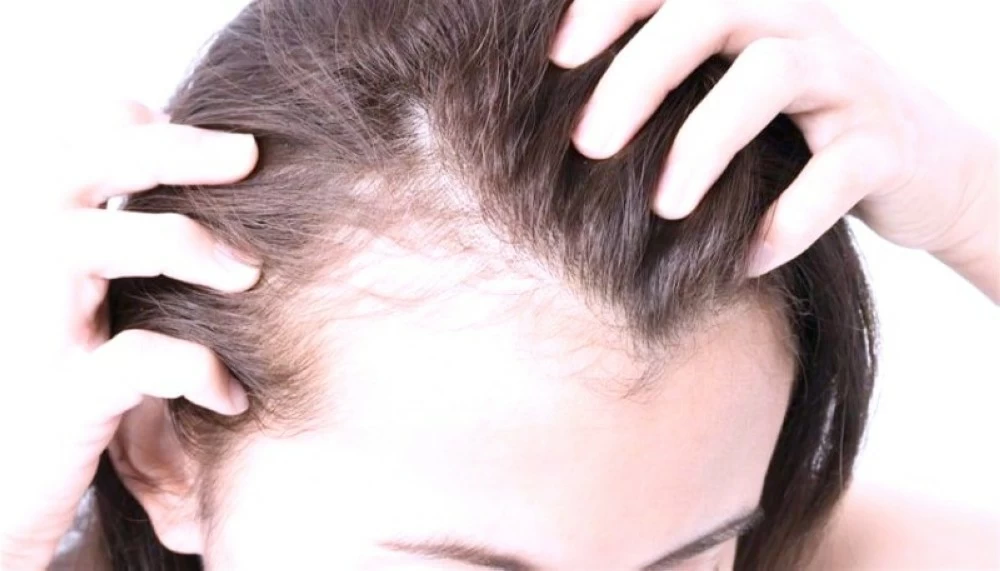
A recent medical report cited by the UK’s Daily Mail reveals that increased hair loss rates in women are no longer a temporary aesthetic issue, but rather a health indicator related to physical and psychological factors, requiring early diagnosis and careful medical follow-up.
Reports have shown that chronic psychological stress, sleep disturbances, and physical stress are among the most prominent triggers that disrupt the natural hair growth cycle and push a large number of hair follicles into a stage of simultaneous hair loss, a condition medically known as “telogen effluvium.”
Dermatology experts have shown that this type of hair loss often appears after periods of severe stress, after infection with a viral disease, or after severe psychological changes, since the neural and hormonal signals that regulate the activity of the hair follicles are affected, leading to their weakening and pronounced acceleration of hair loss.
Medical data also shows that deficiencies in essential nutrients such as iron, vitamin D, and zinc are direct contributors to reduced hair density and slow growth. This deficiency leads to weakened hair follicles, reducing their ability to produce healthy, strong hair, making clinical testing a necessary step before any therapeutic intervention.
Doctors noted that hormonal changes, especially in perimenopausal women, play a vital role in hair thinning due to decreased estrogen levels, which requires a comprehensive treatment program that combines medical treatment and lifestyle modifications.
A recent medical report cited by the UK’s Daily Mail revealed that the increasing incidence of hair loss in women is no longer just an aesthetic problem, but a health indicator related to physical and psychological factors that requires early diagnosis and accurate medical follow-up.
These reports reveal that chronic psychological stress, sleep disturbances, and physical stress are among the main triggers that disrupt the natural hair growth cycle, pushing large numbers of hair follicles into the shedding phase, a state medically known as “telogen effluvium.”
Dermatology experts pointed out that this type of hair loss often appears after a period of severe stress, after a viral infection or after acute psychological changes, since the nerve and hormonal signals that regulate the activity of the hair follicle are affected, leading to weakening of the hair follicle and a significant acceleration of hair loss.
Medical data also points out that deficiencies in essential nutrients such as iron, vitamin D, and zinc are direct contributors to reduced hair density and slow growth. This deficiency weakens the hair follicles and reduces their ability to produce healthy, strong hair, making clinical testing a necessary step before any therapeutic intervention.
The doctors pointed out that hormonal changes, especially in women during the premenopausal and postmenopausal stages, play a vital role in hair thinning due to decreased estrogen levels, and therefore require a comprehensive treatment program that combines medical treatment and lifestyle modifications.
