

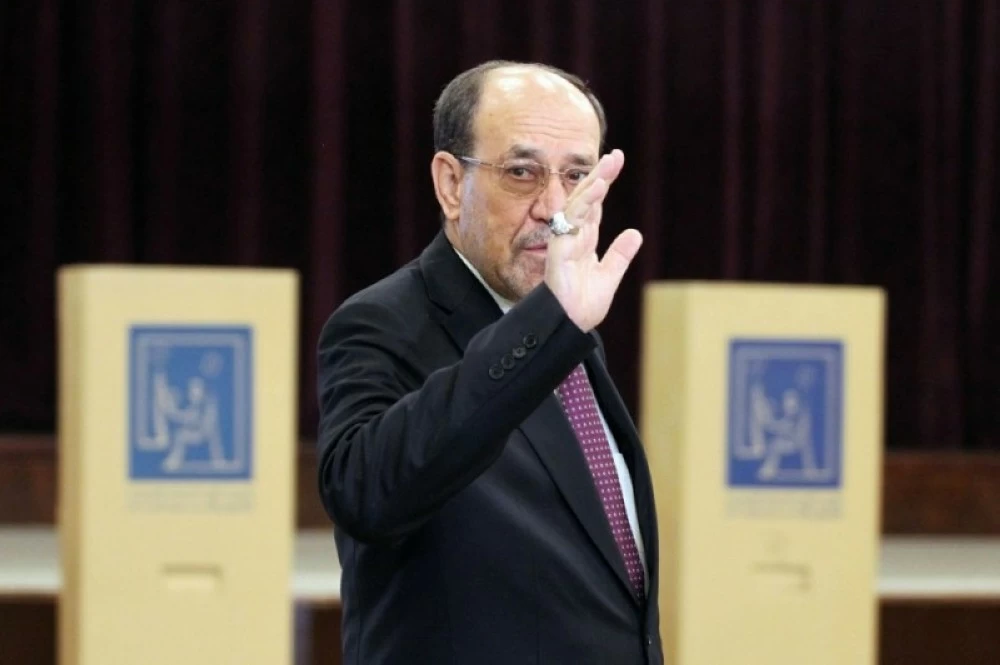
BAGHDAD – Iraq’s main Shiite political alliance has named former leader Nouri al-Maliki as prime minister as the United States puts intense pressure on the country to curb Iranian influence.
Iraq’s parliament will vote on Tuesday for a largely ceremonial figure, the president, who will appoint a prime minister nominated by the Shi’ite bloc.
This came after months of negotiations after parliamentary elections in November, in which the Coordination Framework, a Shiite parliamentary bloc that includes political parties and members of militias designated as terrorist organizations by the United States, won the most seats.
US Secretary of State Marco Rubio warned Iraq on Sunday against the pro-Iranian government, with al-Maliki expected to return to lead the government after leaving office in 2014 under intense pressure from the US.
In a phone call with incumbent Prime Minister Mohammed Shia al-Sudani, Rubio expressed hope that the next administration will work to make Iraq “a force for stability, prosperity, and security in the Middle East.”
“We emphasized that a government controlled by Iran cannot prioritize Iraq’s own interests, keep Iraq out of regional conflict, or advance the mutually beneficial partnership between the United States and Iraq,” Rubio said.
An Iraqi political source told AFP news agency that the United States had informed him that it had a “negative view of the previous government led by former Prime Minister Maliki.”
The U.S. representative said in the letter that while the choice of prime minister is Iraq’s decision, “the United States will make its own sovereign decision regarding the next government in line with U.S. interests.”
The United States wields significant influence over Iraq, as most of Iraq’s oil export revenues are kept at the Federal Reserve Bank of New York under an agreement reached after the 2003 U.S. invasion that toppled Saddam Hussein.
Chief among the U.S. demands is that Iraq prevent the resurgence of Iranian-backed Shiite militias. Sudani, who took office in 2022, won U.S. trust through delicate efforts to curb group violence.
Maliki initially took office in 2006 with U.S. support, having been a strong supporter of U.S. military efforts against al-Qaeda and other Sunni militants in Iraq.
However, the United States ultimately turned against Mr. Maliki, believing that he promoted overly sectarian policies that led to the emergence of the Islamic State extremist movement. — Agency
Related articles