


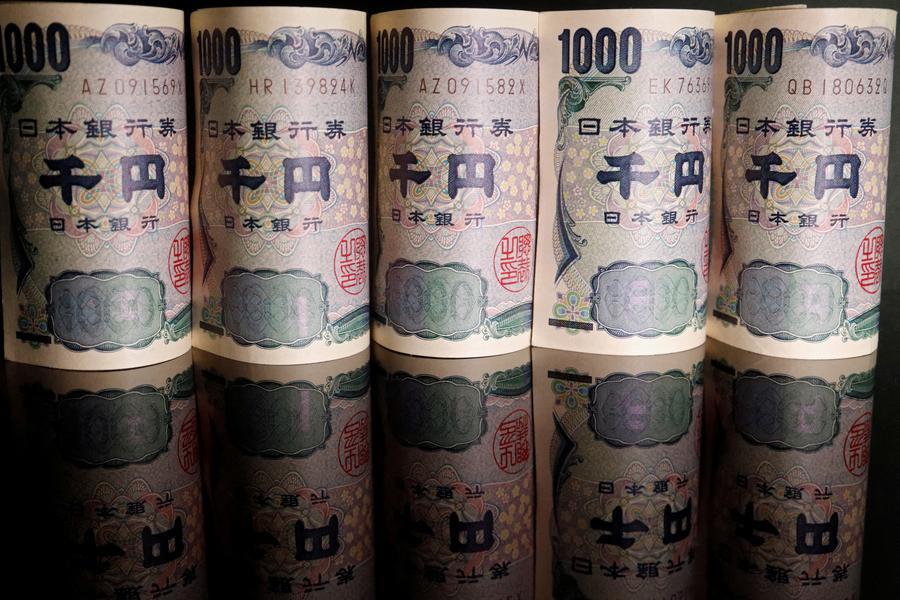
The yen soared to a two-month high on Monday as comments by the prime minister in Tokyo and Japan’s leading currency diplomat heightened speculation of coordinated currency intervention by U.S. authorities.
Investors also reduced their positions in the dollar ahead of the possible announcement of a new Fed chair by the Federal Reserve and the Trump administration.
The yen rose as much as 1.5% to 153.30 yen to the dollar, the highest since early November. The final score was 153.97.
Tokyo markets continued to attract investor attention after Japanese Prime Minister Sanae Takaichi said on Sunday that the government would take “necessary measures” against speculative market movements.
Signs of intervention
Sources told Reuters on Friday that the New York Fed was checking the dollar/yen rate with dealers, which could be considered a precursor to intervention. The yen exchange rate has risen more than 3% from Friday’s lows due to a rush to unwind short yen positions.
“If both the MOF (Japan’s Ministry of Finance) and the US Treasury are trying to limit dollar-yen appreciation, that’s clearly going to be a stronger driver,” said Dominic Banning, head of G10 currency strategy at Nomura.
“It will have a bigger impact on market behavior than if the Ministry of Finance were alone.”Japanese Finance Minister Satsuki Katayama declined to comment on the interest rate check, but foreign exchange diplomat Jun Mimura said the government would maintain close coordination with the United States on foreign exchange and act appropriately.
The United States has not participated in any coordinated intervention in the Japanese currency since March 2011, when it sold the yen after the Fukushima earthquake.
The yen is also under pressure due to concerns about Japan’s government debt, which is more than twice its economic output. A historic rise in market interest rates has raised concerns about Japan’s ability to repay its debt, but Takaichi said he would cut taxes as he campaigned for a snap general election on February 8.
The yen posted its biggest single-day gain against the dollar in nearly six months on Friday, surging again on late Asian trade and New York trading. Bank of Japan money market data on Monday showed Friday’s sharp rise in the yen against the dollar was unlikely to be the result of official Japanese intervention.
The U.S. dollar index, which measures the dollar’s strength against a basket of six currencies, fell 0.1% to a four-month low of 97.14.
Falling dollar boosts euro and pound
Monday’s spillover dollar sell-off pushed the euro and British pound to four-month highs, while the Australian dollar hit its highest since September 2024.
The euro was last up 0.2% at $1.1854, the pound sterling was up 0.1% at $1.3659, and the Australian dollar was up 0.4% at $0.6922.
“The dollar is fragile anyway, but the rise in the yen has triggered a market-wide dollar selloff,” said Mark Chandler, chief market strategist at Bannockburn Capital Markets in New York.
“There’s a lot going on in the United States right now, including the recent protests over the Minnesota shooting. President Trump may also nominate a replacement for Jay Powell this week, so the market is nervous about both.” President Donald Trump said on Thursday that he would soon announce his choice to replace Chairman Jerome Powell as the next Federal Reserve Chairman, with BlackRock’s Rick Rieder currently the 48% favorite on betting site Polymarket.
The U.S. Federal Reserve will set interest rates on Wednesday, and markets expect them to remain unchanged, although policymakers have warned of further rate cuts, pricing in about 50 basis points of annual easing. Precious metals hit new highs, with gold above $5,100 an ounce, tying silver for the highest price on record.
“There’s potentially something much bigger at stake here,” said David Forrester, senior strategist at Credit Agricole in Singapore.
“The threat of intervention reflects broader investor concerns that the Japanese and U.S. authorities want a weaker U.S. dollar,” he said. “This, combined with President Trump’s erratic policy decisions, such as threatening to impose 100% tariffs on Canadian exports if we strike a trade deal with China, has put pressure on the attractiveness of U.S. dollar assets.”
(Reporting by Samuel Indyk in London, Gregor Stuart Hunter and Tom Westbrook in Singapore, and Gertrude Chavez in New York; Editing by Jamie Freed, Sri Navaratnam and Toby Chopra)
