


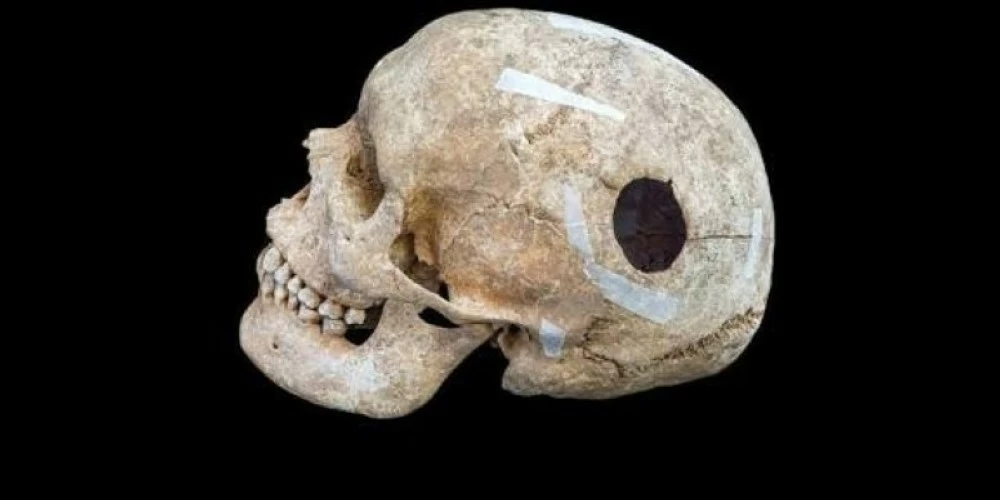
Archaeologists have uncovered what could be astonishing evidence of the oldest known surgical procedure in history. A Viking Age human skull with a large surgical hole.
This skull belongs to a young man between the ages of 17 and 24 who lived in the 9th century AD (about 772-891), and was unusually tall at approximately 195 centimeters (195 centimeters), far exceeding the average height for men of the time, which was approximately 168 centimeters.
Discovery during student training
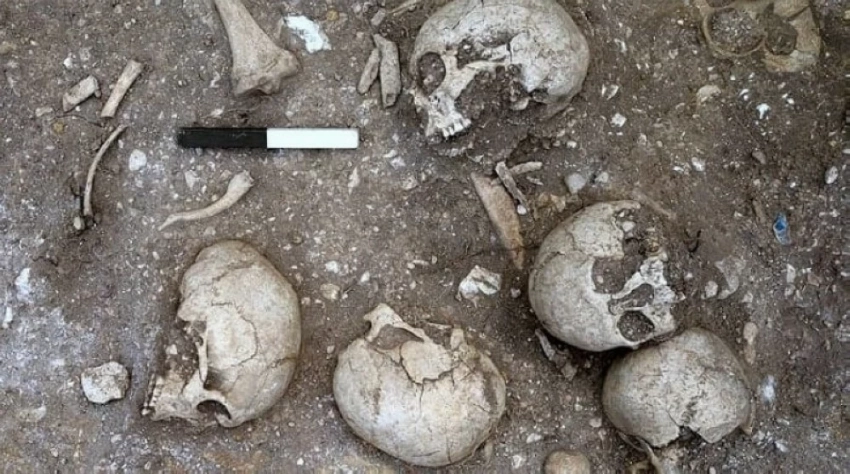
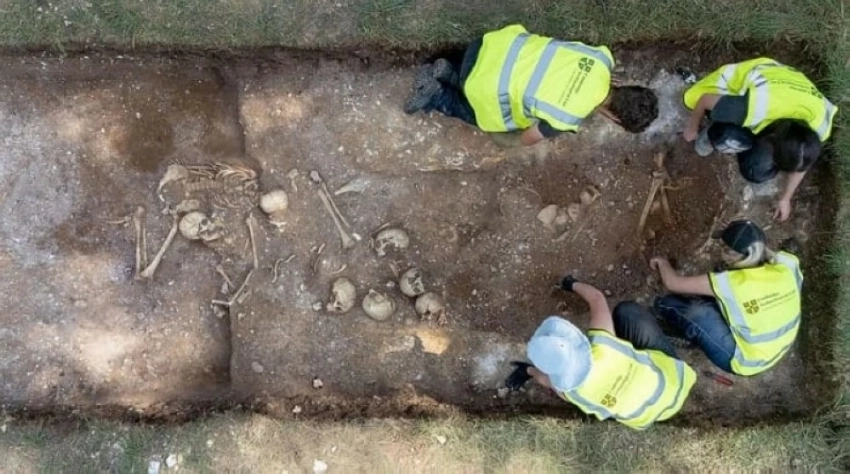
Cambridge University students discovered the remains last year during a training excavation at Wandlebury Iron Age hill fort, south of Cambridge. The horrifying mass grave contained the remains of at least 10 people, some complete skeletons and some partially dismembered, a “pile of feet”, a group of separated skulls, and parts of apparently bound bodies.
The oval hole in the skull, about 3 centimeters in diameter, is thought to be the result of an ancient trepanation procedure. Trepanation is a surgical procedure in which a hole is drilled into a living skull to treat conditions such as severe migraines, seizures, or intracranial pressure caused by trauma or tumors.
Possible tumor and intracranial pressure
Dr Trish Pearce, curator of the Duckworth Institute at the University of Cambridge, said: “This young man may have had a tumor of the pituitary gland which causes an oversecretion of growth hormone, which explains his unusual height as seen in the axis of his long bones and other skeletal features.”
She added that this surgical procedure may have been an attempt to relieve this pain, as such conditions increase pressure within the skull and cause severe headaches, which is still a common goal in the treatment of head injuries today.
The mystery of mass graves
There were signs of healing around the edge of the hole, indicating that the man survived for a while after the surgery, but ended up in this collective hole. Archaeologists believe the holes were the result of battles, mass executions, or corporal punishment during the border war between the Anglo-Saxon and Viking kingdoms of eastern England.
Dr Oscar Aldred from the Cambridge Archeology Unit, who led the excavation, said: “Cambridgeshire was an area of border conflict between the Saxon and Viking kingdoms and witnessed constant conflict. This hole may have been connected to these conflicts, or the site may have been a sacred site or a known assembly used to carry out punishments, and some of the severed parts may have been displayed as trophies before being buried.”
Archaeologists have uncovered what could be surprising evidence of the oldest known surgical procedure in history. A Viking Age human skull with a large surgical hole.
This skull belongs to a young man between the ages of 17 and 24 who lived in the 9th century AD (approximately 772-891), and his height is approximately 195 centimeters, far exceeding the average height for men at the time (approximately 168 centimeters).
Discovery during student training
Cambridge University students discovered the remains last year during a training excavation at Wandlebury Iron Age hillfort, south of Cambridge. The horrifying mass grave contained the remains of at least 10 people, including complete skeletons and partially dismembered ones, a “pile of legs” and a collection of separated skulls, some of which appeared to have been bound together.
The oval-shaped hole, about 3 centimeters in diameter, in the skull is thought to be the result of an ancient trepanation procedure in which holes were drilled into the living skull to treat conditions such as severe migraines, seizures, or increased intracranial pressure due to trauma or tumors.
Possibility of tumors and increased intracranial pressure
Dr Trish Pearce, curator at the Duckworth Institute at the University of Cambridge, said: “This young man may have had a pituitary tumor that causes an overproduction of growth hormone, which could explain his unusual height, including his long diaphysis and other skeletal features.”
He added that the surgical procedure may have been an attempt to relieve this pain, as such conditions cause increased intracranial pressure, leading to severe headaches, which is still a common goal in the treatment of head injuries today.
The mystery of mass graves
Although there are signs of healing around the edge of the hole, indicating that the man survived for some time after the surgery, archaeologists believe that the mass grave ended up being the result of a battle, mass execution, or corporal punishment during a border dispute between the Anglo-Saxon and Viking kingdoms of eastern England.
Dr Oscar Aldred, from the Cambridge Archeology Unit, who led the excavation, said: “Cambridgeshire was a contested border area between the Saxon and Viking kingdoms, and there were ongoing conflicts. This hole could be related to these conflicts. Alternatively, perhaps the site was a sacred site or a known assembly used to carry out punishments, and some of the dismembered parts may have been displayed as trophies before burial.”
