


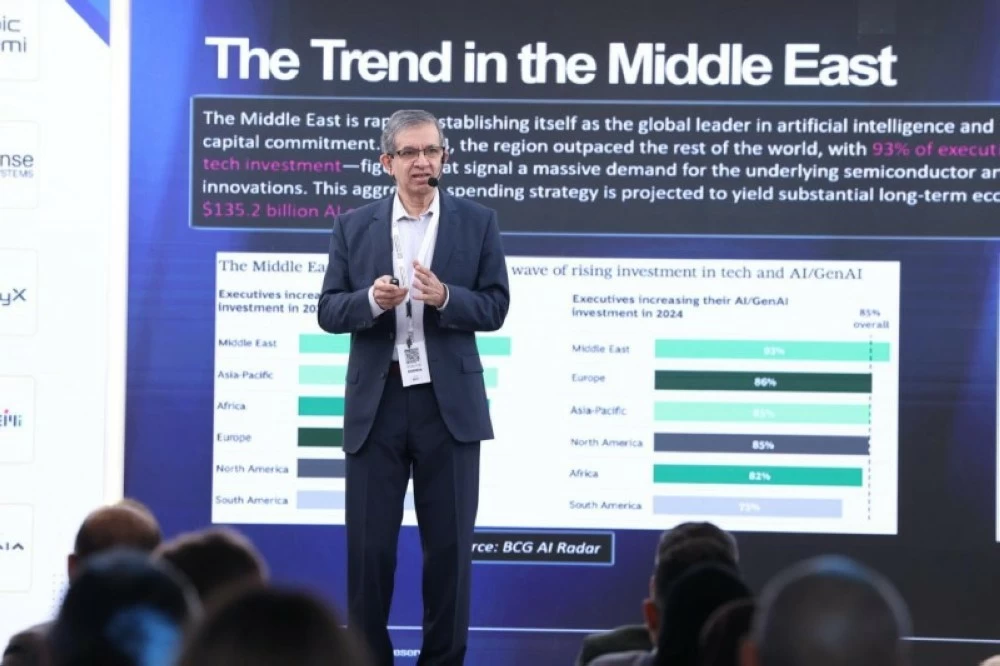
Saudi Arabia successfully held the Kingdom of Saudi Arabia Semiconductor Forum in Riyadh on Tuesday, reaffirming its strategic commitment towards building a resilient and globally competitive semiconductor ecosystem.
The high-level meeting brought together government officials, global technology leaders, investors, academia, and industry experts to align on a harmonized roadmap for semiconductor localization, digital sovereignty, and advanced industrial development under Vision 2030.
The one-day meeting served as a strategic platform to consider Saudi Arabia’s evolving role across the semiconductor value chain, with discussions centered on local content development, advanced manufacturing, workforce development, investment frameworks, artificial intelligence (AI), data centers, cloud infrastructure, advanced computing, energy systems, and the growing importance of semiconductors in driving smart industries.
The forum saw the participation of major global and regional technology companies including Qualcomm, Lenovo, Amazon Web Services (AWS), HUMAIN, EPIC Semi, JLL, Datavolt, Go Telecom, UltraSense and others, reflecting the strong cross-sector collaboration towards Saudi semiconductor ambitions.
Strategic localization plans highlighted
A key highlight of the forum was the keynote address entitled “A Call for a Saudi Semiconductor Localization Plan in 2030” by Dr. Naveed Sherwani, CEO of the Saudi National Semiconductor Hub.
Dr. Sherwani emphasized the strategic urgency of establishing a coordinated national framework to build domestic semiconductor capacity, reduce dependence on global supply chains, and promote sustainable economic diversification. He emphasized the importance of policy alignment, targeted international partnerships, systematic human resource development, and implementation-focused localization efforts to position the Kingdom as a resilient and globally relevant semiconductor hub.
He noted that localization needs to go beyond assembly and encompass design capabilities, advanced packaging, research and development, and strategic manufacturing partnerships.
Related articles

Al Jomaih & Shell Lubricating Oil Company (JOSLOC) and Al Nakhlah National Company (NANCO) forge strategic partnership to enhance mobility in Saudi Arabia
Ecosystem linkages between sectors
Throughout the day, keynote sessions and panel discussions explored viable pathways to ecosystem development. Topics include financing and investment mechanisms, enabling high-performance computing infrastructure, fostering advanced manufacturing capabilities, strengthening AI-driven demand for semiconductors, and incorporating localization as a core industrial strategy.
Participants emphasized that the semiconductor sector is at the heart of the digital economy, driving key national priorities such as AI infrastructure, hyperscale data centers, cloud services, energy systems, smart cities, and defense technology.
Speakers emphasized the importance of coordinated public-private cooperation in accelerating ecosystem maturation, strengthening competitiveness, and ensuring the long-term resilience of the semiconductor sector.
Investment and partnership momentum
The forum featured discussions focused on investment priorities, knowledge transfer, structured localization pathways, and facilitated direct engagement between Saudi decision-makers and international technology leaders.
The presence of major global companies showed increased confidence in Saudi Arabia’s policy direction and industrial strategy. Stakeholders noted that clear regulatory frameworks, targeted incentives, and talent development efforts are important to attract sustained investment in semiconductor-related ventures.
The event further reflected Saudi Arabia’s broader ambitions to achieve digital sovereignty and strengthen its leadership in next-generation technologies as part of Vision 2030’s diversification agenda.
By convening policymakers, investors, technology leaders, and industry stakeholders under one platform, the Semiconductor Forum takes an important step toward translating strategic intent into coordinated industrial action.
