


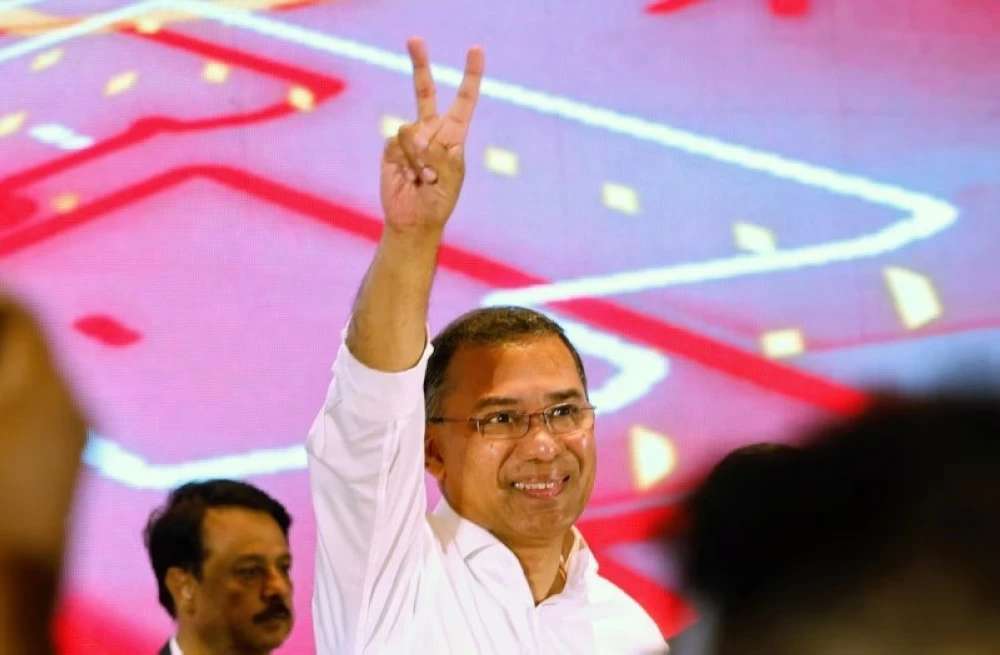
Bangladesh Nationalist Party leader and prime ministerial candidate Tariq Rahman has set the priorities of the next government to revitalize the economy, restore security and order, and strengthen good governance.
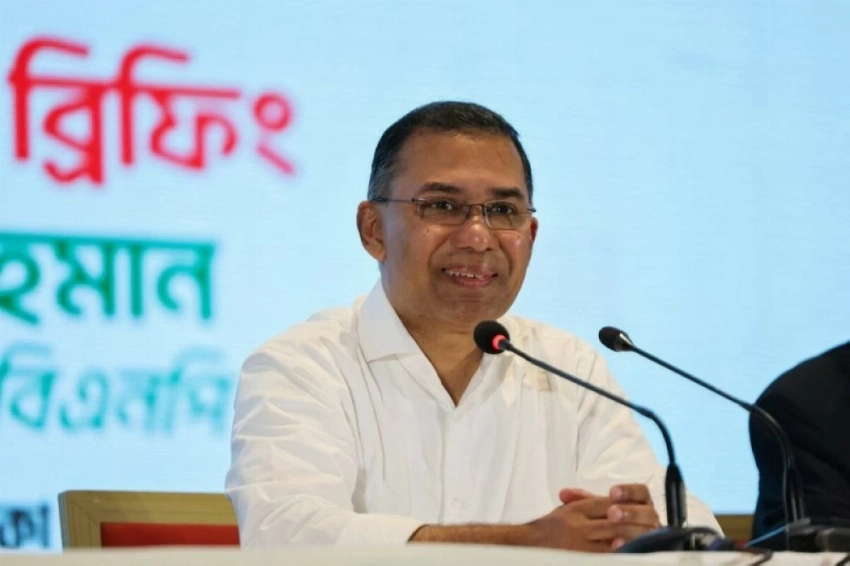
very serious challenge
Following the party’s landslide victory in the parliamentary elections, Rahman said at a press conference today (Saturday) that we face very serious challenges. We must address the country’s economy and ensure good governance.
He also said he would work to promote business and create more job opportunities, stressing that “China is a friend of development” and expressing hope for stronger cooperation between the two countries, Reuters reported.
Bangladesh elections
Rahman’s remarks came after the announcement of the results of last Thursday’s parliamentary elections, in which the BNP coalition won an overwhelming majority of 212 out of 299 seats in parliament, compared to 77 seats for the Jamaat-e-Islami party coalition.
The party thus returned to power for the first time in nearly 20 years in the first fully competitive election since the Gen Z uprising that ousted former Prime Minister Sheikh Hasina in August 2024.
simultaneous constitutional referendum
A well-attended constitutional referendum was held in parallel with the election, with voters approving reforms such as limiting the prime minister to two presidential terms, strengthening the independence of the judiciary, and increasing women’s representation. Analysts saw the BNP’s large majority as an opportunity to restore political stability after months of uncertainty.
Cautious praise and call for reform
Meanwhile, interim government head Muhammad Yunus (Nobel Peace Prize laureate) welcomed the result, describing it as a “remarkable milestone in the transition to democracy” and congratulating Tariq Rahman on the “party’s overwhelming victory” for the transfer of power.
International observers, including the US Republican International Institute, noted the peaceful and efficient election operation, but warned that the political environment remained fragile and called on the new government to implement swift reforms to consolidate democratic gains.
controversial biography
Tariq Rahman, 60, the son of former Prime Minister Khaleda Zia (who died last year) and the late President Ziaur Rahman, founder of the BNP and one of the symbols of Bangladesh’s independence, spent 17 years in self-imposed exile in London before returning home in December 2025.
This is his first time winning a seat (in Dhaka 17 and Bogra 6 constituencies), and he has previously been accused of corruption by opposition parties, which he strongly denies.
Mr. Rahman faces major challenges, including rebuilding the damaged economy, restoring investor confidence and reforming the ready-made garment sector, while maintaining a balance in external relations, particularly with China and India (Prime Minister Narendra Modi personally congratulated Mr. Rahman).
The BNP’s victory represents a historic turnaround for Bangladesh after years of authoritarian rule, and there are high hopes for the restoration of democracy and economic stability under the leadership of Tariq Rahman.
Bangladesh Nationalist Party leader and prime ministerial candidate Tariq Rahman has made it clear that the next government’s priorities will be to revitalize the economy, restore security and order, and promote good governance.
very serious challenge
“We are facing very serious challenges. We have to deal with the country’s economy and ensure good governance,” Rahman said at a press conference today (Saturday) following the party’s landslide victory in the parliamentary elections.
“China is a friend of development,” he said, adding that he would work to promote business and create more job opportunities, and expressed hope for stronger cooperation between the two countries, according to Reuters.
Bangladesh elections
Rahman’s remarks came after the results of last Thursday’s parliamentary elections were announced, in which the BNP coalition won an overwhelming majority of 212 out of 299 seats in parliament, compared to 77 seats for the Islamist coalition.
The party thus returned to power for the first time in nearly 20 years in the first truly competitive election since the Gen Z uprising that ousted former Prime Minister Sheikh Hasina in August 2024.
Concurrent constitutional referendum
The constitutional referendum that coincided with the election saw active participation, with voters approving reforms including limiting the prime minister to two terms, strengthening the independence of the judiciary, and increasing women’s representation. Analysts saw the BNP’s large majority as an opportunity to restore political stability after months of uncertainty.
Cautious praise and calls for reform
Meanwhile, interim Prime Minister Muhammad Yunus (Nobel Peace Prize laureate) welcomed the results, describing them as “an important milestone in the transition to democracy” and congratulating Tariq Rahman on his “party’s landslide victory” in preparation for the transfer of power.
International observers, including the International Republican Association of America, praised the peaceful and efficient conduct of the election, but warned that the political environment remained fragile and called on the new government to implement swift reforms to strengthen democratic progress.
controversial biography
Tarique Rahman, 60, the son of former Prime Minister Khaleda Zia (who died last year) and the late President Ziaur Rahman, founder of the BNP and symbol of Bangladesh’s independence, spent 17 years in self-imposed exile in London before returning home in December 2025.
This is the first time he has won a seat (in Dhaka 17 and Bogra 6 constituencies) and has previously faced corruption allegations from opposition parties, which he vehemently denies.
Mr. Rahman faces major challenges, including rebuilding the damaged economy, restoring investor confidence and reforming the ready-made garment sector, while maintaining a balance in external relations, particularly with China and India (Prime Minister Narendra Modi personally congratulated Mr. Rahman).
The BNP’s victory represents a historic shift in Bangladesh after years of authoritarian rule, and there are high hopes for the restoration of democracy and economic stability under the leadership of Tariq Rahman.
