


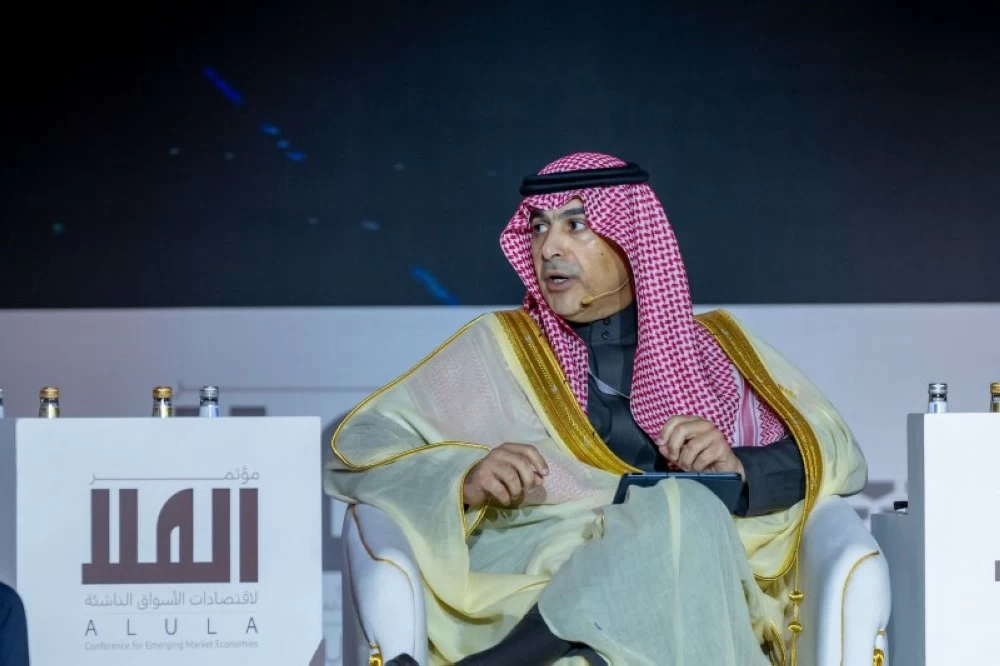
Saudi Central Bank Governor Ayman Al Sayyari warned of the escalation of global shocks hitting the global financial system, stressing that they are no longer emergencies or circumstantial events, but rather have turned into multidimensional and more frequent shocks, reflecting a state of structural uncertainty that imposes unprecedented challenges on economies, especially emerging economies.
During his participation in the AlUla Emerging Economies Conference, Al Sayyari explained that this situation is due to four main factors, including geopolitical fragmentation, a significant acceleration of technological developments, especially artificial intelligence, and fluctuations in commodity prices, in addition to the accelerated growth of non-bank financial intermediaries.
He pointed out that at a time when non-bank financial intermediation assets exceeded 51% of total global financial assets, the traditional monetary policy transmission mechanism was beginning to show signs of weakness due to the declining role of traditional banking channels, thereby increasing market sensitivity to liquidity fluctuations and increasing the pace of pressure from margin supplementation, guarantee discounting, and simultaneous deleveraging operations.
He noted that the shocks facing the global financial system are often external to emerging economies, which are already struggling with internal challenges that exacerbate volatility, and given escalating geopolitical tensions, trade fragmentation, and high levels of debt and its costs, these economies face structural and institutional vulnerabilities that reduce their ability to absorb shocks.
He explained that the difference between the most resilient and the most vulnerable economies depends on two main factors. The first is the existence of a coherent regional monetary, monetary and regulatory policy framework that supports countercyclical responses and limits fluctuations in capital flows. The second is to provide effective “shock absorbers”, primarily sufficient foreign exchange reserves, in addition to the depth of financial markets, including debt markets, capital markets, and short-term money markets.
Referring to the Saudi experience, Mr. Alsayali noted the reliance on reserves, which has contributed to maintaining financial stability and market stability, and emphasized the importance of countercyclical policies to reduce volatility, explaining that the accumulation of reserves during periods of growth is strategically used to support the balance of payments and cushion the impact of commodity price fluctuations.
He added that pegging the Saudi riyal to the US dollar has contributed to strengthening price stability, noting that the Kingdom’s average inflation rate over the past five years remains below 3%.
Mr. Al Sayyari stressed that international cooperation remains a critical element in addressing emerging vulnerabilities, pointing to the progress made by policymakers around the world and the importance of exchanging experiences to strengthen supervisory and regulatory preparedness and support global financial stability.
The Saudi Central Bank Governor concluded his speech by highlighting three priorities for international cooperation, including strengthening cross-border data exchange to support vulnerability monitoring and assessment, increasing harmonization and interoperability in the implementation of emerging technologies to maintain financial stability, and accelerating knowledge exchange to modernize regulatory and supervisory frameworks.
Saudi Central Bank Governor Ayman Al Sayyari warned of the intensifying shocks from around the world hitting the global financial system, stressing that they are no longer just emergencies or circumstantial events, but are turning into multidimensional and more frequent shocks, reflecting structural uncertainties that impose unprecedented challenges on countries, especially emerging economies.
While participating in the Al-Ula Conference for Emerging Economies, Al Sayyari explained that this situation is due to four main factors, including geopolitical fragmentation, the rapid acceleration of technological developments, especially artificial intelligence, fluctuations in commodity prices, and the accelerated growth of non-bank financial intermediaries.
He pointed out that traditional monetary policy transmission mechanisms are beginning to show signs of weakness, with the role of traditional banking channels declining as non-bank financial intermediation assets exceed 51% of total global financial assets, market sensitivity to liquidity fluctuations increases, and pressures from margin calls, collateral discounts, and simultaneous debt reductions become more frequent.
He noted that shocks facing the global financial system are often external to emerging economies, which are already struggling with internal challenges that exacerbate the severity of volatility, and that these economies face rising geopolitical tensions, trade fragmentation, and structural and institutional vulnerabilities that reduce their ability to absorb shocks amid high levels of debt and their costs.
He made clear that the difference between the most resilient economies and the more fragile ones will depend on two main factors. One is the existence of a coherent regional policy framework (monetary, fiscal, regulatory) that supports countercyclical responses and limits fluctuations in capital flows. The second is the availability of effective “shock absorbers”, mainly sufficient foreign exchange reserves, in addition to the depth of financial markets, including debt, equity and short-term money markets.
Referring to the Saudi experience, Mr. Alsayali pointed to the reliance on reserves, which has contributed to maintaining financial stability and market stability, and emphasized the importance of countercyclical policies to reduce volatility, explaining that reserve accumulation during periods of growth is strategically used to support the balance of payments and cushion the impact of commodity price fluctuations.
He added that the pegging of the Saudi riyal to the US dollar has contributed to strengthening price stability, noting that the kingdom’s average inflation rate over the past five years has remained below 3%.
Mr. Alsayali affirmed that international cooperation remains a critical element in addressing emerging vulnerabilities, noting the importance of progress by global policymakers and the exchange of experiences to strengthen regulatory and supervisory preparedness and support global financial stability.
He concluded his speech by highlighting three priorities for international cooperation, including strengthening cross-border data exchange to support surveillance and assess vulnerabilities, increasing collaboration and interoperability in deploying emerging technologies to maintain financial stability, and accelerating knowledge exchange to update regulatory and supervisory frameworks.
