

SYDNEY: Asian stocks rose on Tuesday as investors hoped for the best from a spate of gains in US mega-cap stocks, but uncertainty caused by President Donald Trump’s recent tariffs on South Korea limited broad gains while boosting gold and silver.
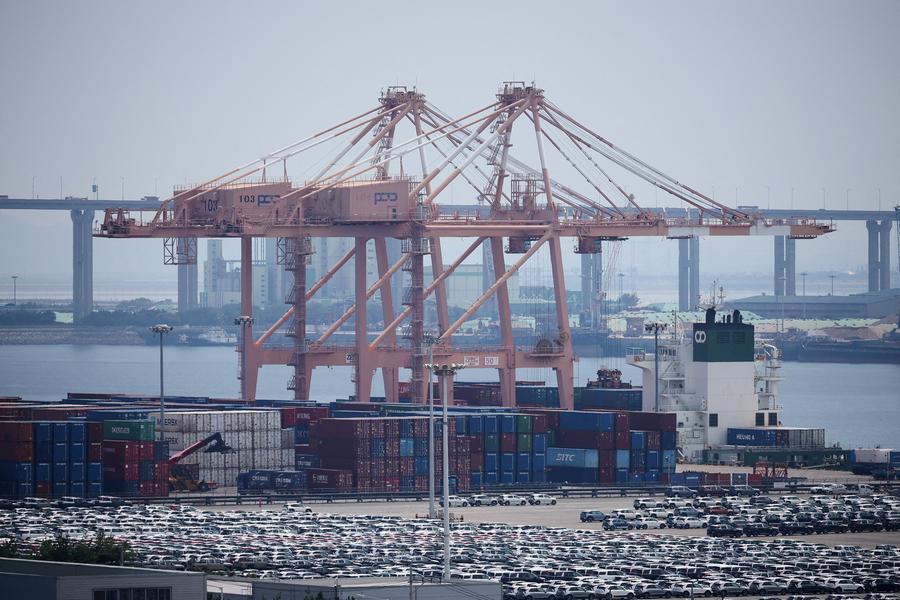
President Trump accused South Korea’s parliament of “not implementing” a trade deal with Washington and said late Monday that he would raise tariffs to 25% on imports from Asia’s fourth-largest economy to the United States, including cars, lumber and medicine.
The stock market seemed to take the news well, with Nasdaq futures up 0.2% as investors braced for big gains from the so-called Magnificent Seven, which includes Microsoft, Apple, Tesla and others, starting Wednesday.
Even South Korea’s KOSPI quickly reversed its earlier decline, ending up 0.8% higher.
Still, safe-haven gold rose 1% to $5,066 an ounce, just shy of its all-time high of $5,110, while silver rose 6.4% to $110.60 an ounce, not far from its all-time high of $117.70 just set on Monday.
“The frenzied nature of the uncertainty and the weaker dollar are the main drivers of this (gold) rally,” said Christopher Rooney, commodity strategist at RBC Capital Markets.
“Similarly large gains in the past have been in early September or mid-December if you look at duration alone, which means the current duration is by no means an outlier,” he said, adding that based on 2025 performance, gold could reach $7,100 an ounce by the end of the year.
In Asia, MSCI’s broadest index of Asia-Pacific shares outside Japan rose 0.4%. Japan’s Nikkei stock average fell 0.1% as the recent sharp rebound in the yen clouded the outlook for its vast export sector.
Chinese blue-chip stocks were flat, but Hong Kong’s Hang Seng Index rose 0.4%.
Overnight, Wall Street rose for the fourth day in a row, with the S&P 500 and Nasdaq hitting their highest levels in more than a week. Much attention is being paid to the financial results of major US tech companies, which will be a key test of the sustainability of the AI-driven rally.
The Fed is expected to announce its latest policy decision on Wednesday, but no changes in interest rates are expected. But the meeting will be overshadowed by the Trump administration’s criminal investigation into Chairman Jerome Powell, whose term ends in May.
Online betting markets currently believe there is a 50% chance that Rick Rieder, head of fixed income at BlackRock, who is a fellow supporter of low interest rates, will succeed Trump.
US dollar discomfort
The dollar will come under criticism again in the first weeks of 2026 as a variety of factors, including Washington’s desire for a weaker currency and President Trump’s erratic policy decisions, increase, prompting investors to reconsider their optimistic assumptions about a period of stability for the dollar.
The latest drop to its lowest level in more than four months was driven by the sharp rise in the Japanese yen since Friday, when talk of interest rate checks by the New York Fed raised the risk of joint U.S.-Japan intervention to stem the yen’s decline.
The dollar was steady at 154.30 yen on Tuesday, down a staggering 2.6% in the past two sessions and well below the 160 yen level considered a red line by Japanese authorities.
Against six major currencies, the dollar was flat at $97.09, hitting a 4-1/2-month low of around $96.8.
In the U.S. Treasury market, the benchmark 10-year Treasury yield rose 1 basis point to 4.225%, after falling for four consecutive sessions from a recent high of 4.313%.
The shooting death of a second American by a federal immigration officer in Minnesota has sparked fears of another U.S. government shutdown as Republicans and Democrats are at odds over funding for President Trump’s Department of Homeland Security.
Oil prices were almost flat on Tuesday. Brent crude oil futures fell 0.1% to $60.58 per barrel and US West Texas Intermediate crude oil fell 0.2% to $65.48.
(Reporting by Stella Chiu; Editing by Sri Navaratnam)
