

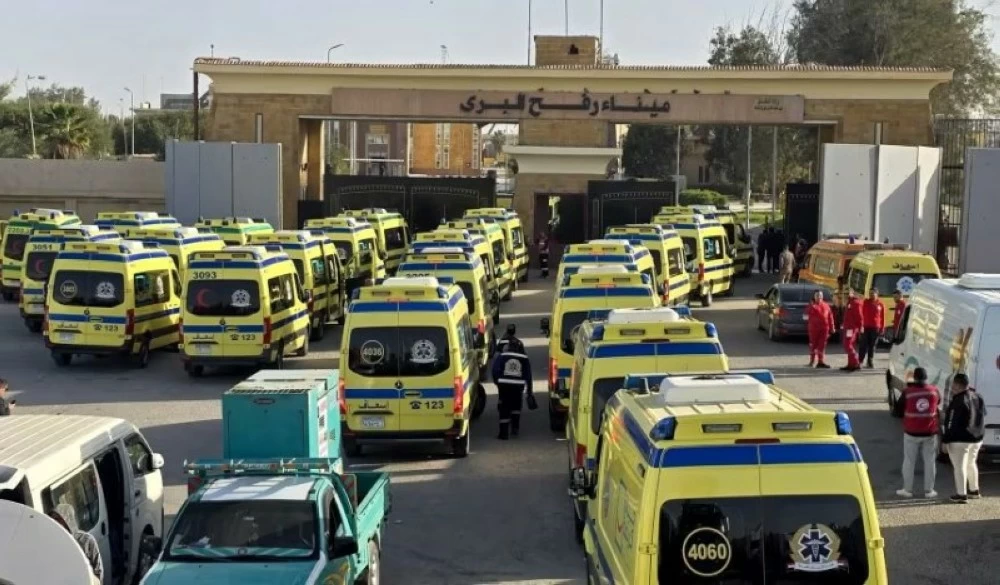
RAFAH – Israel reopened the border between Gaza and Egypt on Monday, allowing a small number of Palestinians to leave the enclave and allowing some who fled the war to return for the first time.
The crossing, the only route in and out for almost all of Gaza’s more than 2 million residents, has been largely closed since May 2024, when the Gaza side was occupied by Israeli forces.
The closure cuts off a vital route for injured and sick Palestinians to receive medical care outside of Gaza, with only a few thousand people allowed to seek treatment in third countries over the past year by alternative routes through Israel.
The restart was scheduled to take place during the first phase of a ceasefire plan between Israel and Hamas, launched by US President Donald Trump in October. But Israel blocked this until last week, when the body of the last Israeli hostage in the Gaza Strip was returned.
Although there are complaints that only a small number of people and no goods can pass through the road, it will be a relief to many Palestinians who see the road as a lifeline to the rest of the world.
Some 20,000 sick and injured Palestinians are waiting to leave Gaza for treatment.
According to Palestinian officials, only 50 patients will be allowed to leave each day, accompanied by two relatives, and 50 people who left Gaza during the war will be allowed to return.
The checkpoints will be operated by EU supervisors and local Palestinian staff, while Israel will carry out security checks remotely.
On Monday morning, Israeli security officials said the Rafah crossing was “open to the movement of residents, both in and out” following the arrival of a team from the European Union Border Assistance Mission.
Al-Qahera News TV, which is close to Egyptian intelligence, reported that the crossing had “accepted the first wave of Palestinians returning to the Gaza Strip from Egypt.” It added that the move was made “as part of Egypt’s efforts to facilitate movement through the border.”
Related articles
Yemen accuses UAE aid forces of gross human rights violations
Mohamed Nasir, a Palestinian who was injured early in the war and had his leg amputated, said the crossing was a “lifeline”.
“I need to undergo surgery that is not available in Gaza but can be performed overseas,” he told AFP news agency.
Israeli authorities announced on Sunday that a trial opening of the intersection had taken place.
A Palestinian official familiar with the trial proceedings told the BBC that around 30 Palestinian staff had arrived on the Egyptian side of the border ahead of the first operational phase.
The World Health Organization will oversee the transfer of patients from areas under Hamas control and will transport them by bus across the “yellow line” to areas controlled by Israeli forces, the BBC understands.
President Trump’s 20-point Gaza peace plan states that reopening the Rafah border in both directions would be subject to the same mechanisms that were in place under the previous ceasefire agreement in January last year.
Until Israel occupied it in 2024, the crossing was the main exit point for Palestinians allowed to leave the country during the war, as well as a key entry point for humanitarian aid.
The Israeli government announced in December that the Rafah crossing would open to allow Palestinians to leave Gaza. But Egypt said the crossing would only be opened if movement in both directions was allowed, allowing the return of some 30,000 displaced Palestinians who fled to Egypt and other countries during the war.
Despite the intersection being reopened, Israeli military attacks killed at least four Palestinians, including a 3-year-old boy, in separate incidents north and south of the Strip on Monday. — Agency
