

The Kingdom of Saudi Arabia supported the Middle East Green Initiative (MGI) and stressed the importance of regional cooperation and collective action to advance towards achieving the goals of environmental protection, expanding vegetation coverage, and addressing the challenges of desertification, drought and climate change. Saudi Arabia also announced the start of the operational phase of the initiative and preparations for the launch of an ambitious project.
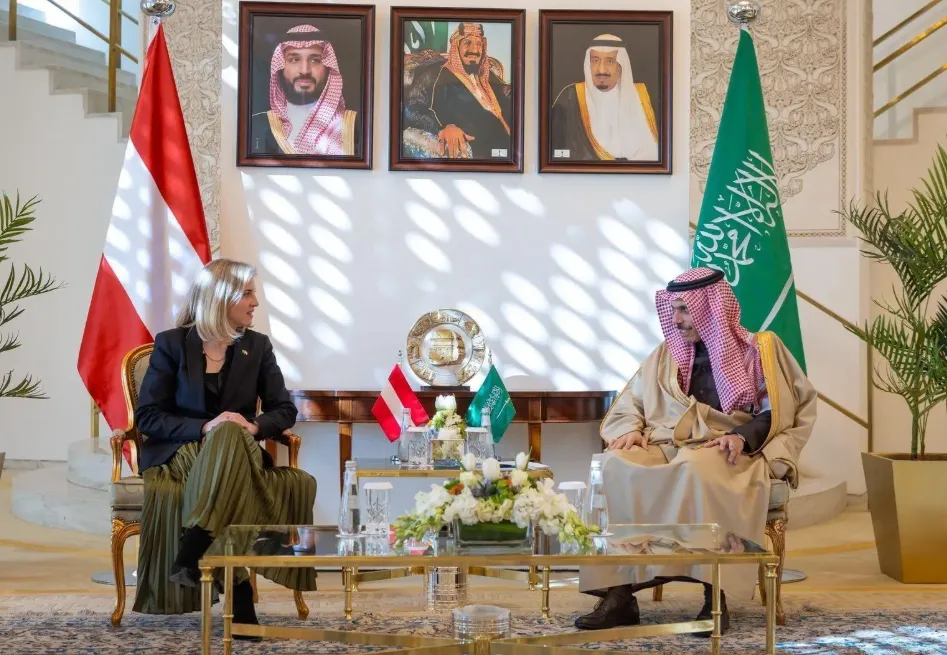
This was stated in a speech by Abdulrahman Al-Fadly, Minister of Environment, Water and Agriculture, who is also the Chairman of the second session of the MGI Council of Ministers, at the conclusion of the second session of the Council of Ministers held in Jeddah today. The meeting was attended by 30 member states from Asia and Africa, in addition to the UK, which participated as a non-regional observer, SPA reported.
According to a press release issued today by the Ministry of Environment, Water and Agriculture, Al-Fadly called for increased efforts to restore degraded land and combat desertification. He emphasized how important these actions are to overcome regional challenges such as drought and land degradation. Furthermore, he welcomed the new members, noting that their addition is a crucial step towards achieving the initiative’s ambitious goals.
He commended the efforts of regional Member States towards the national goal of increasing vegetation cover through the planting of more than 37 billion trees and the restoration of 92 million hectares of degraded land. He praised the progress achieved so far, with 3.5 billion trees already planted and 550,000 hectares restored, and said these results demonstrate a firm commitment to both national and regional greening goals.
The Ministerial Council Communiqué of the Second Ministerial Council Meeting of the Middle East Green Initiative has been published, and the Council adopted several important decisions to support the start of the operational phase of the initiative. The Council also renewed its resolve to strengthen regional cooperation to combat land degradation, halt desertification, strengthen resilience to drought, and adapt to severe environmental, social and economic impacts while mitigating its impacts.
The Council also welcomed the addition of the Republic of Ghana, the Republic of Sierra Leone, the Democratic Socialist Republic of Sri Lanka and the Syrian Arab Republic as new regional members of the Middle East Green Initiative, bringing the total number of regional members to 34, in addition to the United Kingdom as a non-regional observer. The Council noted that this number is expected to increase further, reflecting the strong interest and commitment of countries in the region to achieving the initiative’s goals.
The MGI Ministerial Board expressed its deep gratitude and appreciation to His Royal Highness King Salman bin Abdulaziz Al Saud, Custodian of the Two Holy Mosques, and His Royal Highness Crown Prince Mohammed bin Salman bin Abdulaziz Al Saud, Crown Prince and Prime Minister, for their outstanding support to the Middle East Green Initiative. The Council also expressed its sincere gratitude to Abdulrahman Al-Fadly, Minister of Environment, Water and Agriculture, and the Chairman of the Council of Ministers for hosting the second Council of Ministers meeting, which was a major milestone in advancing the implementation and objectives of this initiative. The MGI Council of Ministers also congratulated the Faculty of Engineering. Mr. Ibrahim Alturki has been appointed as MGI Secretary General.
The Council of Ministers took note of the MGI Executive Committee report and the MGI Secretary-General’s report, highlighting important achievements during the establishment phase, including the approval of the Country Host Agreement and the signing of the Fund Trustee Agreement with the Islamic Development Bank (IsDB). He also mentioned conducting capacity-building and knowledge-sharing events, as well as signing several memorandums of understanding with relevant international organizations.
These steps will pave the way for the operational phase and the start of projects to develop vegetation cover and restore degraded lands in Member States. The Council commended the Kingdom of Saudi Arabia’s efforts in coordination and cooperation with regional Member States and representatives of the Executive Committee. He also praised Saudi support in funding the General Secretariat’s equipment and operating budget. Additionally, the Council welcomed the progress made in securing the necessary components and enablers to begin the implementation phase of the initiative.
The Council stressed the importance of strengthening multilateral cooperation with regional and international organizations and acknowledged the important role of the private sector, financial institutions and civil society in addressing the challenges of land degradation, desertification and drought. These contributions will play an important role in mitigating the effects of climate change and improving quality of life. The Council approved 35 regional and international technical and financial organizations and institutions to cooperate and sign agreements and memorandums of understanding aimed at achieving the objectives of the initiative.
The Board welcomed the Kingdom of Saudi Arabia’s continued chairmanship of the MGI Ministerial Board into 2026. This will ensure the continued development of the Initiative Secretariat and the completion of its organizational structure in preparation for the launch of land restoration projects in the Initiative’s regional member states.
According to SPA, the Council also approved an intercontinental rotation approach for the Presidency of the Middle East Green Initiative Ministerial Council. Based on this approach, starting in 2027, member states from two continents, Africa and Asia, will take turns in holding the Presidency. In 2027, Africa will assume the Presidency, with countries taking on the role in alphabetical order of the English language.
The Council of Ministers congratulated the Kingdom of Saudi Arabia on the outstanding success of the 16th Conference of the Parties (COP16) to the Convention to Combat Desertification (UNCCD), held in Riyadh from 2 to 13 December 2024. The Council underlined its full support for the outcome of COP16, which marked a historic turning point in advancing global support for the Convention and contributed significantly to strengthening multilateral cooperation to the Convention to Combat Desertification (UNCCD). Addressing the challenges of land degradation and drought.
It further encouraged MGI regional Member States to actively participate in the upcoming UNCCD COP and continue to play a leading role in fostering international momentum to advance the implementation of the Convention’s objectives, combat land degradation, halt desertification, accelerate land restoration and strengthen resilience to drought.
The Council of Ministers welcomed the ambitious achievements of COP16, in particular the Riyadh Declaration and the pioneering efforts launched by the Kingdom of Saudi Arabia at COP16, including the Riyadh Global Drought Resilience Partnership, the International Initiative on Dust Storm Early Warning, and the Business for Land Initiative.
The Council of Ministers also welcomed the launch of the Riyadh Action Agenda at COP16, which aims to move from ambition to action, and commended the strong engagement of many countries, international organizations, the private sector and civil society, who jointly launched some 40 initiatives under the Riyadh Action Agenda to provide durable and effective solutions for land restoration, sustainable land management, empowerment of indigenous peoples and local communities, and drought adaptation.
The Council of Ministers commended the Kingdom of Saudi Arabia’s leadership in strengthening synergies between the three Rio Conventions during its COP16 Presidency and recognized Brazil’s strong focus on land protection and restoration during the COP30 Presidency of the United Nations Framework Convention on Climate Change (UNFCCC), held from 10 October to 21 November 2025 in Belém, Brazil, which led to the launch of the Resilience Pact. Launch of Agricultural Investment for Net Zero Land Degradation (RAIZ) and Tropical Forest Perpetual Facility.
These efforts support land restoration efforts consistent with MGI’s objectives. The Executive Board also welcomed COP30’s decision to increase adaptation financing by 2035. This decision is expected to allocate more financial resources towards supporting nature-based solutions, particularly projects aimed at accelerating land recovery and strengthening drought resilience.
The Council also welcomed the outcome of the Seventh United Nations Environment Assembly (UNEA-7), which contributes to promoting international cooperation to address global environmental challenges. The Council commended the leadership of MGI Member States, in particular the Sultanate of Oman’s UNEA-7 Presidency, following the Kingdom of Morocco’s UNEA-6 Presidency in 2024.
The Council of Ministers welcomed the Arab Coordination Group’s (ACG) announcement to allocate $12 billion by 2030 to support global projects aimed at restoring degraded lands and building resilience against drought and desertification. The Council commended the Group’s support for regional and global environmental priorities and reaffirmed the important role of the Middle East Green Initiative as a platform for innovative projects.
On the sidelines of the Council of Ministers meeting, the Middle East Green Initiative Fund Secretariat Agreement was signed between the Initiative Secretariat and the Islamic Development Bank. The bank will manage the fund to support the operational phase and implementation of the initiative’s projects.
