


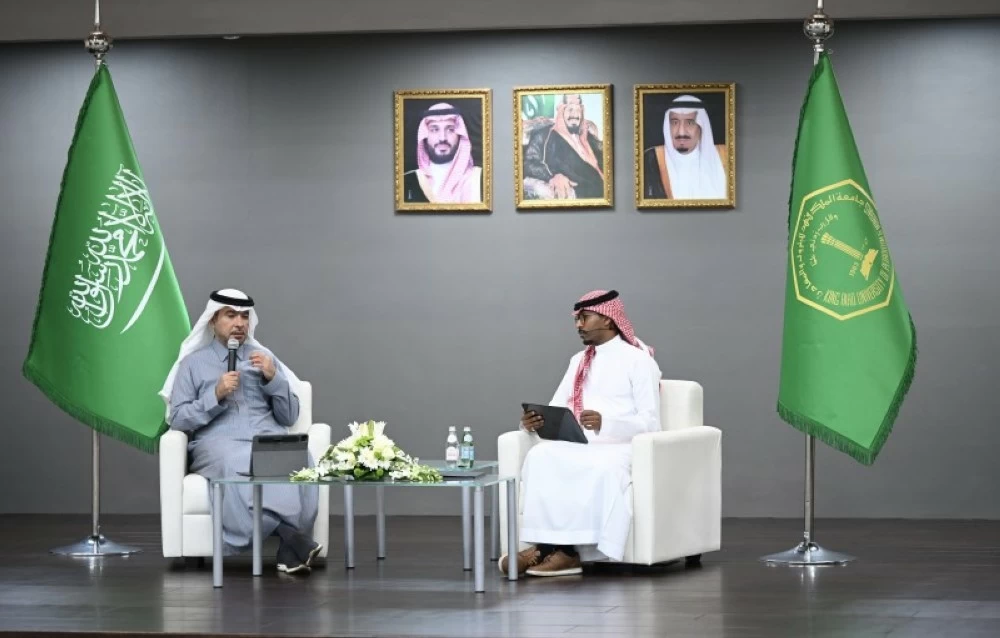
Majid Al Khogair, Minister of Rural Affairs and Housing, emphasized that the future of Saudi cities depends on innovation and strategic partnerships between government departments and academic institutions, and the role of artificial intelligence as a key tool in the development of smart and sustainable cities.
In a session entitled “Towards a smart and sustainable future city” held during a meeting with academics and students from King Fahd University of Petroleum and Mineral Resources in Riyadh, he explained that through the adoption of the latest technologies such as computer vision and smart monitoring, compliance rates have increased to 64%, operational costs have been reduced by 80% and dependence on face-to-face reviews has been reduced to 2%, as well as operational cost savings of over SR250 million due to quality improvements. road layer.
The department is committed to establishing a living national laboratory for artificial intelligence applications, from generative urban design to the use of drones supported by computer vision, and to bringing innovation from the laboratory to urban streets while ensuring the responsible application of technology. It aims to accelerate the transfer of cities, develop “digital twins” of cities to simulate future scenarios before implementation, and support proactive decision-making based on accurate data to increase operational efficiency and resource sustainability.
strategic partner
Al Hogeir said that universities are not just academic temples, but strategic partners that use artificial intelligence to analyze population growth, improve traffic flows, design public spaces according to community needs, and lead urban transformations that turn complex urban challenges into opportunities for sustainable development.
actual needs
He pointed out that the ministry’s scientific research is based on the country’s actual needs and includes the development of Saudi algorithms and models in the fields of housing, transportation, and sustainability, such as predicting housing demand, increasing energy consumption efficiency of buildings, and smart systems of water network management to maximize national impact.
He noted that involving students and researchers in practical projects will enable the next generation of professionals to use artificial intelligence ethically and responsibly, and that collaboration with universities, including King Saud University, has contributed to the development of urban design programs, the integration of Saudi architecture, and the adoption of 19 design guides to improve the quality of urban landscapes.
leadership vision
Discussing the role of academic experience in forming a leadership vision, Al Hogeir described it as a factory for refining thinking, teaching how to analyze complex problems, work in a team spirit, and take responsibility. These are the principles that apply today to the governments of more than 140 prefectures and cities serving more than 15 million people.
He touched on the role of universities, especially King Fahd University, in building smart cities, and said that university graduates are contributing to the activation of the Municipal Sector Behavioral Impact Measurement Framework (MCIF) through 14 indicators to analyze data and translate it into decision-making and tangible impact.
fundamental change
He pointed out that business philosophy has fundamentally changed from developing services to redesigning the way we think and make decisions.
He explained that the transformation had increased residents’ satisfaction with municipal services from 49% to more than 65%, satisfaction with city cleanliness from 53% to 76%, and reduced the rate of waste disposal in unhealthy ways from 64% to 49%.
He further added that cognitive cities represent the future of urban living, using data and advanced technology to proactively manage huge assets such as more than 8,000 parks, public squares and more than 196,000 kilometers of road network to ensure quality of life and resource sustainability.
economic value
Al Hogeir emphasized that scientific research translates into tangible economic value when applied in the field by achieving direct operational savings, such as increasing the efficiency of asset management, creating start-up companies, improving the quality of road construction layers, and reducing the costs of construction and energy projects, thereby increasing the sustainability of cities and their attractiveness as investment targets.
He discussed the role of modern construction technologies, 3D printing and drones in ensuring the construction of smart cities based on local capabilities, with a focus on localizing these technologies to the Kingdom and fostering national spirit.
He pointed out that the ministry’s goal is to build an integrated national model that combines knowledge and decision-making with the power of artificial intelligence to serve the entire country and achieve the goals of Saudi Vision 2030.
Majid Al-Fukair, Minister of Cities, Rural Affairs and Housing, confirmed that the future of Saudi Arabia’s cities depends on innovation and strategic partnerships between government departments and academic institutions, and the role of artificial intelligence as a key tool in the development of smart and sustainable cities.
Speaking at a meeting with academics and students from Riyadh’s King Fahd University of Petroleum and Mineral Resources in a session titled “Towards a smart and sustainable city of the future,” he explained that the adoption of the latest technologies such as computer vision and smart monitoring has contributed to increasing compliance rates to 64%, reducing operational costs by 80% and reducing reliance on in-person audits to 2%, as well as achieving operational savings of over SR250 million through urban improvements. quality of the road surface.
The ministry said it aims to establish a National Live Laboratory for Artificial Intelligence applications, from generative urban design to the use of drones supported by computer vision, to accelerate the transfer of innovation from the lab to city streets while ensuring the responsible application of technology, to develop “digital twins” of cities to simulate future scenarios before deployment, and to support proactive decision-making based on accurate data to increase operational efficiency and resource sustainability.
strategic partner
Alfkair said universities are not just academic institutions, but strategic partners in leading urban transformation, using artificial intelligence to analyze population growth, improve traffic flows, design public spaces according to community needs, and turn complex urban challenges into opportunities for sustainable development.
actual needs
He pointed out that the scientific research of the Ministry is based on the country’s actual needs, such as the development of algorithms and Saudi models in the fields of housing, transportation and sustainability, such as predicting housing demand, improving energy consumption efficiency of buildings and smart systems of water network management to maximize national impact.
He said that involving students and researchers in real projects will enable the next generation of professionals to use artificial intelligence ethically and responsibly, and that collaboration with universities, including King Saud University, has contributed to the development of urban design programs and the establishment of Saudi architecture, and adopted 19 design guidelines to improve the quality of urban landscapes.
leadership vision
Discussing the role of educational experience in forming a leadership vision, Mr. Al Fukair explained that experience is a factory for refining thought processes and teaching how to analyze complex problems, how to work as a team and how to take responsibility, and that these are the principles that are currently applied in the management of more than 140 provinces and cities serving more than 15 million people.
He touched on the role of universities in building smart cities led by King Fahd University, whose graduates contributed to revitalizing the Municipal Sector Impact Measurement Framework (MCIF) through 14 indicators for data analysis and translating it into decision-making and tangible impact.
fundamental change
He cited a fundamental shift in work philosophy, from developing services to reshaping the way we think and make decisions.
He explained that the changes have increased residents’ satisfaction with municipal services from 49% to more than 65%, satisfaction with city cleanliness from 53% to 76%, and reduced the proportion of waste disposed of in unhealthy ways from 64% to 49%.
He added that cognitive cities represent the future of urban living, leveraging data and advanced technology to proactively manage vast assets such as more than 8,000 parks and public squares and 196,000 kilometers of road networks to ensure quality of life and resource sustainability.
economic value
Al Fukair asserted that scientific research, when applied in practice, translates into tangible economic value through improved asset management efficiency and the creation of start-ups, achieving direct operational cost reductions such as improving the quality of road construction layers and reducing construction and energy project costs, thereby increasing cities’ sustainability and attractiveness as investment targets.
He discussed the role of modern construction technologies, 3D printing and drones, and focused on localizing these technologies to the Kingdom and developing national talent to ensure the construction of smart cities that leverage local capabilities.
He noted that the ministry’s ambition is to build an integrated national model that combines knowledge and decision-making driven by the power of artificial intelligence to serve the entire country and achieve the goals of Saudi Vision 2030.
