

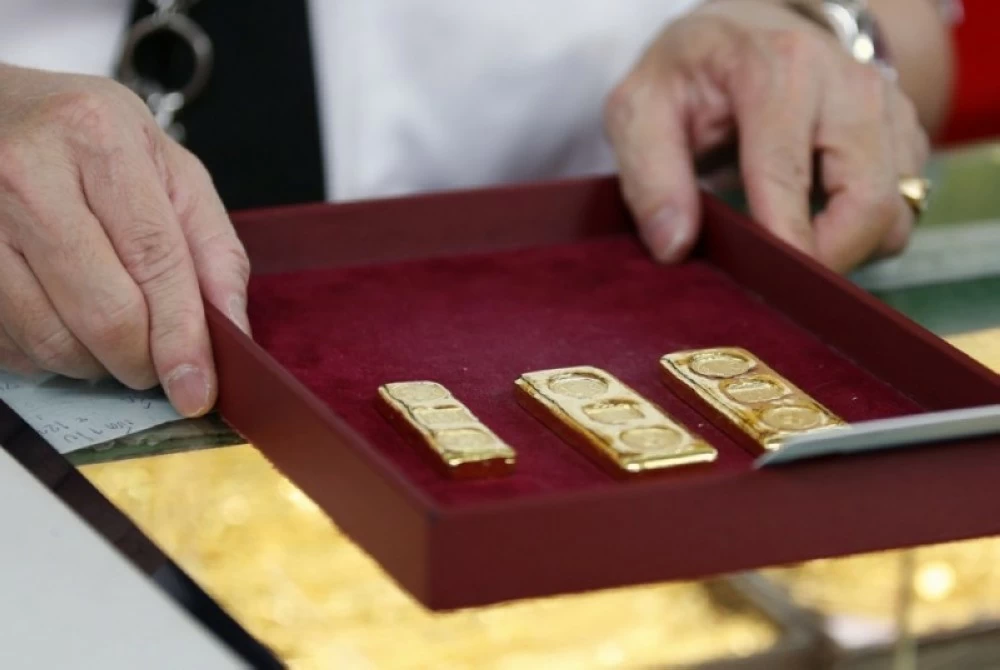
LONDON — Gold prices soared above $5,000 an ounce for the first time in history, extending a historic rally that saw the precious metal rise more than 60% in 2025.
Investors rushed into safe-haven assets as tensions between the United States and its key European allies over Greenland heightened concerns about financial and geopolitical uncertainty.
The historic bull run in 2026 was driven by a series of moves by US President Donald to destabilize global and domestic markets, including threats of tariffs against NATO allies, a military operation to capture Venezuelan President Nicolas Maduro, and a criminal investigation into Federal Reserve Chairman Jerome Powell.
On Saturday, he threatened to impose 100 per cent tariffs on Canada if it signs a trade deal with China.
A weaker dollar, higher-than-expected inflation and expectations that the Federal Reserve will cut interest rates further this year are also driving demand.
Demand for precious metals is also being driven by a variety of other factors, including higher-than-usual inflation, a weaker U.S. dollar, buying by central banks around the world, and the U.S. Federal Reserve expected to cut interest rates again this year.
On Friday, silver topped $100 an ounce for the first time, following a nearly 150% rally last year.
Wars in Ukraine and Gaza and the US seizure of Venezuelan President Nicolas Maduro also contributed to the rise in gold prices.
One of gold’s biggest appeals is its relative rarity. Only about 216,265 tonnes of the metal have been mined so far, according to the World Gold Council, an industry group.
“When you own gold, you’re not tied to someone else’s debt like you would be with bonds or stocks, where the performance of a company is tied to its performance,” said Nicholas Frappel, global head of institutional markets at ABC Refinery.
“This is a very good diversifier in a very uncertain world,” he added.
Gold took a big hit in 2025, posting its biggest annual gain since 1979, as investors flocked to the precious metal.
Gold has repeatedly hit record highs as financial markets have been reeling from worries about President Trump’s tariffs and concerns that artificial intelligence stocks will become overvalued.
Related articles

Kempinski Residences & Suites in Doha launches freehold apartment sales, offering investors and buyers a prestigious address in the heart of Doha
“I think a big part of that is due to the extreme uncertainty surrounding U.S. policy,” said Nikos Kabris of research consultancy Metals Focus.
Economic concerns can lead to higher gold prices, but when investors expect interest rates to drop, gold prices also tend to rise.
Investors typically focus on assets such as gold and silver because low interest rates reduce returns on investments such as bonds.
The US Federal Reserve is widely expected to cut its key interest rates twice this year.
“The opportunity cost of keeping your money[in government bonds]is actually inversely correlated because it’s not worth it anymore, so people go to gold,” said Ahmad Asiri, research strategist at Pepperstone.
Investors aren’t the only ones buying up gold.
Last year, central banks added hundreds of tonnes of bullion to their reserves, according to the World Gold Council.
“There is clearly a shift away from the US dollar that is benefiting gold tremendously,” Cavallis said.
Gold prices have continued to rise since the start of the year, but Frappel warned that a “news-driven” market could lead to a decline in gold prices.
“There should be room for unexpected news that might actually be good for the world, but not necessarily good for gold,” he said.
However, not everyone buys gold purely for investment purposes.
In many cultures, this metal is purchased during festivals or given as a gift for celebrations such as weddings.
In India, the annual Diwali festival is believed to be an auspicious occasion to purchase precious metals to bring wealth and good fortune.
According to US investment bank Morgan Stanley, Indian households hold $3.8 trillion in gold, equivalent to 88.8% of gross domestic product (GDP).
China is the world’s largest single consumer market for gold, and many people believe that buying gold will bring them good luck.
“We often see seasonal increases in demand around the Lunar New Year, and we’re seeing that to some extent at the moment,” Cavallis said, referring to the Year of the Horse, which begins in February. — Agency
