

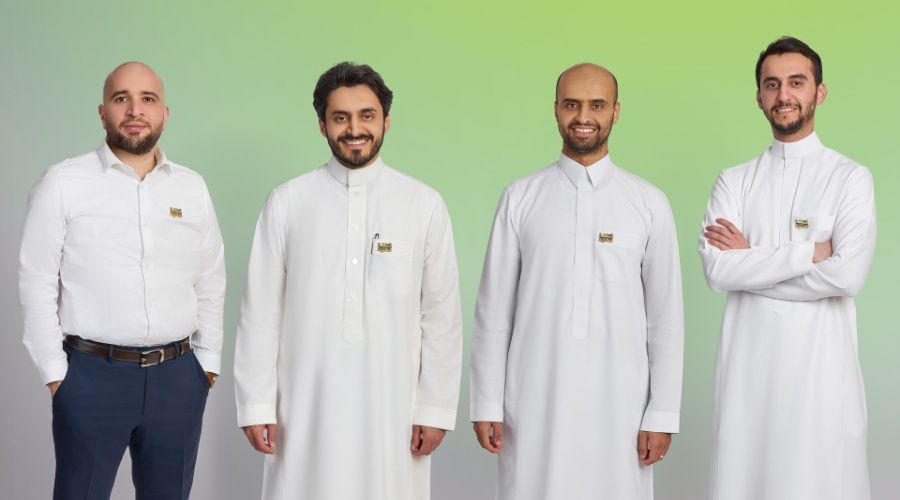
Safqah Capital, a Saudi Arabia-based fintech/proptech platform, has raised $15.2 million in a seed round led by Shorooq, with participation from anb Seed Fund and Rua Growth Fund, along with Sharaka Capital, COTU Ventures, Sadu Capital, 500 Global, Suhail Ventures, MEVP, Waad Invest, JOA Capital and others. Founded in 2023 by Abdullah Alsubaie, Karim Merry, Abdulmalik Arosman, and Omar Alessa, Safqa is building a Sharia-compliant real estate lending infrastructure focused on small and medium-sized business developers, who have historically been underserved by traditional banks. The funding will be used to expand our fundraising capabilities, expand our digital platform, and build more advanced AI-driven risk and underwriting tools to support growing demand from developers.
press release:
This is one of the largest pure equity seed funding rounds in the Kingdom’s history, making it an outstanding deal in the region’s fast-growing fintech landscape. Riyadh-based fintech/proptech Safqa Capital has raised $15.2 million to build infrastructure to power next-generation real estate development in Saudi Arabia. More than 12 leading institutional investors and venture backers participated in this round, led by Shorooq, anb Seed Fund, and Rua Growth Fund, with participation from Sharaka Capital, COTU Ventures, Sadu Capital, 500 Global, Suhail Ventures, MEVP, Waad Invest, and JOA Capital. Highlights investors’ growing confidence in Safka’s role as a cornerstone of Vision 2030’s real estate ambitions.
While Saudi Arabia’s mega-projects grab global headlines, Safqa focuses on the fundamental challenge of enabling faster and more transparent access to capital for the thousands of small and medium-sized developers who supply the Kingdom’s housing and commercial supply. In 18 months, the company has funded more than 70 development projects across Saudi Arabia totaling over $800 million. Safqah has reported a track record of zero defaults to date, with loans secured at over 248% and disbursed through a milestone-based framework.
“Banks were not created for developers, and we were,” said Abdullah Alsubaie, co-founder and CEO of Safka. “We have designed an ecosystem that allows developers to access capital faster, accelerate project implementation, and improve capital efficiency, while increasing oversight and risk management for all stakeholders.”
Safqah’s core offering is a Sharia-compliant debt financing solution designed for small and medium-sized business developers who have traditionally been underserved by traditional banks. Safka is authorized by the Kingdom’s Capital Market Authority (CMA) to offer and realize investments in debt instruments, helping developers provide the liquidity they need to move from planning to execution.
“Safqah is not another lending platform; it is a foundational infrastructure,” said Shane Shin, founding partner at Shorooq. “They have built a model designed to match the pace of development in Saudi Arabia, while meeting regulatory standards and institutional investor expectations. We see Safqa Capital becoming an integral part of the country’s real estate machine.”
The project pipeline in Saudi Arabia’s real estate and infrastructure sector is estimated at more than $1.1 trillion, highlighting the scale of capital and execution required across the ecosystem. However, thousands of small business developers face high hurdles in accessing capital, as banks often require long approval cycles, high collateral thresholds, and strict underwriting practices. These frictions delay deliveries, strain working capital, and reduce overall market throughput.
Safqah addresses this challenge by integrating real estate underwriting, structured finance, and developer-centric software into one platform. More than just a lender, Safqah is building a digital “operating system” for real estate development, combining financing, monitoring, documentation and execution support into a single workflow.
But Safka’s ambitions go beyond raising money. The company leverages advanced data analytics and AI to enhance project oversight, improve decision-making, and increase transparency. Safqah provides developers with a streamlined portal to manage their projects and capital. For investors, it provides access to a diverse set of opportunities supported by structured underwriting and data-backed reporting.
Khalid S. Alghamdi, CEO of anb Capital, said: “We are very pleased to co-lead the investment in Safqa as part of our efforts to support technology-enabled financial platforms that contribute to the Kingdom’s Vision 2030. “Safka combines technological innovation with strong credit governance to provide more efficient and transparent financing solutions for real estate developers across the region. We believe we are well-positioned to support the evolution of the real estate and financial services sectors.” We will improve the efficiency of capital markets and contribute to sustainable economic growth in Saudi Arabia. ”
Turki Aljoieb, general partner at Rua, said: “Safqa is eliminating one of the most significant bottlenecks in the Saudi real estate market by expanding access to structured Islamic law-compliant financing for small and medium-sized developers. “By enabling project execution and scalable housing delivery, Safka supports national affordability targets and advances Vision 2030 home ownership goals, while providing investors with disciplined access to long-term asset-backed exposure,” he added. in the kingdom’s real estate sector. ”
Safqah’s founders bring a complementary mix of expertise. Abdullah Alsubaie CEO, experienced entrepreneur and software engineer. His co-founders include Karim Melly, a veteran CBO at NHC. Chief Financial Officer (CFO) Abdulmalik Arosman, who played a key role in ELM’s IPO. Omar Alessa is a CTO with global startup experience spanning Silicon Valley and London.
The new capital will be developed on several strategic fronts. Safqah Capital plans to aggressively enhance its product offering and digital platform and build more advanced AI tools for risk assessment and underwriting. A key focus will also be on expanding financing capacity to meet the rapidly increasing demand from developers, increasing both the size and number of projects funded.
