


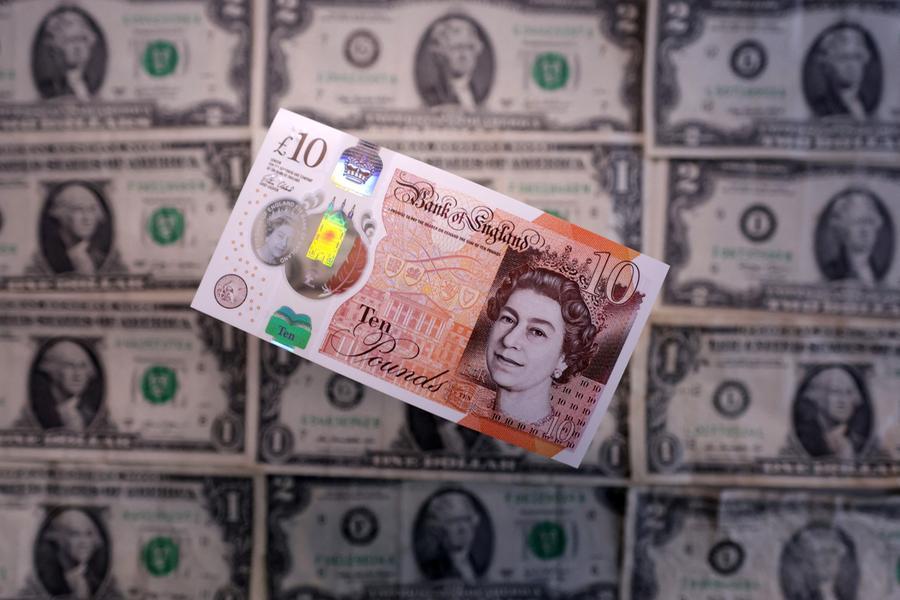
Sterling edged up against the US dollar for a fourth consecutive day on Tuesday, partially supported by data showing retail inflation accelerated sharply in January while political uncertainty smoldered in the UK.
The pound was last up 0.12% against the dollar at $1.3696, near a four-month high.
The pound last fell 0.12% against the euro to 86.72 pence per euro. The dollar has been under pressure in recent weeks from a range of issues, including geopolitical and tariff uncertainty that reinvigorated the “Sell America” trade last week, while traders are also wary of the possibility of coordinated currency intervention by U.S. and Japanese authorities. Meanwhile, the pound rallied on the back of last week’s strong domestic data that showed the economy is improving.
Prices in Britain’s main retailers rose at the fastest pace in almost two years in January, according to figures released by the British Retail Federation on Tuesday.
BRC chief executive Helen Dickinson said: “Any suggestion that inflation has peaked is simply not supported by these figures.”
The data could complicate decision-making for the Bank of England, which is widely expected to leave interest rates on hold when it meets next week. According to the market, traders are currently expecting one rate cut by mid-year and a second rate cut likely by December. However, political tensions are high, with Labor blocking Manchester Mayor Andy Burnham from returning to parliament. Mr Burnham is widely seen as a potential challenger to Prime Minister Keir Starmer, whose leadership of the Labor Party is in question.
Nick Rees, head of macro research at Monex, said global developments had taken some of the heat from the UK’s domestic sterling issue.
He said: “While the pound is currently benefiting from the turmoil elsewhere in the market, we think traders should focus on the political situation in the UK, as it is very volatile.”
“The fact that a civil war appears to be brewing in the Labor Party is not good for trust, it is not good for stability and it is not good for political decision-making,” Rees said, noting that the UK’s fiscal situation was already difficult.
“Adding all this up, we think there is downside risk to the pound as soon as the market starts to take notice.”
(Reporting by Sophie Kiderlin; Editing by Amanda Cooper and Sharon Singleton)
