

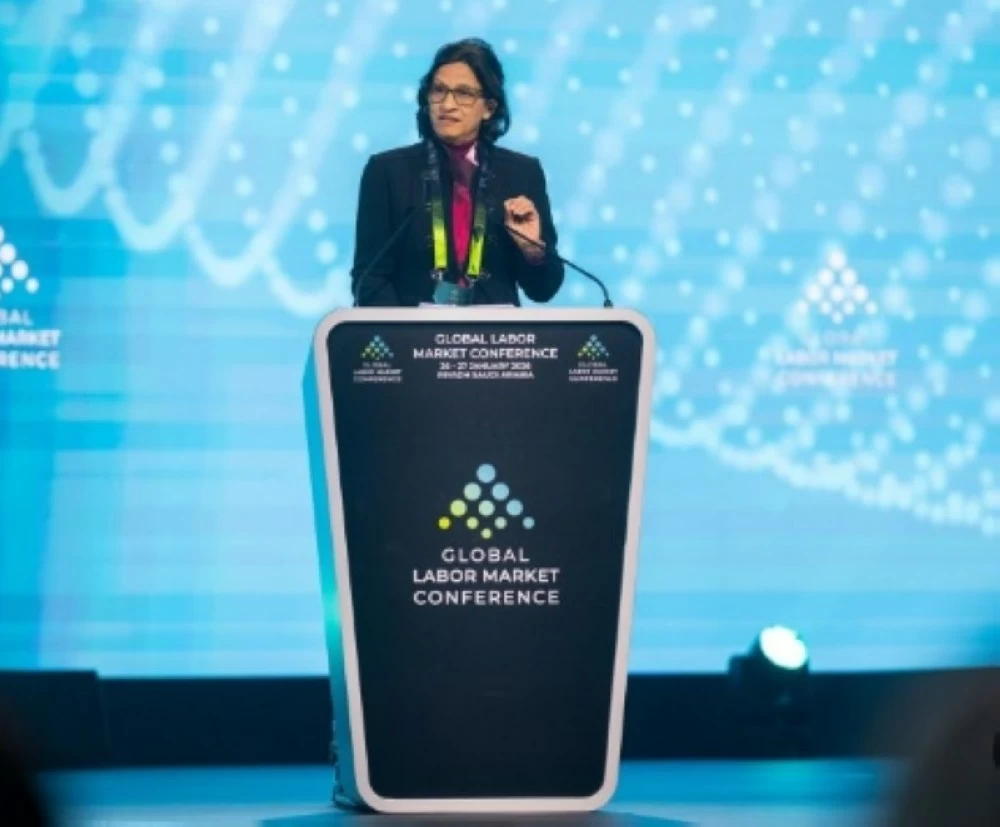
Dr. Mamta Murthy, World Bank Vice President for Human Resources, acknowledged that the Saudi-World Bank partnership is an effective model for turning evidence-based policies into tangible economic opportunities for businesses of all sizes, contributing to enhanced job creation and human capital development.
In his speech at the Third International Labor Market Conference in the capital, Riyadh, the Prime Minister explained the urgent need to develop workforce systems to keep pace with the rapid transformation of the global economy, and emphasized the vital role of the private sector in leading this transformation and achieving inclusive and sustainable employment growth.
sustainable investment
Dr. Murthy explained that sustainable investment in people is the basis for unlocking the full potential of human capital, stressing that this trend requires restructuring financing mechanisms and adopting new models for implementing workforce transformation programs. He noted that labor market challenges and opportunities vary by region, and that sub-Saharan Africa and South Asia have promising potential to drive future growth if young groups in these regions develop skills that match labor market needs.
three transformations
He highlighted the many structural challenges facing global skills development, including education systems that focus on inputs rather than outcomes, the matching gap between available and needed skills, as well as designing training programs for jobs that no longer exist, and the difficulty of scaling up the range of successful solutions, and warned against relying on policies based solely on supply without a real connection to the real demands of the labor market.
To address these challenges, Dr. Murthy reviewed three major changes in workforce development, including adopting private sector-led solutions, establishing market-based methodologies to provide job opportunities across value chains, and prioritizing sectoral reforms that pave the way for long-term transformation of labor systems before moving to comprehensive reforms, and emphasized that deepening partnerships with employers is an essential element in skills development and job creation.
new indicator
He referred to the expansion of the World Bank’s agenda in the area of knowledge and learning, noting efforts to integrate higher education and on-the-job learning and develop new human capital indices that will enable governments to more accurately diagnose skills gaps and integrate education, skills and labor market issues into advice related to economic and financial policy.
He reviewed the most notable initiatives related to this agenda, including the launch of the annual Labor Market Academy, the establishment of a global advisory board of experts, and the creation of a practical guide to support short-term, focused interventions in the workforce sector. He also announced that the World Bank will publish an expert report on the Kingdom’s progress in labor market reform and skills development.
