

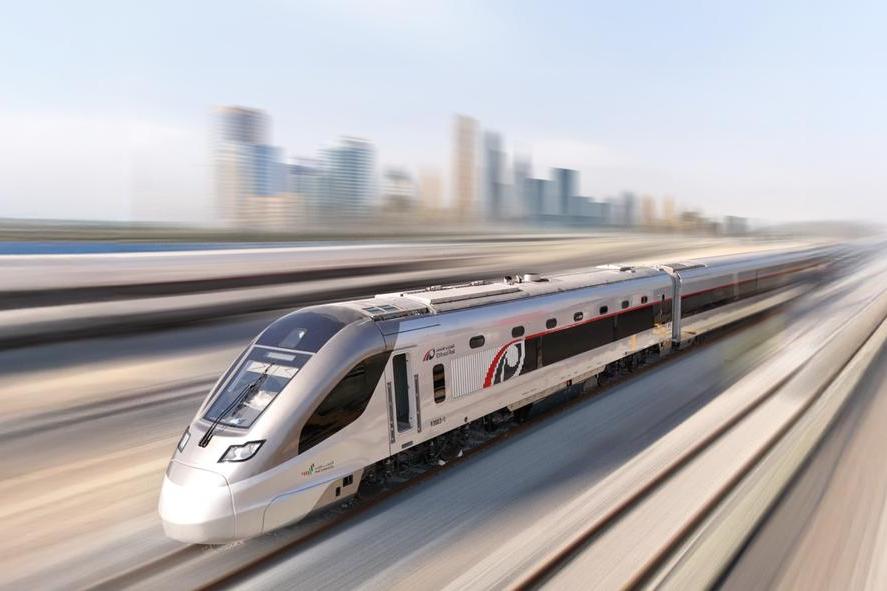
Etihad Rail, the developer and operator of the UAE national rail network, has partnered with Italian high-tech company IronLev to conduct the first maglev (maglev) test in the Middle East, introducing a new vision for the future of sustainable rail transport in the region.
During trials at the Alfaya warehouse, the technology was proven to be able to cope with heavy labor. During the trial run, the platform successfully transported a 7-tonne container over 1.2 kilometers, Gulf News reported.
“This is more than just a fancy science experiment. This is a bold vision for how to move goods and people across the UAE virtually frictionlessly, a first in the region, as the UAE seeks the next generation of low-emissions transport systems,” said an Etihad Rail executive.
Even more impressive is the efficiency. By eliminating physical contact between wheels and tracks, friction becomes a thing of the past. They say early data shows this could lead to a staggering 29% reduction in energy consumption compared to traditional rail systems.
Unlike traditional maglev systems, which require special, power-hungry tracks, this test utilizes passive ferromagnetic levitation. Simply put, this system uses permanent magnets to lift trains onto existing rails. It does not require a constant power supply to stay afloat.
This is a “best of both worlds” scenario, taking advantage of the extensive rail infrastructure the UAE has already built, while also benefiting from the ultra-smooth and high speeds of maglev technology, they added.
As Etihad Rail prepares to open its full passenger network in 2026, sustainability is key, a Gulf News report said citing sources.
“By reducing track wear and reducing carbon emissions, this maglev integration is perfectly aligned with the UAE’s net zero goals. We look to a future where traveling at speeds of up to 200km/h feels like gliding on air, because technically it is,” they added.
Copyright 2026 Al Hilal Publishing and Marketing Group Provided by SyndiGate Media Inc. (Syndigate.info).
