


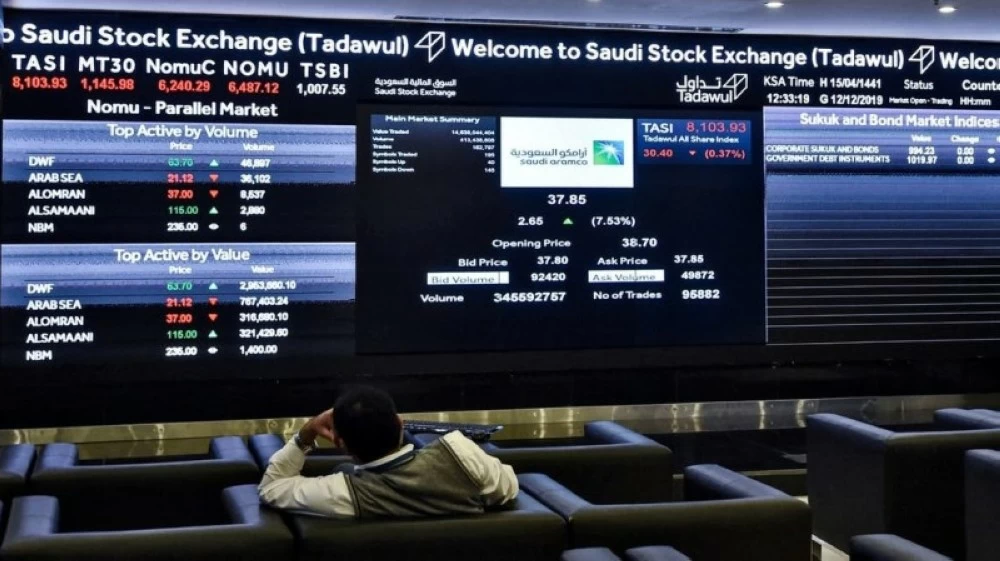
The decision to open the Saudi financial market to all categories of foreign investors is a crucial step on the path of market development and a qualitative transformation that will move Tadawul from the stage of selective opening to a fully open market model.
According to a report published by Al Arabiya.net, this measure does not simply reflect regulatory reform, but also demonstrates the high degree of maturity of the market, the confidence of regulators in the supervisory system, and the ability to absorb the world’s long-term capital.
open economy
Opening the Saudi market to foreign investors reflects the Kingdom’s commitment to building an open economy that is attractive to global capital, based on transparency and governance, and has broader implications than the financial market framework.
This trend is also in line with the goals of Saudi Vision 2030, which aims to strengthen the role of the financial sector in supporting economic growth and diversifying income sources.
The opening of the Saudi market to foreigners cannot be seen as a temporary decision or a temporary incentive, but rather a real turning point in the course of financial markets.
Deeper integration
The abolition of the framework that allowed indirect exposure to stocks has deepened the integration of the Saudi market with global financial markets, making foreign investors effective partners in the market rather than mere beneficiaries of returns.
This decision is expected to attract global investment institutions and long-term funds seeking a stable market with strong economic growth, contributing to the expansion and diversification of the investor base.
This diversity reduces reliance on short-term liquidity, increases trading stability, and reduces the severity of volatility associated with rapid speculation.
Pricing efficiency
The presence of foreign institutional investors increases the efficiency of stock price setting, as it relies on fundamental analysis, performance evaluation, and governance quality rather than momentum or short-term impact news.
As a result, prices become more reflective of a company’s true value, supporting market fairness and transparency.
The new phase will pose direct challenges to listed companies, as the level of financial disclosure, quality of reporting and management efficiency will be key factors in attracting foreign investment.
This positive pressure encourages companies to raise governance standards and improve operational performance, which is ultimately reflected in overall market strength.
investment flow
The market opening comes at a very sensitive time, following a period of price correction during which many stocks were revalued to more attractive levels relative to regional and global markets.
This synchronization with appropriate prices and a more open regulatory framework creates a favorable environment for qualitative investment flows, contributing to the restoration of confidence and strengthening momentum.
Sectors with strong fundamentals are expected to attract the attention of international investors, with the telecommunications, healthcare, pharmaceutical and food sectors enjoying sustained growth and clear business models, as well as the banking sector supported by stable profitability and strong financial solvency.
The decision to open the Saudi financial market to all categories of foreign investors represents a crucial step in the evolution of the market and marks a qualitative change that will move Tadawul from the stage of selective opening to a fully open market model.
According to a report published by ‘Al Arabiya.net’, this measure does not simply reflect a regulatory adjustment, but indicates the high level of maturity of the market and the confidence of regulators in its supervisory structure and ability to absorb the world’s long-term capital.
open economy
The opening of Saudi markets to foreign investors reflects the Kingdom’s commitment to attracting global capital and building an open economy based on transparency and governance, and has far-reaching implications beyond the framework of financial markets.
This direction is in line with the goals of Saudi Vision 2030, which aims to strengthen the role of the financial sector in supporting economic growth and diversifying income sources.
The opening of the Saudi market to foreigners cannot be seen as a temporary decision or a short-term stimulus. Rather, this is a real turning point in the trajectory of financial markets.
Deeper integration
The abolition of the framework that allowed indirect exposure to stocks has deepened the integration of the Saudi market with global financial markets, making foreign investors not only beneficiaries of profits but also real partners in the market.
This decision is expected to attract global investment institutions and long-term funds seeking a stable market with strong economic growth, contributing to the expansion and diversification of the investor base.
This diversification reduces reliance on short-term liquidity, increases trading stability, and reduces volatility associated with rapid speculation.
pricing efficiency
The presence of foreign institutional investors increases the efficiency of stock price setting because it relies on fundamental analysis, performance evaluation, and quality of governance rather than momentum or short-term news.
As a result, prices become more reflective of a company’s true value, supporting market fairness and transparency.
The new phase will pose direct challenges to listed companies, as the level of financial disclosure, quality of reporting and management efficiency will be key factors in attracting foreign investment.
This positive pressure drives companies to raise governance standards and improve operational performance, which is ultimately reflected in overall market strength.
investment flow
The market launch comes at a very sensitive time, following a period of price correction during which many stocks were revalued to more attractive levels relative to regional and global markets.
This synchronization of favorable prices and a more open regulatory framework creates an environment conducive to high-quality investment flows, contributing to the restoration of confidence and strengthening momentum.
Sectors with strong fundamentals are expected to attract the attention of foreign investors, with a focus on the telecommunications, healthcare, pharmaceutical, and food sectors, which enjoy sustained growth and clear business models, as well as the banking sector, which is supported by stable profitability and high financial solvency.
