

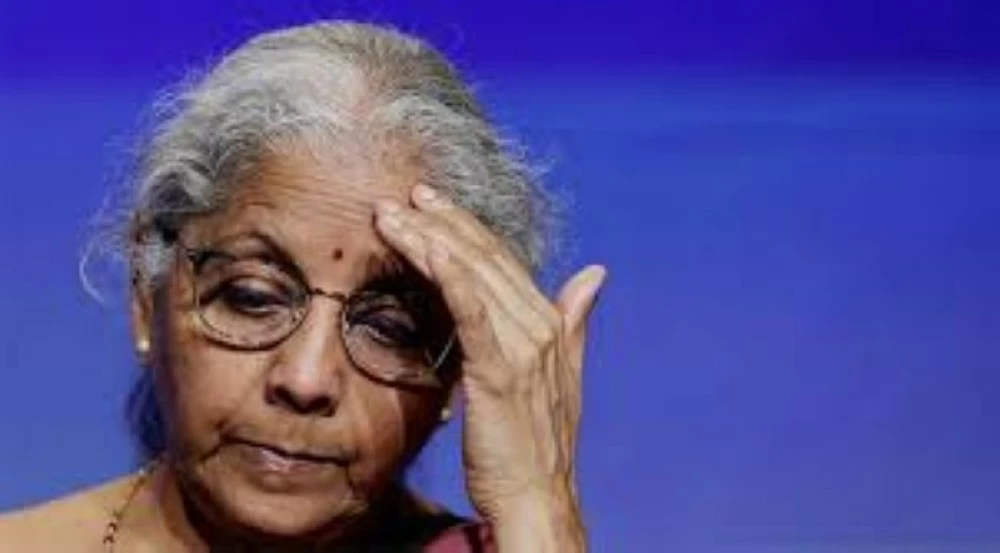
India’s Finance Minister Nirmala Sitharaman today announced that India aims to achieve a debt-to-GDP ratio of 55.6% in the fiscal year 2026-2027, from around 56.1% this year.
Presenting the Union Budget, Sitharaman said India’s federal deficit is expected to remain at 4.4% of GDP in the fiscal year ending March 2026, with the target set at 4.3% of GDP for next year.
stable foundation
Finally, the Government of India expected the national economy to register growth in the range of 6.8% to 7.2% during the financial year starting April 2026, as per the Annual Economic Survey.
This forecast represents a slowdown compared to the expected growth rate of 7.4% for the current fiscal year.
The annual survey presented in Parliament by Finance Minister Nirmala Sitharaman showed that while the domestic economy remains stable, slower growth in trading partners and trade disruptions due to tariffs could impact exports and investor sentiment.
4 times
The study is based on comparisons with the previous economic growth cycle, when India’s gross domestic product quadrupled from $1 trillion in 2008 to $4 trillion by 2025.
The next phase would see gross domestic product jump to $16 trillion by 2042, adding $12 trillion in new growth, compared to just $3 trillion in the previous cycle.
India’s Finance Minister Nirmala Sitharaman announced today that India aims to reduce its debt-to-GDP ratio from around 56.1% this fiscal year to 55.6% in 2026-2027.
Sitharaman, while announcing the Union Budget, explained that India’s federal budget deficit is expected to be maintained at 4.4% of GDP in the fiscal year ending March 2026, with the target for next year set at 4.3% of GDP.
stable foundation
The Indian government recently projected the national economic growth rate for the financial year starting April 2026 to be between 6.8% and 7.2%, according to the Annual Economic Survey.
This forecast represents a slowdown compared to the expected growth rate of 7.4% for the current fiscal year.
The annual survey announced in Parliament by Finance Minister Nirmala Sitharaman showed that the country’s economy remains on stable footing. However, slowing growth in trading partner countries and trade disruptions due to tariffs could affect exports and investor sentiment.
4 times
The study is based on comparisons with previous economic growth cycles, when India’s GDP quadrupled from $1 trillion in 2008 to $4 trillion by 2025.
In the next phase, GDP is expected to jump to $16 trillion by 2042, an increase of $12 trillion compared to just $3 trillion in the previous cycle.
