


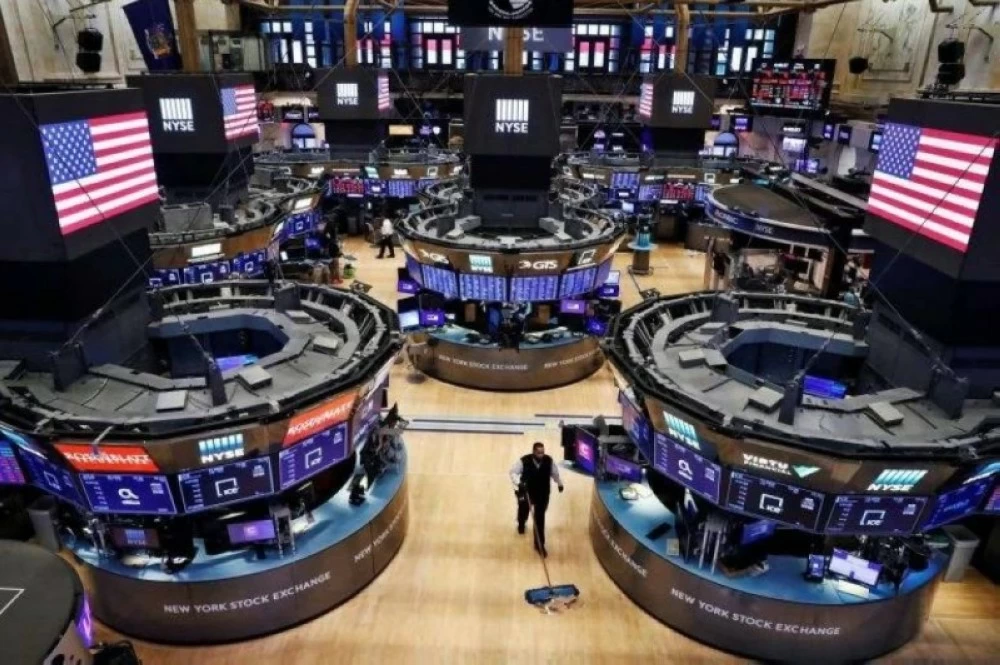
A Wall Street Journal report revealed that the real winners from the global turmoil are not long-term investors, but rather speculators who are adept at taking advantage of news before the outcome is clear.
The paper explained that as 2026 began, political threats escalated, from Washington’s threat to annex Greenland to the possible imposition of punitive tariffs on Europe, and the impact this had on financial markets was met with surprising indifference, as if traditional risk management rules no longer applied, but rather uncertainty itself became fuel for speculation and quick profits.
shocking jump
One of the most striking examples of this is an exchange-traded fund (ETF) related to rare earths and Greenland development, which rose a shocking 100% in just one week, driven by geopolitical expectations that have yet to materialize.
In the same context, the stock prices of Danish and Canadian companies witnessed an unprecedented sharp rise as the market awaited what was described as a potential “deal of the century” related to the future of Greenland and its strategic resources.
speculative wave
Meanwhile, the major indexes do not reflect the same enthusiasm, with the S&P 500 index still only about 1% below its historic high, indicating that traditional investors are handling the current situation with great caution, preferring to wait rather than get caught up in a wave of high-risk speculation.
The most noticeable change is in the expectations market, which is witnessing what can be described as an “unprecedented spring.” Weekly trading volume on platforms like Karshi and Polymarket exceeded $1 billion for the first time, a phenomenon that reflects a growing desire to bet on the unexpected.
chaos is a commodity
Today, traders bet not just on market trends and central bank decisions, but on almost everything, from the date of a possible annexation of Greenland to small symbolic details like the color of the US president’s necktie.
Instead of risk pushing investors back, disruption has become a tradable commodity, with everyone trying to get a share of it while ignoring fundamental economic metrics like growth, inflation, and corporate profits.
lucky event
But experts caution against confusing the two concepts. Investing is inherently based on building wealth over time on a clear economic basis.
When it comes to speculation, it’s about betting on the spur of the moment, in search of instant fortune, which can lead to immediate extraordinary profits or equally large losses.
In the world of 2026, speculators appear to be the star of the show, but the most important questions remain. Who will survive when the dust settles?
A Wall Street Journal report revealed that the real winners from the global turmoil are not long-term investors, but speculators who are adept at taking advantage of news before the outcome is clear.
The newspaper explained that as 2026 begins and political threats intensify, from the US government’s hints of annexing Greenland to the possibility of punitive tariffs on Europe, the impact on financial markets is being met with notable indifference, as if traditional risk management rules no longer apply. Rather, uncertainty itself is fuel for speculation and quick profits.
shocking sudden increase
One of the most notable examples of this is an exchange-traded fund (ETF) linked to rare metals and the development of Greenland, which soared a shocking 100% in just one week on geopolitical expectations that have yet to materialize.
In the same context, the stock prices of Danish and Canadian companies saw an unprecedented sharp rise as the market awaited what was described as a potential “deal of the century” related to the future of Greenland and its strategic resources.
speculative wave
Meanwhile, major indicators do not reflect similar enthusiasm. The S&P 500 index remains about 1% below its historic high, indicating that traditional investors are treating the current situation with great care and preferring to wait rather than embark on a risky speculative wave.
The most notable changes are in prediction markets, which are experiencing what could be described as an “unprecedented spring.” Weekly trading volumes on platforms such as Karshi and Polymarket surpassed the $1 billion mark for the first time, reflecting a growing desire to bet on anything unexpected.
Chaos as a commodity
Today, traders bet not just on market trends and central bank decisions, but on almost everything, from the potential date of Greenland’s annexation to small symbolic details like the color of the U.S. president’s necktie.
Rather than pushing risk to drive investors out, disruption has become a tradable commodity, and everyone is trying to get their share of it, ignoring fundamental economic metrics like growth, inflation, and corporate profits.
lucky strike
However, experts caution against confusing the two concepts. The essence of investing is to rely on clear economic fundamentals to build wealth over time.
Speculation, by contrast, involves betting on the moment, seeking quick fortunes that can produce exceptional profits or significant losses just as quickly.
In the world of 2026, speculators appear to be the star of the show, but the most important questions remain. Who will still be standing when the chaos is over?
