

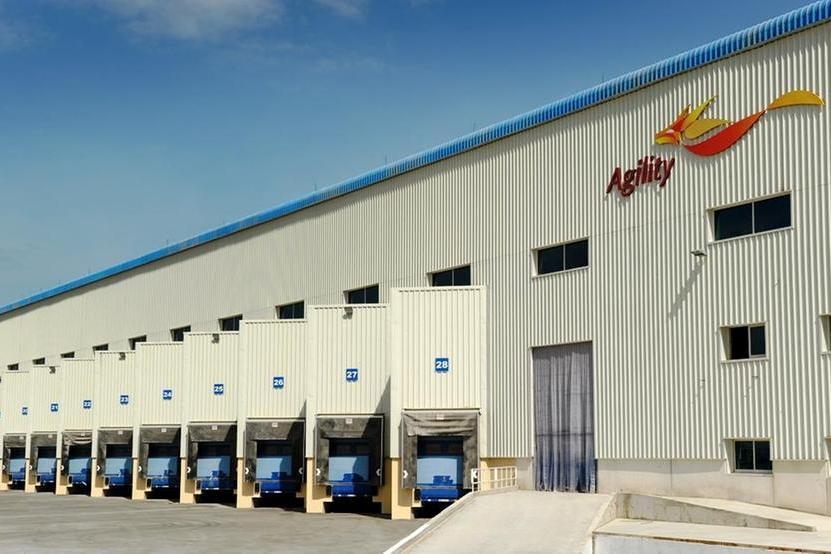
The 2026 Agility Emerging Markets Index says logistics industry executives are bracing for a volatile year in trade, geopolitics and the global economy, turning to AI, scrutinizing costs and reconfiguring supply chains to deal with uncertainty.
In a survey of 503 industry experts, 86% said they expected volatility to increase in 2026 or saw trade, political and economic turmoil as the “new normal.”
The Agility study showed that AI is almost universally adopted in the logistics industry. 98% of respondents said their company uses artificial intelligence to manage some aspect of its supply chain or business operations.
The study also suggested that changes in global production and sourcing — first spurred by the coronavirus, then U.S.-China tensions, and last year’s wave of tariff hikes — are continuing as companies rebuild and fine-tune their supply chains.
“Business and government leaders know they have no comfort zone or time to rest. They are seeking durable paths to growth during a time of extraordinary uncertainty,” said Agility Chairman Tarek Sultan. “They see AI as both a source of volatility and a tool to manage it. They are facing new trade barriers in real time. They are driving energy transitions and navigating conflicts between economic partners.”
This study and index is Agility’s 17th annual snapshot of industry sentiment, ranking the world’s 50 leading emerging market companies. The index ranks countries on their overall competitiveness based on domestic and international logistics strength, business environment, digital readiness, and attractiveness factors for logistics operators, freight forwarders, air carriers, ocean carriers, distributors, and investors.
The 2026 Index features an in-depth analysis of Arabian Gulf countries. Individually and as a group, the six Gulf states are positioning themselves as the world’s transport and logistics hubs, investing heavily in AI, energy transition, and human capital development.
The GCC region is “thriving” as a trade crossroads, strengthened by the rapid adoption and expansion of AI and the ability to maintain good relations with both the US and China. “Volatility will not derail (the Gulf states’) ambitions,” the index said.
It occupies a stable position in the index ranking of 50 countries. The 2026 index ranks China, India, UAE, Saudi Arabia, Malaysia, Indonesia, Qatar, Mexico, Thailand, and Brazil from 1st to 10th. The countries that have improved the most are Ukraine (up 7 places to 31st place) and Tunisia (up 4 places to 32nd place). Cambodia (from 7th to 37th) dropped sharply in the rankings. Pakistan (down from 5th to 38th); Bolivia (down five places to 49th).
Six Gulf countries are among the top 12 countries with the best business climate, with China, Malaysia, India, UAE and Saudi Arabia among the most digitally ready.
China, India, Mexico, UAE, and Saudi Arabia rank highly for international logistics opportunities. The leaders in domestic logistics are China, India, Indonesia, Qatar, and Saudi Arabia.
Global companies continue to diversify and reconfigure their supply chains. 97% of executives surveyed said their companies have changed or will soon change some aspects of production and sourcing.
Businesses see tariffs and protectionism as the risks for which they are least prepared. The key tools they are using to deal with trade disruption are supplier diversification, cargo consolidation, and strategic warehousing.
When it comes to sustainability, a significant 48% said their company has paused or slowed down on sustainability. The most frequently cited reasons are cost reduction, changing business priorities, and difficulty demonstrating return on investment.
Transport Intelligence (Ti), a leading logistics industry analytics and research firm, has compiled this index since its launch in 2009.
“One of the phrases that came up again and again throughout our research was ‘structural uncertainty’ driven by geopolitical fragmentation, trade policy instability and uneven economic momentum,” said John Manners Bell, CEO of Ti. “This index confirms that supply chain companies are avoiding, rather than retreating from, this uncertainty.”
“If you look at emerging markets, some have advanced digital tools built in, while others are constrained by skills, infrastructure and access to capital.”
