

Close Menu
The Oasis Report | Latest Saudi Arabia News & Updates
  • Home
  • Analysis
  • Business
  • Economy
  • Finance
  • Investor
  • Opinion
  • Saudi Arabia
  • Startups
What's Hot

Nouf Bumhair: ‘Women executives can bring about change in sports management’ – Saudi News

February 4, 2026

L&T signs Nextpower joint venture for 2.5GW Saudi solar power project

February 4, 2026

Saudi Arabia’s stock index outperformed GCC peers in January following strong results

February 4, 2026
Facebook X (Twitter) Instagram
Trending
  • Nouf Bumhair: ‘Women executives can bring about change in sports management’ – Saudi News
  • L&T signs Nextpower joint venture for 2.5GW Saudi solar power project
  • Saudi Arabia’s stock index outperformed GCC peers in January following strong results
  • German Chancellor visits Riyadh to strengthen strategic and economic ties
  • “Meteorology”: Thunderstorms in four regions – Saudi News
  • Dollar is strong, yen is shaky ahead of Japanese elections
  • Gold soars more than 2%, breaching $5,000 per ounce barrier again – Saudi News
  • Gold prices expand gains, rising more than 2% after best day since 2008
  • Home
  • About Us
  • Advertise With Us
  • Contact US
  • DMCA
  • Privacy Policy
  • Terms and Conditions
Facebook X (Twitter) Instagram
The Oasis Report | Latest Saudi Arabia News & UpdatesThe Oasis Report | Latest Saudi Arabia News & Updates
Wednesday, February 4
  • Home
  • Analysis
  • Business
  • Economy
  • Finance
  • Investor
  • Opinion
  • Saudi Arabia
  • Startups
The Oasis Report | Latest Saudi Arabia News & Updates
Home » Revealing the secret of a world where ants became extinct 40 million years ago – Saudi News

Revealing the secret of a world where ants became extinct 40 million years ago – Saudi News

adminBy adminJanuary 31, 2026 Opinion No Comments2 Mins Read
Share
Facebook Twitter LinkedIn Pinterest Email


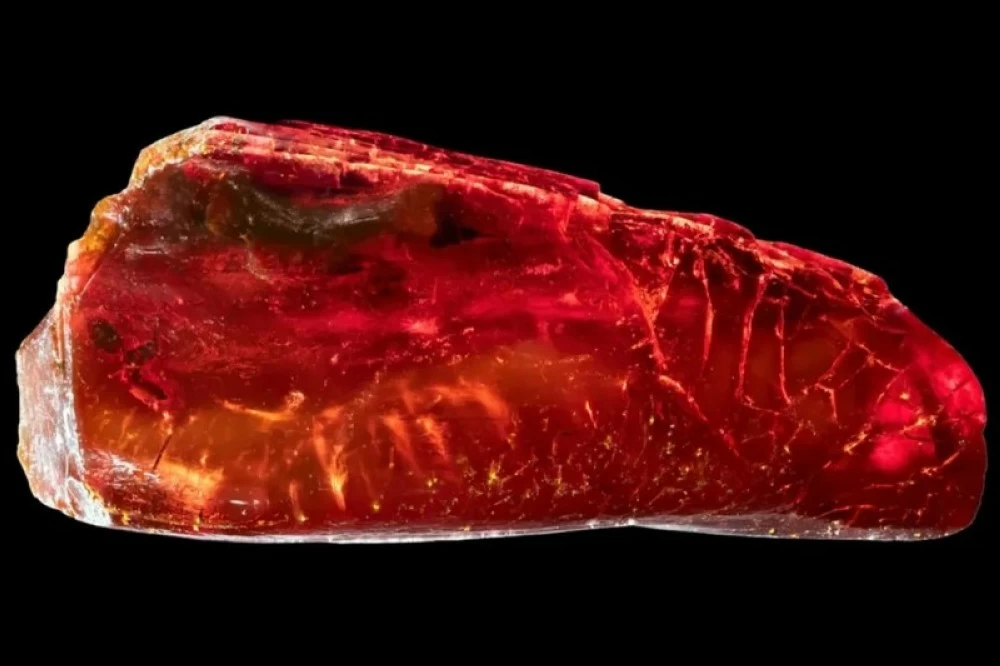
Researchers were able to discover a piece of rare amber dating back about 40 million years. It contains extremely precise preservations of extinct ants, fungal mosquitoes and blackflies, making it one of the most precise fossil discoveries ever known. The Sun reports that the specimen is the best-known example of the extinct species Ctenoberus gepertii.

The near-perfect state of preservation gave scientists an unprecedented opportunity to examine the internal structure of the ant’s head and body using three-dimensional imaging techniques, resulting in detailed images never before recorded in fossilized ants.

The significance of this discovery was further enhanced by the discovery that this amber fragment was in the personal collection of the famous German writer Johann Wolfgang von Goethe, who acquired approximately 40 pieces of amber. Today’s modern science and technology reveals biological treasures hidden for decades within this cultural heritage.

The study showed that the ant belonged to the “worker” category, shared many characteristics with modern ant species, and likely lived in warm pine forests. The shape of its powerful jaws indicates the ability to dig and peck through trees, which reveals its behavior and the nature of its environment millions of years ago.

In one of the most precise fossil finds ever known, researchers have uncovered a rare piece of amber from around 40 million years old that contains an extremely well-preserved extinct ant, along with the fungi mosquito and blackfly. According to the newspaper The Sun, this specimen is considered the best-known example of the extinct species Ctenoberus gepertii.

The near-perfect state of preservation gave scientists an unprecedented opportunity to examine the internal structure of the ant’s head and body using 3D imaging techniques, resulting in detailed images never before recorded for fossilized ants.

The discovery becomes even more important when it is revealed that this amber fragment was part of the personal collection of the famous German author Johann Wolfgang von Goethe, who owned about 40 pieces of amber, allowing modern technology to uncover biological treasures that had remained hidden for decades within this cultural heritage site.

The study shows that the ant belongs to the category of “workers” and shares many characteristics with modern ant species, suggesting that it lived in warm pine forests. Additionally, its powerful jaw shape indicates the ability to burrow and gnaw into trees, revealing its behavior and the nature of its environment millions of years ago.


Source link

admin
  • Website

Keep Reading

Nouf Bumhair: ‘Women executives can bring about change in sports management’ – Saudi News

“Meteorology”: Thunderstorms in four regions – Saudi News

Will the nightmare repeat itself? Air India inspects 33 Boeing planes after sudden breakdown – Saudi News

What is the truth about Sherine Abdel Wahab selling her official YouTube channel? – Saudi Arabia News

Egyptian actor syndicate permanently suspends ‘Spirit Off’ series – Saudi News

Add A Comment
Leave A Reply Cancel Reply

Editors Picks

L&T signs Nextpower joint venture for 2.5GW Saudi solar power project

February 4, 2026

Dollar is strong, yen is shaky ahead of Japanese elections

February 4, 2026

Gold prices expand gains, rising more than 2% after best day since 2008

February 4, 2026

Airbus CEO emphasizes need for stable supply chains and cooperation to foster global connectivity

February 4, 2026
Latest Posts

Subscribe to News

Subscribe to our newsletter and never miss our latest news

The Oasis Report is an independent digital news platform dedicated to delivering timely, accurate, and insightful coverage of Saudi Arabia. Our mission is to keep readers informed about the Kingdom’s rapidly evolving political, economic, social, and cultural landscape.

Facebook X (Twitter) Instagram Pinterest YouTube

Subscribe to Updates

Subscribe to our newsletter and never miss our latest news

Facebook X (Twitter) Instagram Pinterest
  • Home
  • About Us
  • Advertise With Us
  • Contact US
  • DMCA
  • Privacy Policy
  • Terms and Conditions
© 2025 theoasisreport. Designed by TeraSolutions.io

Type above and press Enter to search. Press Esc to cancel.