

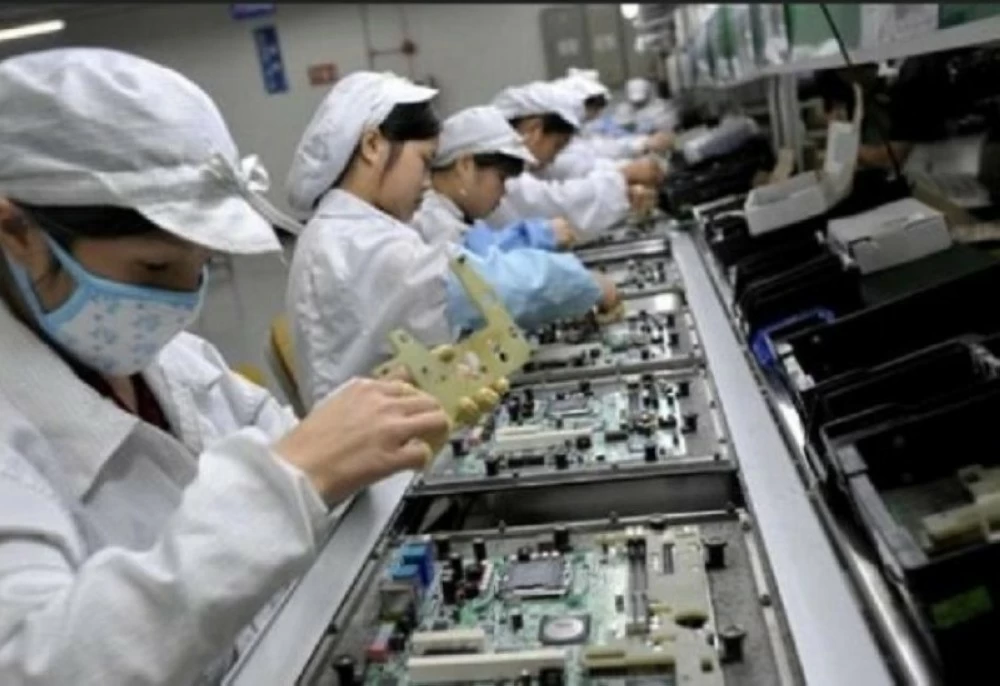
Official data released yesterday (Saturday) showed that China’s industrial activity unexpectedly slowed during January, after the sector recorded a modest increase late last year, reflecting the continuing challenges facing the world’s second-largest economy.
Purchasing manager index declines
According to an announcement by China’s National Bureau of Statistics, the Purchasing Managers’ Index, the main indicator of industry performance, fell to 49.3 points this month, but the forecast was 50.1 points, indicating that the 50-point level is the dividing line between expansion and contraction, indicating a slight contraction in industrial activity.
Sluggish domestic demand and traditional off-season
Huo Lihui from the National Bureau of Statistics said the data reflected a “traditional recessionary period” in some manufacturing industries as well as a “lack of real demand in the market”, stressing that after several months of weak performance since April last year, the current economic slowdown ended a series of short-lived gains seen at 50.1 points in December.
Challenges of the Chinese economy
China’s economy faces a continued decline in domestic consumer spending, impacting economic activity despite strong exports, which Qiu Zhang, chief economist at Pinpoint Asset Management, deemed a “pillar of growth” last year. He added that while the decline in industrial activity reflects weakness in domestic demand, the sustainability of the industrial sector is key to future growth expectations.
Trade surplus and expected government measures
China will achieve a historic trade surplus of $1.2 trillion in 2025, a key strength, while the Chinese government has pledged to take steps to boost demand in the coming years. The government is scheduled to announce major policies in March, coinciding with the announcement of a new five-year plan.
Real estate crisis and demographic challenges
China’s real estate market has been hit by a long-term debt crisis, which is hampering real estate investment and reducing people’s desire to buy homes. A shrinking and aging population will also make future consumption booms more difficult to predict, increasing pressure on the economy.
Growth slows towards 2025
Data shows China’s economy will grow 5% in 2025, one of the slowest growth rates in decades, and authorities are expected to set a similar growth target for this year at their annual political meeting next March.
