


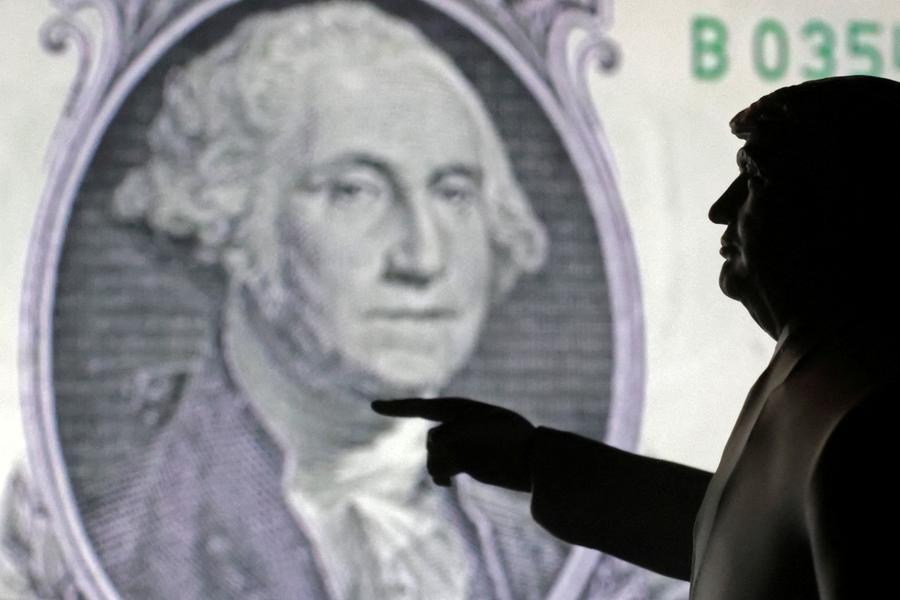
SINGAPORE: The dollar took a breather on Wednesday after reversing losses as US President Donald Trump appeared to ignore recent weakness in the world’s reserve currency as stock prices hit record highs on optimism about profits.
The dollar’s plunge has pushed the euro above $1.20 for the first time since 2021, the Australian dollar to a three-year high above 70 cents, gold to new highs and commodity prices measured in dollars.
Trading stabilized in Asian trading, helping the struggling yen stay away from recent lows before the dollar recovered to 152.76 yen.
The dollar’s decline is the sharpest since President Trump’s tariff blitz rocked markets last April. Concerns over his erratic policy decisions, his attacks on the Federal Reserve, his outlook on interest rates and, most recently, Friday’s move by the U.S. to sell the dollar to support Japan’s strong yen, are contributing factors.
When asked by a reporter whether he thought the dollar had fallen too much recently, President Trump replied, “The dollar is doing great.”
“Forex market participants are always looking for trends to jump on,” said Steve Englander, head of global G10 currency research at Standard Chartered in New York.
“Government officials often push back against sudden currency fluctuations, but when the president expresses indifference or supports the move, it emboldens U.S. dollar sellers to press on,” he said.
The dollar has fallen more than 9% through the first year of President Trump’s second term in 2025.
The Federal Reserve will hold an interest rate-setting meeting later Wednesday, but no policy changes are expected.
The focus will be on whether that trend is consistent with the two rate cuts that markets are pricing in this year, and how Chairman Jerome Powell, who has strongly pushed back against threats of criminal charges, will deal with questions about the Fed’s independence.
Bitcoin lags behind in gold record run
The dollar’s weakness spread to other assets, with gold hitting a new record of more than $5,241 an ounce and benchmark Brent crude oil futures hitting a four-month high of $67.98 a barrel.
In Asian trade, US Treasury yields have remained largely stable at 4.233%, while Bitcoin has been noticeably left behind, remaining fixed at just below $90,000.
On Wall Street, the S&P 500 index hit a new high overnight, ahead of the start of earnings calls for big tech companies like Meta and Tesla after Wednesday’s close.
In Asian trading, S&P 500 futures rose 0.2% and European futures fell 0.2%.
Hong Kong’s Hang Seng Index rose 2% to its highest level in 4-1/2 years.
Australia’s higher-than-expected inflation in December has raised hopes of a rate hike as early as next week, with ANZ and Westpac switching their rate forecasts after the data release, with all of Australia’s “big four” banks now predicting rate hikes.
Indonesia’s stock market fell 7% after index provider MSCI stopped updating Indonesia’s entries in its products tracked by global investors, citing concerns about opaque ownership and trading. (Reporting by Tom Westbrook; Editing by Shri Navaratnam and Jacqueline Wong)
